



phone

The most common cause of hair loss in men — a receding hairline and thinning at the crown, driven by genetics and hormones.

Hair Loss

Male Pattern Baldness

Male pattern baldness, also known as androgenetic alopecia, is the most common cause of hair loss in men. It develops gradually and usually follows a predictable pattern of receding hairline and thinning on the crown. The condition is hereditary and linked to hormones that affect hair follicle sensitivity.
Contents →

Overview

What is male pattern baldness?

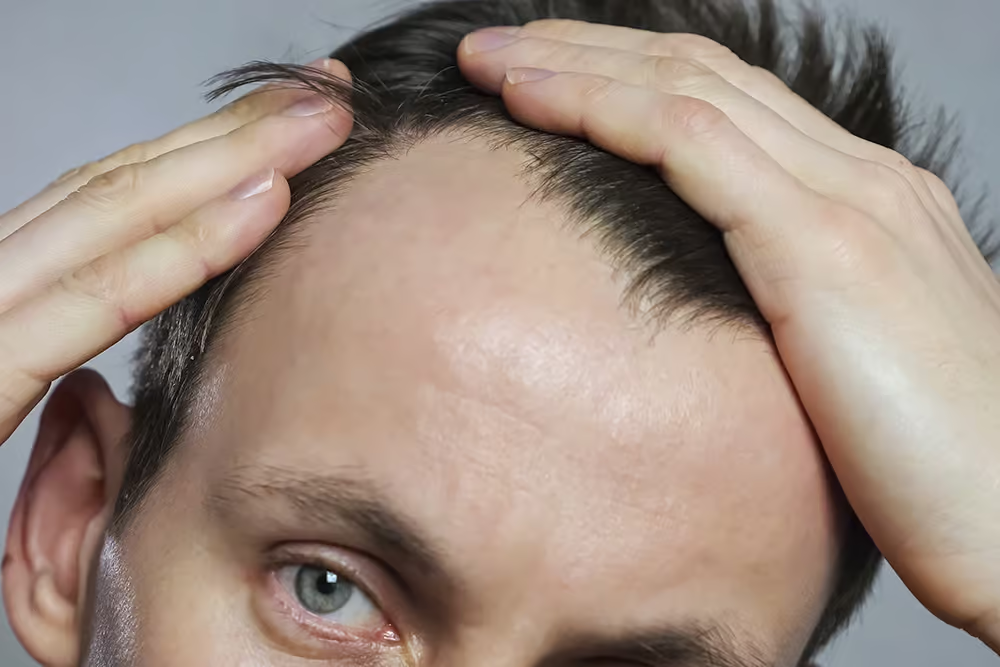
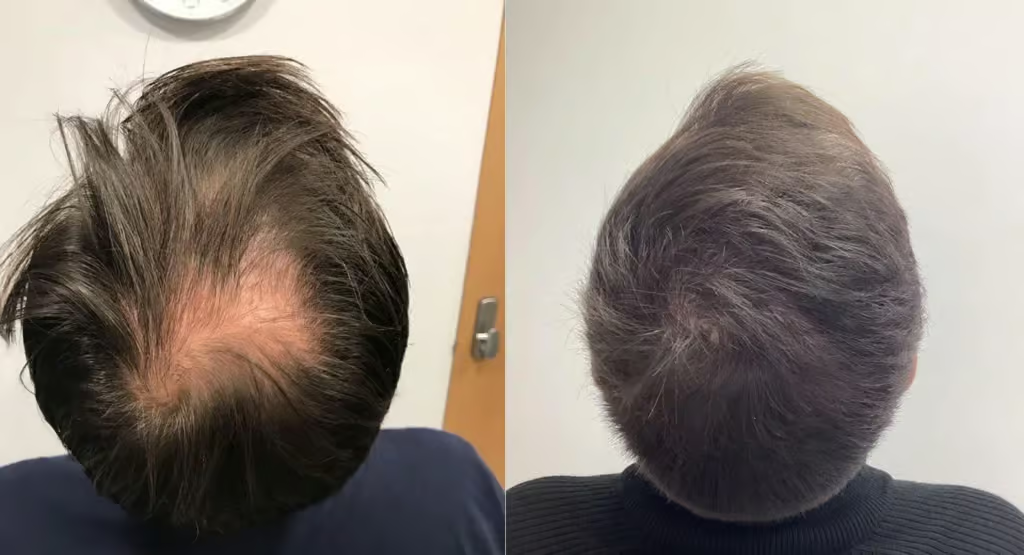
Male pattern baldness causes gradual hair thinning that often begins around the temples or crown. Over time, it can lead to partial or complete baldness on the top of the scalp, while hair around the sides and back usually remains.

This condition affects up to half of men by the age of 50, though some notice signs earlier. It occurs when hair follicles shrink over time due to a hormone called dihydrotestosterone (DHT), which shortens the hair growth cycle and eventually stops new growth.

Young man with a receding hairline

What does male pattern baldness looks like?

Male pattern baldness typically begins with:

As the condition progresses, bald patches on the crown and temples may merge, leaving a horseshoe-shaped ring of hair around the sides and back of the head.

Symptoms and Causes

Symptoms

Male pattern baldness is typically painless and does not cause scalp irritation or inflammation. Common signs include:

Causes

The primary driver of male pattern baldness is the hormone dihydrotestosterone (DHT), derived from testosterone. DHT affects genetically sensitive hair follicles, causing them to shrink in size—a process called miniaturisation. This leads to progressively finer, shorter hairs and may eventually stop hair growth altogether.

Other factors that contribute to male pattern baldness include:

Diagnosis and Tests

Diagnosis and Tests

A GP or dermatologist can often diagnose male pattern baldness by examining the scalp and assessing the pattern of hair loss. A detailed medical and family history helps rule out other causes. The Hamilton–Norwood scale is frequently used to measure the degree of baldness, from mild recession to advanced loss.

What tests might be done?

Your GP or dermatologist can usually diagnose male pattern baldness by examining your scalp and hair pattern. Additional tests may be recommended to rule out other causes of hair loss:

Management and Treatment

Management and treatment

Male pattern baldness cannot be completely reversed, but several treatments can slow its progression and encourage regrowth.

Medical treatments

Procedural options

Lifestyle and supportive measures

Hair Loss Treatment
Personalised options to slow hair loss and encourage regrowth
From £300

Outlook/Prognosis

Outlook and prognosis

Male pattern baldness is a progressive condition that tends to advance over time. However, early and consistent treatment can preserve existing hair and, in many cases, encourage regrowth.

Response to treatment varies. Men who start therapy early and maintain it long term generally achieve the most visible improvement. Once follicles have completely miniaturised or closed, regrowth is unlikely without surgical intervention.

While the condition is not medically serious, its psychological effects can be significant. Many men find that taking proactive steps, whether through treatment or simply acceptance can greatly improve confidence and wellbeing.

Additional tests may be recommended in certain cases:

Prevention

Prevention

You cannot entirely prevent male pattern baldness, but you can reduce the rate of hair loss and maintain scalp health by:

Reviewed by
Dr Alam
Dr Suhail Alam

Medical Director & Lead Surgeon

At a glance
Condition type
Hereditary hair loss
Main cause
Genetics & DHT
Common areas
Hairline & crown
Progression
Gradual
Treatment
Medical & surgical
Hair regrowth
Varies

Noticing thinning hair?

Take a free online hair assessment for personalised guidance and suitable treatment options.

Experiencing Hair Loss?

If you’ve noticed a receding hairline, thinning crown, or increased shedding, don’t ignore it. Book a free online hair assessment with Aventus Clinic today and receive personalised advice and treatment options.