



phone

Skin Biopsy Hitchin, Hertfordshire

Consultant-Led Skin Biopsy Clinic in Hitchin

Fast access to private skin biopsy assessment, including consultant-led skin lesion examination, dermoscopy and biopsy.

CQC-registered private clinic
In-house skin biopsy procedures
Trusted by 5,000+ patients across our clinics
Q logo
CQC
Registered & regulated

Meet the Aventus team

Who We Are

Fast Access to Skin Biopsy & Diagnosis

Has a suspicious mole, skin lesion or skin change been identified during a skin check?

At Aventus Clinic in Hitchin, Hertfordshire, skin biopsies can often be performed on-site without referral to another provider. Following assessment, your clinician may recommend a biopsy and arrange the procedure at our clinic. Tissue samples are sent for histological examination to help confirm a diagnosis and guide treatment. Assessment, biopsy and follow-up care are all available through the same consultant-led clinic, serving patients across Hertfordshire, Bedfordshire and the surrounding areas.

Assessment, biopsy and follow-up in one clinic

From initial assessment to skin biopsy and follow-up care, our team provides a streamlined diagnostic pathway within the same clinic.

Histology arranged where clinically required

Tissue samples can be sent for specialist laboratory analysis when a definitive diagnosis is required.

A skin biopsy involves removing a small sample of skin, or occasionally the entire lesion, for examination under a microscope. It may be recommended for suspicious moles, skin lesions, suspected skin cancer, precancerous skin changes or unexplained skin conditions. Histological analysis helps confirm a diagnosis and guide appropriate treatment. Most skin biopsies are performed under local anaesthetic as a minor outpatient procedure.

Useful information before your visit

A skin biopsy may be recommended if a mole, skin lesion or skin change cannot be diagnosed with certainty through clinical examination alone. It can help investigate suspicious moles, potential skin cancers, precancerous skin changes and other unexplained skin conditions.

After examining the area, your clinician will numb the skin with a local anaesthetic before removing a small sample of tissue, or occasionally the entire lesion. The procedure is usually completed during a single outpatient appointment.

The procedure itself is usually completed within 15 to 30 minutes, depending on the size, location and type of biopsy being performed.

What To Expect

What happens during a skin biopsy appointment?

Before performing a skin biopsy, we’ll assess the area of concern and explain the most appropriate approach based on your symptoms and clinical findings.

Clinical assessment and dermoscopy

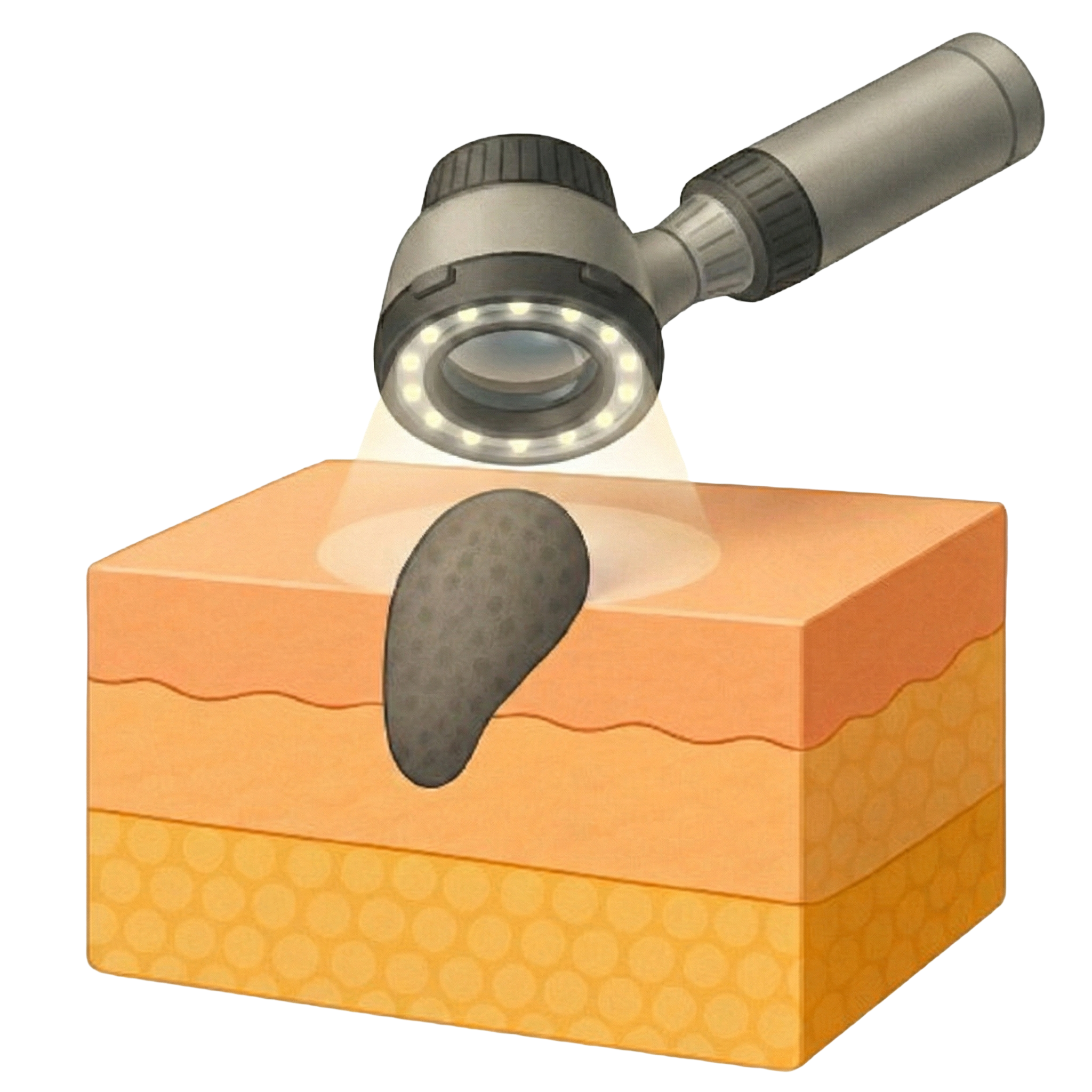
Your clinician will examine the lesion and may use dermoscopy to assess structures beneath the skin surface in greater detail.

Local anaesthetic

The area is cleaned and numbed using a local anaesthetic to help keep you comfortable throughout the procedure.

Skin biopsy procedure

A small tissue sample, or occasionally the entire lesion, is removed for further investigation. Some biopsies require stitches, while others heal with a simple dressing.

Histological analysis

The sample is sent for laboratory analysis to help confirm a diagnosis and determine whether any further treatment or follow-up is required.

Your personalised plan

Diagnosis of suspicious moles and skin lesions

What is it for

Conditions that may require a skin biopsy

A skin biopsy may be recommended when a skin lesion, mole or skin condition cannot be diagnosed with certainty through examination alone.

Suspicious skin lesions

Persistent, changing or unusual skin lesions may require biopsy to help establish a diagnosis.

Suspected skin cancer

A biopsy can help investigate lesions suspected to be skin cancer, including BCC, SCC and melanoma.

Precancerous skin changes

Conditions such as Bowen's disease and actinic keratoses may require biopsy to confirm the diagnosis.

Changing moles and pigmented lesions

A biopsy may be recommended where a mole or pigmented lesion has unusual features or changes over time.

Cysts, lipomas and skin growths

Selected cysts, lipomas and other skin growths may be biopsied or sent for histological analysis following removal.

Persistent skin rashes

Some rashes and inflammatory skin conditions require biopsy when the diagnosis remains unclear.

Who you'll see

What happens after a skin biopsy?

Once your results are available, your clinician will explain the findings and discuss any recommendations.

Recovery after a skin biopsy

Most patients can return to normal activities shortly after a skin biopsy. Healing times vary depending on the biopsy site, and your clinician will provide aftercare advice and any required follow-up.

If further treatment is recommended

Where clinically appropriate, we can discuss the most suitable next steps, including monitoring, lesion removal or treatment of selected skin cancers and precancerous skin conditions based on your biopsy results.

If further treatment is recommended

Where clinically appropriate, we can discuss the most suitable next steps, including monitoring, lesion removal or treatment of selected skin cancers and precancerous skin conditions based on your biopsy results.

Arrange a specialist skin assessment

Start with a free online skin assessment and upload photographs for review by our clinical team. If further investigation is recommended, a skin biopsy can often be arranged at our  clinic without a GP referral.

Aventus clinic staff

Skin Biopsy FAQs

Find answers to common questions about skin biopsies, histology results, recovery and appointments at our Hitchin clinic.

Does a skin biopsy hurt?

Skin biopsies are performed under local anaesthetic, so most patients experience minimal discomfort during the procedure.

Any procedure that removes skin can leave a scar. Most scars fade over time, although the final appearance depends on the biopsy type, location and individual healing response.

Skin biopsy is generally a safe procedure. As with any minor surgery, there is a small risk of bleeding, bruising, infection, delayed healing or scarring.

Skin biopsy is generally a safe procedure. As with any minor surgery, there is a small risk of bleeding, bruising, infection, delayed healing or scarring.

Yes. Histological analysis is commonly used to confirm or exclude melanoma, basal cell carcinoma, squamous cell carcinoma and other skin conditions.