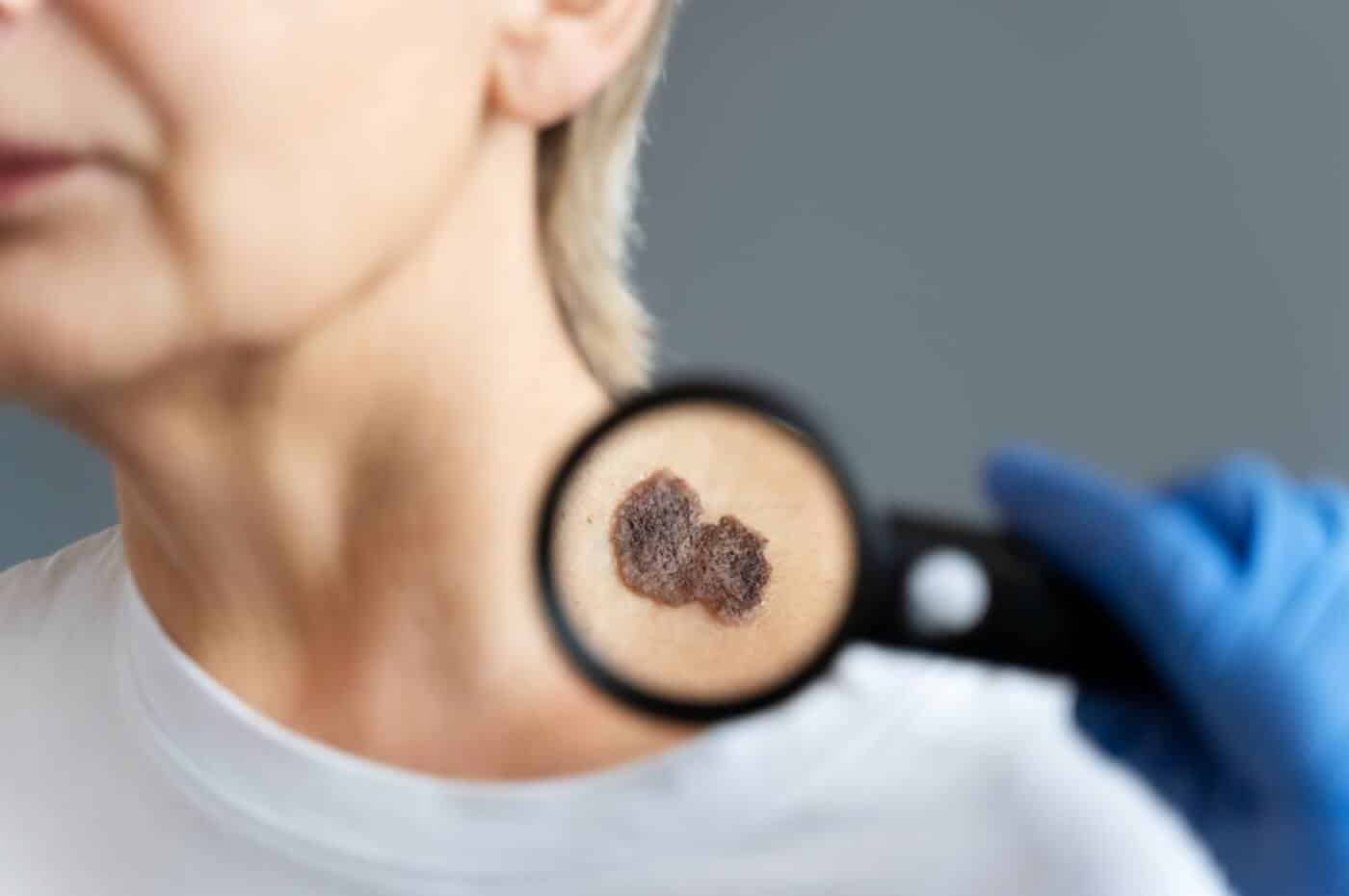







Yes. Skin cancer can develop without obvious sun exposure because UV radiation is not the only risk factor. Inherited genes, a weakened immune system and certain melanoma types also matter.
Skin cancer without sun exposure is possible, even though ultraviolet (UV) radiation from sunlight causes many skin cancers. Some develop on areas usually covered by clothing, while family history, immune suppression and other medical factors can increase risk. Spending little time outdoors or never experiencing sunburn does not completely rule out skin cancer.
Key Takeaways
- UV overexposure causes 86% of UK melanoma cases, but other risk factors also matter.
- Acral melanoma can develop on palms, soles and beneath nails with little direct sunlight exposure.
- Family history, inherited CDKN2A mutations and immune-suppressing treatment can increase skin cancer risk.
- Get new or changing marks, widening nail bands and persistent sores checked, even on covered skin.
Can You Get Skin Cancer Without Sun Exposure?
Yes. Skin cancer can develop in people who spend little time in the sun. UV radiation remains a major risk factor, but inherited susceptibility, immune suppression and certain melanoma types also play a part.
Cancer Research UK estimates that 86% of UK melanoma cases are caused by UV overexposure. The remaining 14% should not automatically be described as cases in people with absolutely no UV exposure.
Limited sun exposure therefore does not rule out skin cancer. Other risk factors and the type of cancer also matter.
Why Can Skin Cancer Develop Without Sun Exposure?
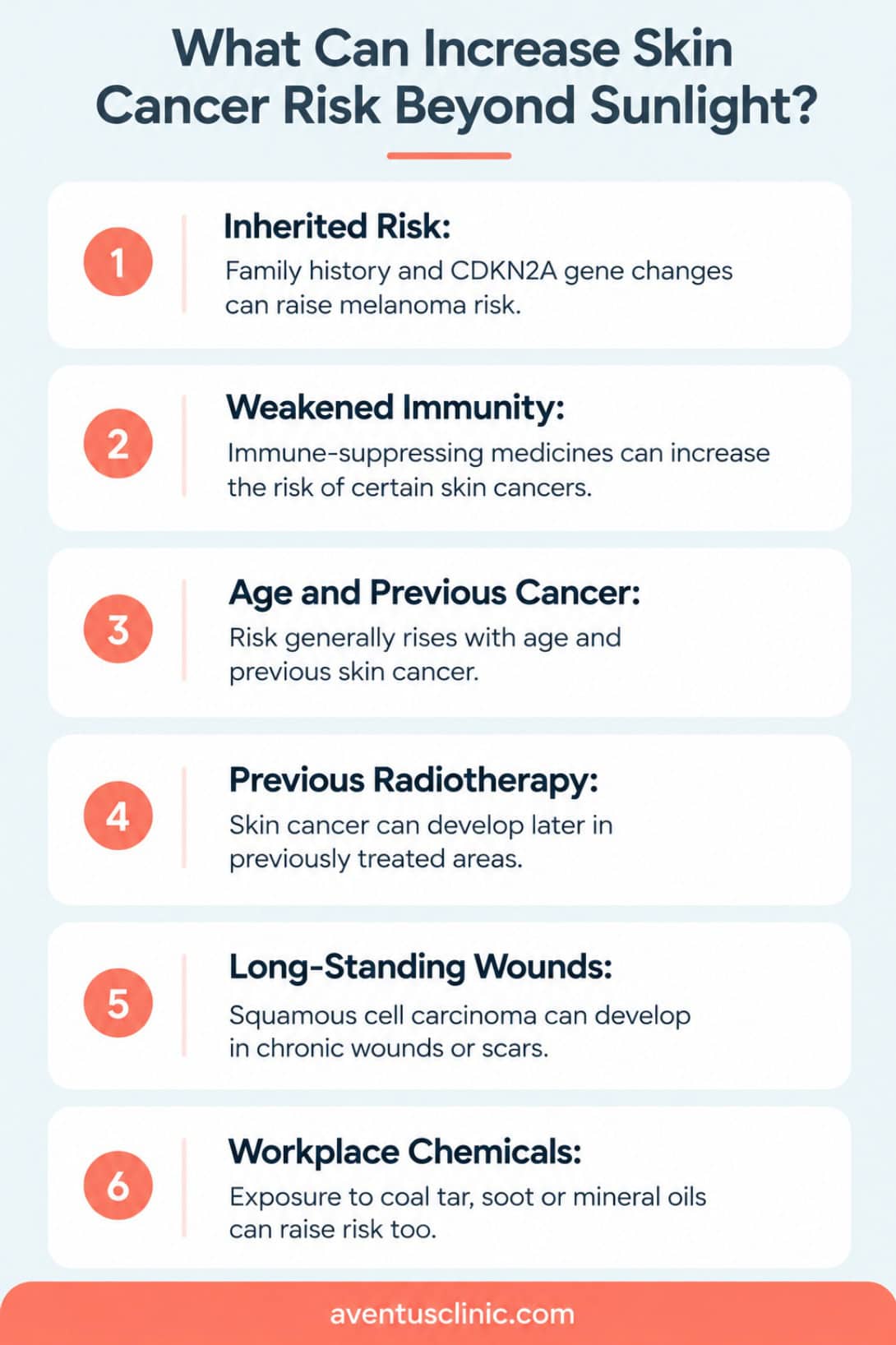
A person’s medical history can reveal risks that are not obvious from their usual sun exposure. These include inherited susceptibility, age, immune suppression and certain past treatments or workplace exposures.
Genetics and Family History
Melanoma can run in families because some people inherit gene changes that increase their risk. One example is a mutation in the CDKN2A gene, which is associated with familial melanoma.
A study of inherited melanoma risk in families from Yorkshire and Australia found that people carrying CDKN2A mutations had similar cumulative melanoma risks in both countries, despite differences in average UV exposure. This means inherited risk can remain important even for people who receive less sunlight. If several family members have had melanoma, discuss this history with a clinician.
Age and Previous Skin Cancer
Skin cancer risk generally increases with age. People who have already had skin cancer also face a greater chance of developing another. A previous diagnosis may reflect earlier skin damage or an underlying susceptibility, so new skin changes still need assessment.
A Weakened Immune System
People taking immune-suppressing medicines after an organ transplant have an increased risk of certain skin cancers. Conditions that weaken immunity can also raise risk.
The level and duration of immune suppression can affect that risk, so sunlight exposure alone does not explain every case.
Previous Radiation Exposure (and Other Factors)
Some skin cancers are linked to medical treatment or damage to the skin. Radiotherapy can increase the risk of cancer developing in the treated area. Squamous cell carcinoma can also develop in long-standing wounds or scars. Certain workplace chemicals, including coal tar, soot and mineral oils, are recognised risk factors.
Sunbeds expose the skin to artificial ultraviolet (UV) radiation, which increases skin cancer risk. The Health and Safety Executive’s guidance on sunbeds and ultraviolet radiation sets out the health risks of this exposure and the safety requirements for salon operators. Avoiding natural sunlight does not remove the risks associated with sunbed use.
Can Melanoma Develop Without Sun Exposure?
Yes. Acral lentiginous melanoma can develop on the palms, soles or beneath fingernails and toenails. The British Association of Dermatologists’ guidance on skin cancer identifies acral melanoma as a type that is not thought to be linked to sun exposure. Its causes are not fully understood.
Look for:
- Unusual pigmentation on the palms or soles.
- A new or widening dark band beneath a fingernail or toenail.
These changes can be easy to overlook because they occur away from commonly checked areas. If you notice an unusual or changing mark, arrange a clinical assessment. Its location or appearance alone cannot confirm whether it is cancer.
Can BCC and SCC Develop Without Sun Exposure?
Yes. Basal cell carcinoma (BCC) and squamous cell carcinoma (SCC) are strongly linked to UV exposure and commonly develop on areas of skin that receive sunlight. However, either type can appear on covered skin, so the location of a mark should not be the only factor considered.
SCC can also develop in chronic wounds or scars. A weakened immune system and previous radiotherapy can increase the risk of certain skin cancers.
Get a persistent or changing patch, lump or sore checked, especially if it:
- Grows
- Bleeds
- Crusts
- Or repeatedly fails to heal.
A clinical assessment can help determine whether further investigation is needed.
What Does Skin Cancer Look Like?
Skin cancer does not always appear as a dark mole. It can look like a new mark, a changing patch or a sore that will not heal. Appearance also varies across skin tones.
Common changes to watch for include:
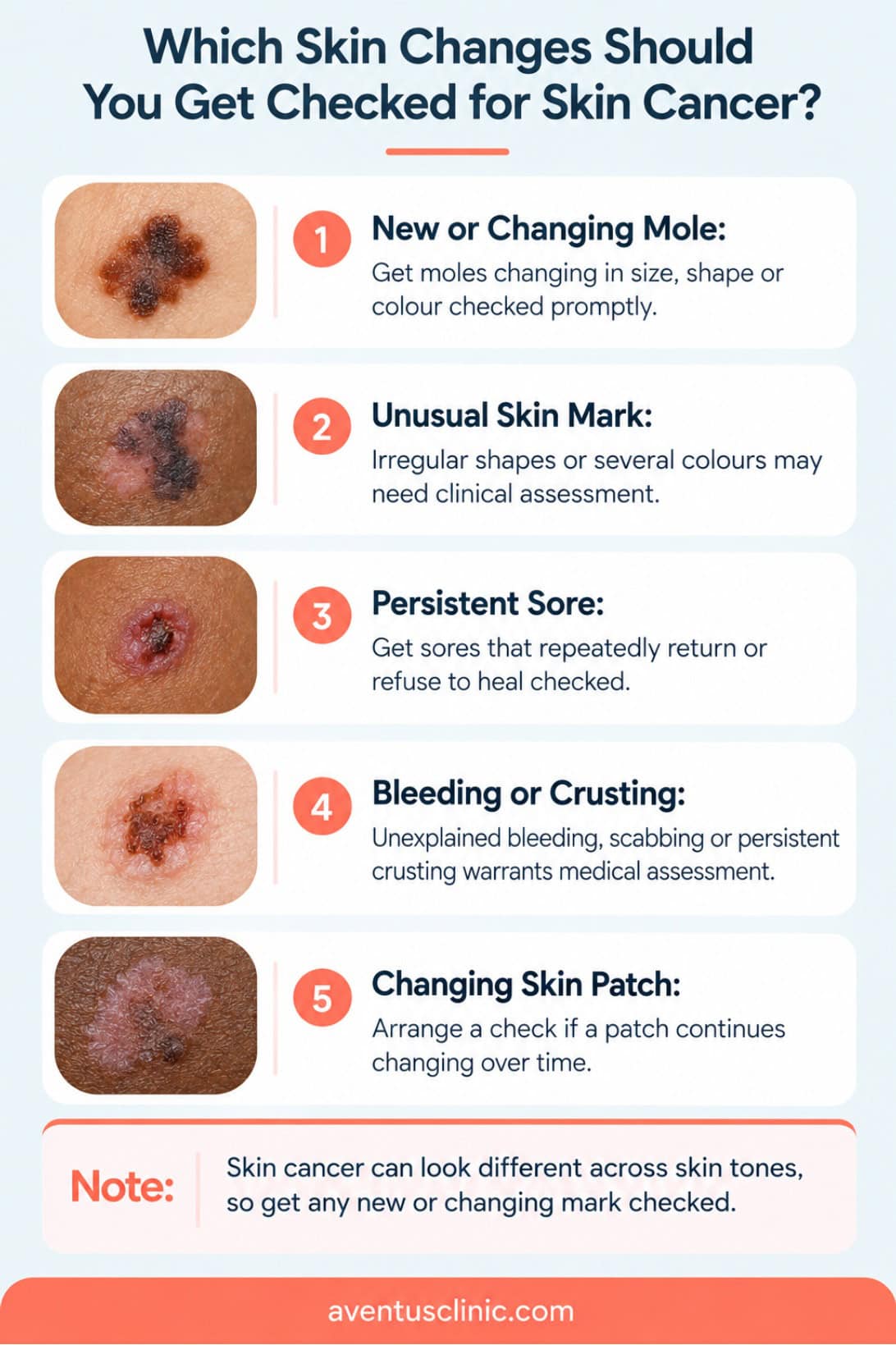
Harmless skin conditions and skin cancer can sometimes look similar, so colour or shape alone cannot confirm the cause. A clinician can assess the mark and determine whether it needs monitoring, treatment or further investigation.
When Should You Get a Skin Change Checked?
Arrange a GP appointment if a mole changes in size, shape or colour, a mark looks different from others, or a sore does not heal. Persistent bleeding, crusting, scabbing or unexplained nail pigmentation also needs assessment.
Do not dismiss a mark because it appears on covered skin, a palm, a sole or beneath a nail. These signs do not automatically mean cancer, but a clinician can assess whether further investigation is needed.
If you’re concerned about a new or changing skin mark, we can help you arrange a skin cancer screening at Aventus Clinic.
How Is a Suspicious Skin Change Checked?
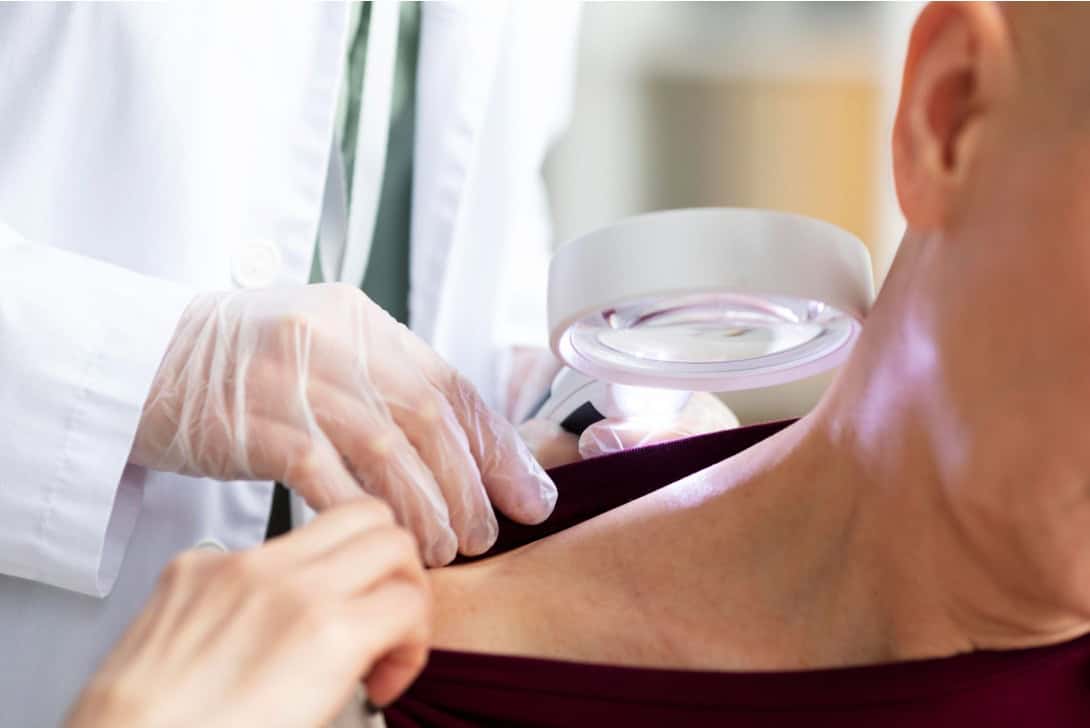
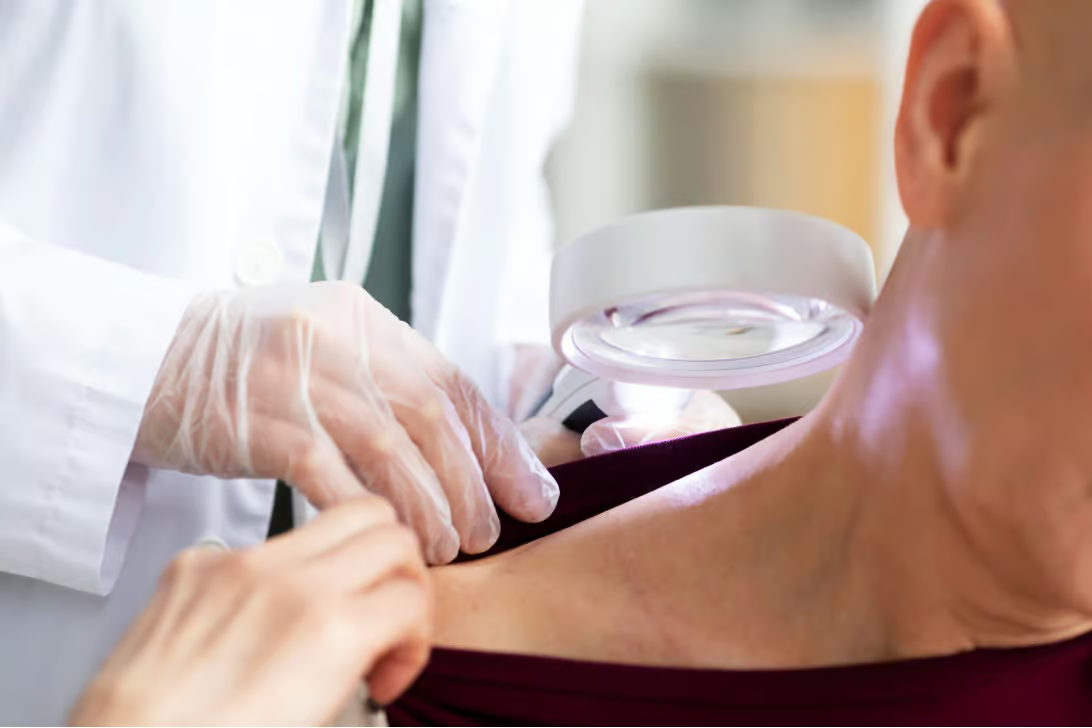
A clinician will ask when the mark appeared, how it has changed and whether you or close relatives have had skin cancer. They will examine the area and may use dermoscopy, which magnifies the skin to reveal details not easily seen with the naked eye.
If further investigation is needed, a referral or biopsy may be recommended. A biopsy involves examining a tissue sample to check for cancer, but not every unusual mark requires one.
Your medical history also matters. NICE guidance on sunlight exposure and skin cancer risk highlights the importance of considering personal or family history of skin cancer and immune suppression when assessing risk.
If you have multiple moles or these risk factors, we can help you arrange a full body skin check at Aventus Clinic.
FAQs
Can You Get Melanoma Without Sun Exposure?
Yes. Acral melanoma can affect the palms, soles and nail beds, where direct UV exposure is limited.
Can You Get Skin Cancer If You Rarely Go Outside?
Yes. Limited outdoor time reduces some UV exposure but does not remove every risk factor.
Can Skin Cancer Develop Under a Fingernail or Toenail?
Yes. A new or widening dark band, or unexplained nail pigmentation, needs medical assessment.
Can Skin Cancer Develop on the Soles of Your Feet?
Yes. Check for new or changing marks, even if they do not resemble typical moles.
Can Skin Cancer Run in Families?
Yes. Family history can increase risk, and certain inherited gene changes raise it further in some families.
Can You Get Skin Cancer Without Ever Being Sunburnt?
Yes. UV can damage skin without a visible burn, and other risk factors can also contribute.
Conclusion
Spending little time in the sun or never experiencing sunburn does not rule out skin cancer. Pay attention to new, changing or persistent marks, including on covered skin, palms, soles and around nails. A clinician can assess the change and decide whether further tests are needed.
Arrange a skin assessment with us today to discuss your concerns and appropriate next steps.
Medical Disclaimer: The information in this article is for general educational purposes only and should not be considered medical advice, diagnosis or treatment. Skin cancer can develop without significant sun exposure due to genetic factors, a weakened immune system, previous medical treatments or certain types of melanoma. If you notice new or changing skin marks, unusual pigmentation beneath nails, persistent sores, bleeding, crusting or changes on areas usually covered by clothing, seek advice from a qualified healthcare professional or dermatologist for a proper assessment and further investigation if needed.

Concerned about thinning hair or changes in density? Get a personalised assessment from our experienced clinical team and explore treatment options tailored to your diagnosis.