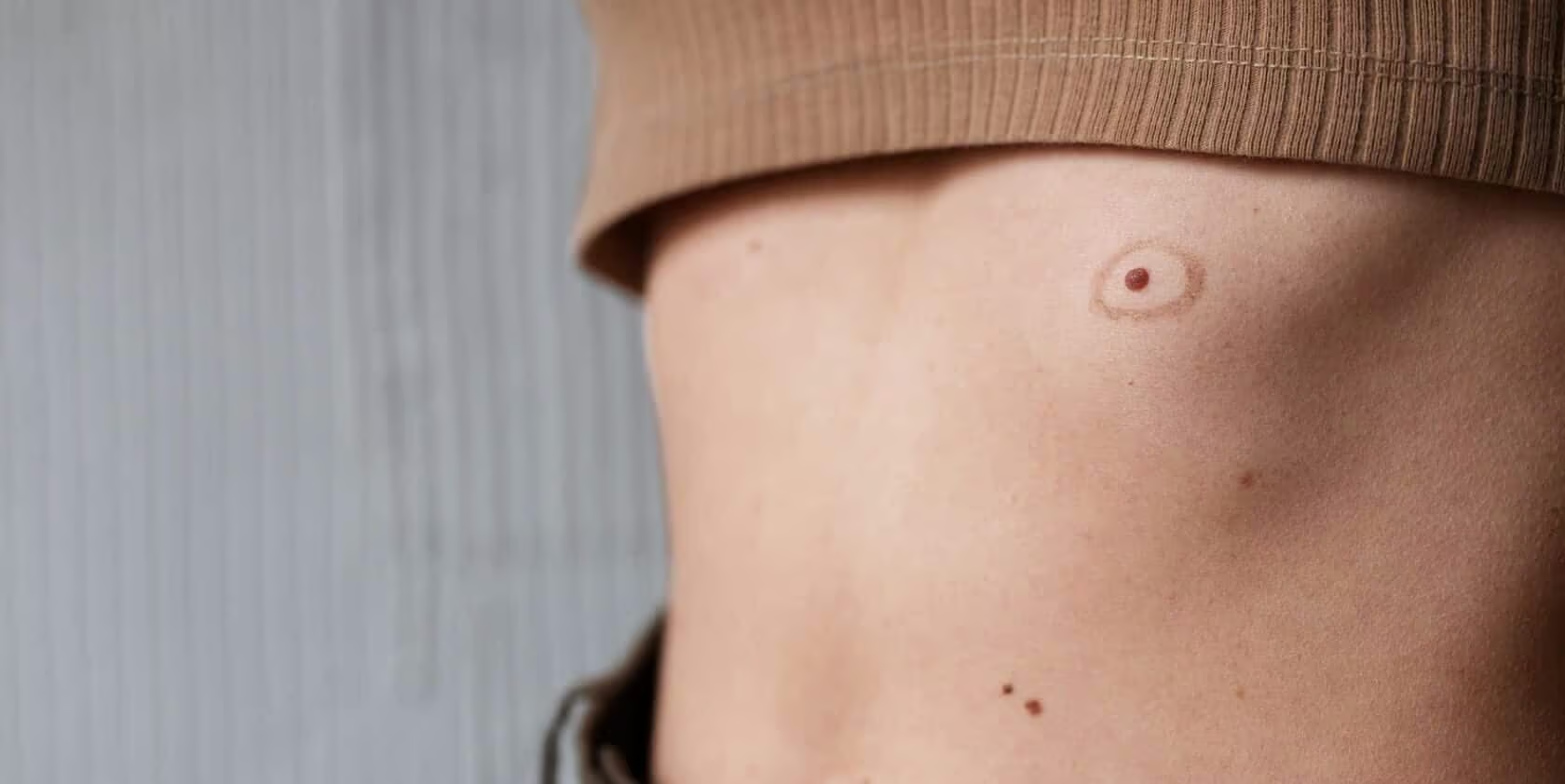







Most new moles are harmless and can develop naturally from genetics, sun exposure, ageing or hormonal changes. New or changing moles should still be professionally checked when they look unusual.
Finding a new mole can be unsettling, but it is often a normal part of skin development. What causes moles to suddenly appear can vary from genetics and sun exposure to age and hormonal changes. New moles are particularly common during childhood and early adulthood. They can also appear later in life. Knowing what is normal helps you spot changes that need professional attention.
Key Takeaways
- New moles can develop naturally due to genetics, sun exposure, ageing and hormonal changes.
- Developing a new mole as an adult does not automatically mean skin cancer, but it should be monitored.
- Changes such as rapid growth, irregular shape, colour changes, bleeding or crusting should be professionally assessed.
- A clinician can examine an unusual mole and use dermoscopy or further testing when needed.
What Is a Mole?
A mole is a small area of skin made up of melanocytes, the cells that produce pigment. Some moles are present at birth, known as congenital moles. Others develop later during childhood or adulthood and are called acquired moles.
According to UK dermatology guidance on mole development, acquired moles are common and generally harmless. The number of moles a person has usually rises through childhood and early adulthood. It tends to increase until around age 30 to 40 before later levelling off or falling.
That does not mean every new mole is a cause for concern. It does mean a new or changing mole later in life deserves closer attention.
What Causes Moles to Suddenly Appear?
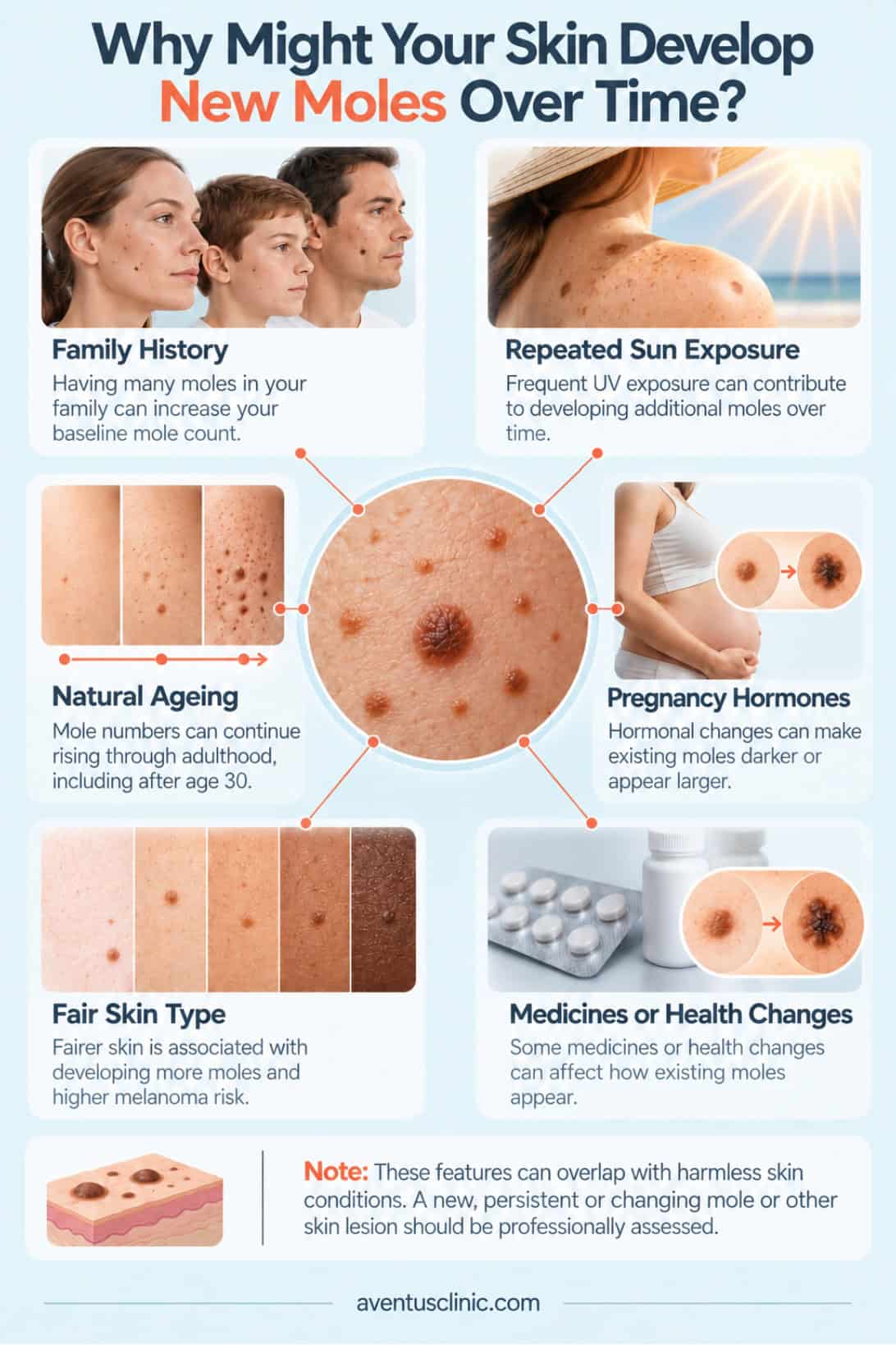
There is rarely one single reason for a new mole. Genetics, UV exposure, age and changes in the skin can all play a part. For some people, several factors may overlap.
Hormonal Changes
Hormonal changes can affect how existing moles look. This can happen during pregnancy, for example.
The NHS guidance on moles notes that moles may become slightly darker during pregnancy. Moles on the chest or abdomen can also appear larger as the skin stretches.
These changes can affect how a mole looks without meaning that pregnancy has caused a new mole to develop.
Sun Exposure and UV Radiation
Sun exposure is one of the stronger environmental factors linked to mole development. Repeated exposure and sunburn can increase the number of moles that develop over time.
A UK twin study on sun exposure and mole density found a clear difference between exposure groups. Average mole density was 41 per square metre among those in the highest exposure group, compared with 24 per square metre among those reporting no exposure.
This does not mean every new mole is caused by the sun. Family history and other factors still matter. It does show why regular sun protection is important.
Age and Natural Skin Changes
Mole numbers can change as you get older. This can happen even after early adulthood.
A King’s College London and British Journal of Dermatology study followed 414 adult twins for an average of 17 years. Mole counts rose in 57% of participants and fell in 40%. The researchers also recorded a 32% rise in total body mole counts across the study period.
The pattern was seen most clearly on the upper body. So, finding a new mole as an adult is possible even after your earlier years.
Genetics and Family History
Genetics appears to be a major influence on how many moles a person develops. A UK twin study estimated that 66% of the variation in mole count was linked to genetic factors.
Family tendency can therefore affect your baseline number of moles. This helps explain why some people naturally develop far more than others.
A family history of many moles does not make every new mole concerning. It does mean you may need to pay closer attention to changes over time.
Skin Type and Pigmentation
Skin type can also influence mole development and melanoma risk. According to the British Association of Dermatologists, fair skin carries a higher risk, particularly alongside factors such as high sun exposure.
Hair and eye colour can also form part of your overall pigmentation profile. These traits do not determine whether an individual mole is harmless or concerning.
Medicines and Other Possible Factors
Some medicines and individual health factors may affect how moles look or change. Evidence is less consistent here than it is for genetics, age and sun exposure.
If you notice a new mole after starting a medicine or during another health change, speak to your GP or pharmacist. They can decide whether the timing is relevant or whether the mole needs a separate skin assessment.
Taken together, these factors show why a new mole does not always have one obvious cause. Skin can change naturally over time, but unusual changes still deserve attention.
Where Can New Moles Appear on the Body?
New moles can appear almost anywhere on the skin. Their location alone does not tell you whether they are harmless or need checking. Some develop on areas that receive plenty of sun, while others can appear on covered or less exposed skin.
| Body Area | What to Know |
|---|---|
| Face and scalp | New moles can develop on visible and less noticeable areas |
| Neck and shoulders | Often exposed to UV radiation |
| Chest and stomach | Moles can develop across the trunk |
| Back | Can be difficult to check without help |
| Arms and hands | Easily visible areas where changes can often be noticed |
| Legs and thighs | Moles can develop anywhere on the legs |
| Feet and soles | Moles can occur even in areas with little sun exposure |
| Fingers and around the nails | Less visible areas that can sometimes be overlooked |
The back is particularly easy to miss during self checks. Asking someone to look or booking a mole checking service can help if an area is difficult to monitor properly.
Why Are New Moles Appearing in Adulthood?
New moles can appear during adulthood because mole development continues to change over time. Previous sun exposure, genetics and natural ageing can all contribute. Hormonal changes can also affect how some existing moles look.
The important point is that a new mole does not automatically mean skin cancer. However, a new mole after around age 30 deserves closer attention than one that appeared during childhood. Watch for rapid growth, an uneven shape, irregular edges or unusual colouring.
Bleeding, crusting, persistent itching or soreness should also be checked. Rather than trying to identify the cause yourself, arrange a professional assessment when a new mole looks unusual or starts changing.
When Should You Worry About a New Mole?
A new mole does not automatically mean something is wrong. What matters more is whether it looks unusual or starts changing from how it looked before.
The ABCDE approach can help you spot the main visual changes. It looks at asymmetry, borders, colour, diameter and evolution. There are also symptoms that deserve attention. Look out for:
It Is Changing in Size, Shape or Colour
A mole that starts changing in size, shape or colour is worth getting checked. Pay attention to any noticeable difference from how it looked before.
The change may happen gradually or over a shorter period. Either way, a new or noticeable difference is a good reason to arrange a professional assessment.
It Looks Noticeably Different From Your Other Moles
Sometimes the easiest change to spot is that one mole simply looks different from the rest. This is often described as the “ugly duckling” sign.
The difference could be in its colour, shape, size or overall appearance. Comparing it with your other moles can therefore help you notice something that deserves a closer look.
It Has an Unusual or Irregular Appearance
Some moles stand out because their shape or edges look uneven. An irregular border or noticeably uneven shape can be a reason to arrange an assessment.
This is where the ABCDE approach can be useful. Looking at the mole’s symmetry and border gives you another way to notice changes that may otherwise be easy to overlook.
It Bleeds, Crusts or Does Not Heal
Bleeding, crusting or a mark that does not heal should also be checked. You do not need to wait for other warning signs before seeking advice.
Persistent changes are particularly worth mentioning. A mole that repeatedly bleeds or crusts should be assessed rather than dismissed as minor irritation.
It Becomes Persistently Itchy, Sore or Painful
A mole can also deserve attention if it becomes persistently itchy, sore or painful. These symptoms do not mean the mole is cancerous, but they are still worth discussing with a professional.
Tell the clinician when the symptoms started. It is also useful to mention whether the mole has changed in appearance at the same time.
It Changes Noticeably Over a Short Period
The speed of a change can matter too. A mole that looks noticeably different over a few weeks deserves attention, particularly if the change involves size, shape, colour or symptoms.
You do not need to work out what the change means yourself. A professional can examine the mole and decide whether it simply needs monitoring or closer assessment.
How Is a New Mole Checked?
A new mole is usually assessed through a clinical skin examination first. The clinician looks at its size, shape, colour, border and location, then considers whether it has changed.
Dermoscopy provides a closer view of structures that cannot be seen clearly by eye. UK clinical guidance on melanoma assessment supports specialist assessment of suspicious pigmented lesions, including dermoscopy.
The clinician may also compare the mole against other marks on your skin. This helps identify anything that looks unusual for you.
If there is genuine uncertainty about a mole, the clinician may recommend a biopsy or removal so the tissue can be examined in a laboratory. When removal is appropriate after assessment, our mole removal service provides a treatment option based on the clinician’s findings.
What Should You Do If You Notice a New Mole?
Start by noting when you first noticed it. You do not need to inspect it constantly, but keeping track of genuine changes can be useful.
Check areas that are difficult to see yourself, particularly your back and scalp. Ask someone you trust to help if needed.
Avoid trying to diagnose a mole from online photographs. Different skin marks can look similar, and harmless moles can also vary in appearance.
Arrange a professional assessment if the mole is new, unusual or changing. A clinician can decide whether it simply needs monitoring or requires closer examination.
FAQs
Why am I suddenly getting lots of moles?
Mole numbers can change because of genetics, sun exposure and normal skin ageing. A sudden increase still deserves attention if the moles look unusual.
Is it normal to develop new moles as an adult?
Yes, it can happen. New adult moles are not automatically cancerous, but changes after around age 30 deserve closer monitoring.
Can hormones cause new moles?
Hormonal changes can alter how existing moles look. Pregnancy can make some moles appear darker or larger.
Can sun exposure cause new moles?
Yes, greater cumulative sun exposure is linked to higher mole numbers. Repeated sunburn also increases melanoma risk.
Can new moles appear anywhere on the body?
Yes. Moles can develop on areas such as the face, back, legs, feet, scalp and other less exposed sites.
Are new moles after age 40 normal?
They can occur, although new or changing moles later in adulthood deserve professional attention.
Should every new mole be checked?
No. Many new moles are harmless. A new, unusual or changing mole should be assessed rather than self diagnosed.
When should I see a dermatologist about a new mole?
Arrange an assessment if it changes size, shape or colour, bleeds, crusts, becomes persistently itchy or painful, or looks very different from your other moles.
Conclusion
A new mole does not automatically mean something is wrong. Most are harmless, but a mole that looks unusual or starts changing is worth getting checked rather than trying to judge it yourself. A professional assessment can help establish whether it simply needs monitoring or further investigation.
Not sure about a new or changing mole? Use our free online assessment to upload a photo for an initial clinical review.
Medical Disclaimer: The information in this article is for general educational purposes only and should not be considered medical advice, diagnosis or treatment. New moles can develop due to genetics, ageing, sun exposure, hormonal changes and individual skin characteristics. If a mole changes in size, shape or colour, bleeds, crusts, becomes persistently itchy or looks unusual, seek advice from a qualified healthcare professional or dermatologist for a proper assessment and further investigation if needed.

Concerned about thinning hair or changes in density? Get a personalised assessment from our experienced clinical team and explore treatment options tailored to your diagnosis.