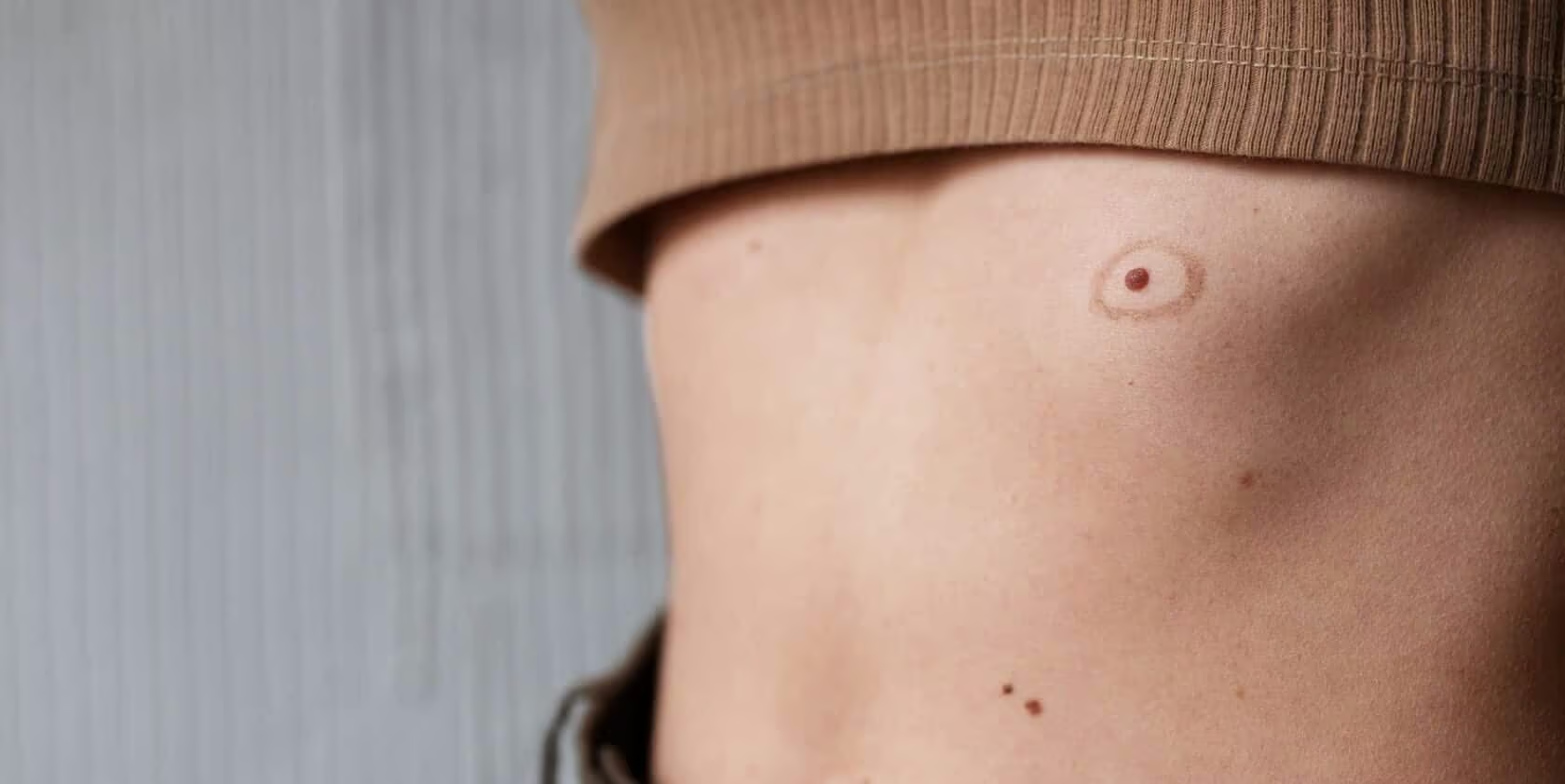







An itchy mole does not automatically mean skin cancer. Brief irritation can occur, but persistent itching needs attention. Especially when accompanied by changes in size, shape, colour, bleeding or crusting.
An itchy mole can have a simple explanation, such as irritation affecting the mole or surrounding skin. However, itching is also one of the signs the NHS says should be checked, particularly when it persists or appears alongside a visible change. The key question is whether the mole is also changing in size, shape or colour, becoming inflamed, bleeding or crusty.
Key Takeaways
- An itchy mole can have a harmless cause, particularly when the irritation is brief and settles.
- Persistent or recurring itching deserves professional attention rather than being dismissed.
- Changes in a mole’s size, shape or colour are more important warning signs than itch alone.
- Bleeding, crusting, inflammation or other new changes should be assessed by a qualified professional.
- Itching alone cannot diagnose melanoma, so avoid relying on photographs or symptoms to make that decision yourself.
Why Is My Mole Itchy?
An itchy mole can become irritated when the mole or surrounding skin is rubbed, scratched or disturbed. A raised mole, for example, may catch on clothing, jewellery, towels or shaving equipment.
A brief episode that settles after obvious irritation is different from itching that continues or repeatedly returns. A harmless mole can become itchy, so itching alone cannot tell you what is causing the problem.
The important point is what happens next. If the itching persists, keeps returning or occurs alongside a noticeable change in the mole, professional assessment is appropriate rather than trying to identify the cause yourself.
Why Shouldn’t You Ignore a Mole That Keeps Itching?
Persistent or recurring itching should be checked because an itchy mole can sometimes be a sign that something has changed. According to NHS advice on the symptoms of melanoma skin cancer, you should see a GP about a mole that is painful or itchy, particularly if it is also inflamed, bleeding or crusty.
Itching does not mean that a mole is cancerous. The reason for getting it checked is to look for other changes that may be more significant.
A systematic review of melanoma warning signs found that changes in size were the most common feature across the studies reviewed. This means an itchy mole becomes more concerning when its appearance is also changing over time.
Is an Itchy Mole a Sign of Skin Cancer?
An itchy mole can be a sign of skin cancer, but itching alone does not mean the mole is cancerous. What matters is whether the itching occurs alongside other changes in the mole.
NICE uses a weighted 7-point checklist when assessing suspicious pigmented lesions. Changes in size, irregular shape and irregular colour each score two points. Inflammation, oozing, a diameter of 7 mm or more and a change in sensation each score one point.
Itching comes under changed sensation, so it is only one part of the assessment. According to NICE guidance for suspected melanoma, a suspicious pigmented lesion scoring three or more should be referred through the suspected cancer pathway.
You can also read our guide to skin cancer warning signs for the wider changes worth watching for.
When Should an Itchy Mole Be Checked?
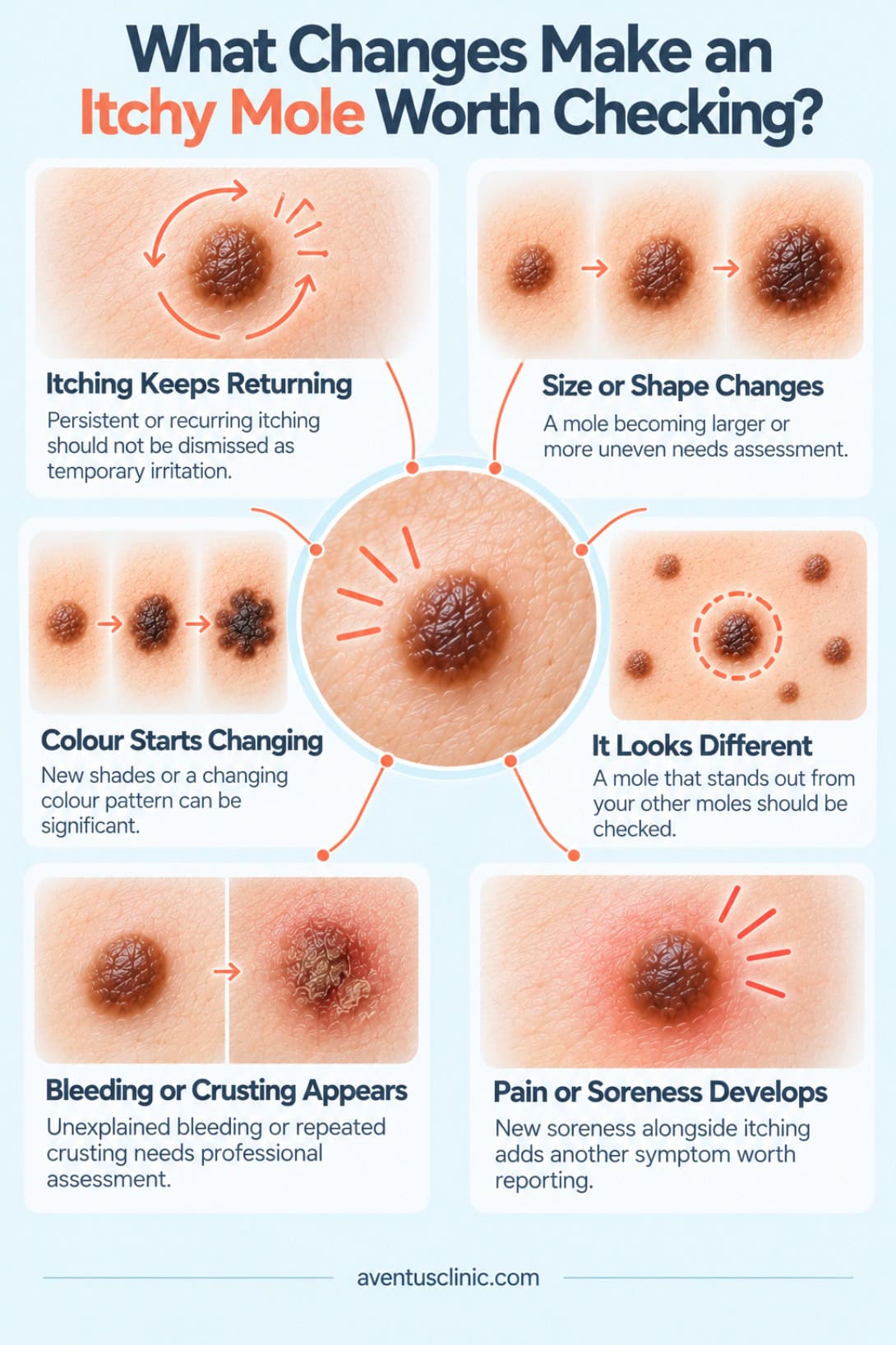
An itchy mole should be assessed when the itching persists, keeps returning or appears alongside another noticeable change.
Pay particular attention when:
It Is Changing in Size or Shape
A mole becoming larger or developing a more irregular shape is more concerning than temporary itching alone. The change over time matters more than one measurement.
Its Colour Is Changing
Changes in colour can warrant assessment, particularly when a mole develops several different shades. A naturally dark mole is not automatically suspicious.
It Looks Different From Your Other Moles
A mole that stands out from your usual pattern is worth paying attention to. Compare it with your other moles rather than judging it in isolation.
It Is Bleeding or Crusting
Bleeding, crusting or oozing should be assessed, particularly when there is no clear explanation or the change continues. Scratching can cause surface irritation, but it should not automatically be assumed to explain persistent bleeding.
It Becomes Sore or Painful
Pain or soreness alongside itching adds another symptom worth reporting. Neither symptom alone can establish what is causing the change.
The Itching Persists or Keeps Returning
Brief irritation can settle after the trigger is removed. Itching that continues without an obvious cause or repeatedly returns should be discussed with a GP or qualified skin specialist.
Why Is My Raised Mole Itchy?
A raised mole can become irritated more easily because it is more likely to catch on clothing, jewellery, towels or shaving equipment. Repeated contact can make the area itchy or sore.
Being raised does not automatically make a mole abnormal. The more important question is whether it has started changing or developing other symptoms.
Look out for changes in size, shape or colour, along with bleeding, crusting or repeated irritation without an obvious trigger. If a raised mole keeps catching on clothing or becomes persistently irritated, assessment should come before considering removal.
Where removal is appropriate after assessment, our mole removal service provides a consultant-led treatment option, with removed tissue available for histological analysis.
How Is an Itchy Mole Checked?
A professional assessment usually starts with the mole’s appearance, history and any changes you have noticed. The practical steps they may take to assess the mole are:
The back is particularly easy to miss during self checks. Asking someone to look or booking a mole checking service can help if an area is difficult to monitor properly.
Skin Examination
The clinician will inspect the mole and surrounding skin, ask when the itching started and whether the mole has changed. They may also compare it with your other moles or previous photographs.
Dermoscopy
Dermoscopy uses magnification and specialised lighting to examine pigment and structural features that are harder to see with the naked eye. It provides a closer assessment but does not by itself confirm cancer.
When a Biopsy May Be Needed
A biopsy may be recommended when the appearance or clinical assessment raises enough concern to require tissue analysis. The tissue can then be examined under a microscope to help establish the diagnosis. Not every itchy mole needs a biopsy or removal.
What Should I Do About an Itchy Mole?
Start by avoiding repeated scratching or picking at the mole. Make a note of when the itching started and whether it keeps returning.
Keep track of any visible changes, including:
- Size
- Shape
- Colour
- Bleeding
- Crusting
- Inflammation
Photographs can help document changes over time, but they should not be used to decide whether a mole is cancerous.
Arrange professional assessment if the itching persists, repeatedly returns or appears alongside a visible change.
FAQs
Can dry skin make a mole itch?
Dry or irritated surrounding skin may contribute to itching, but persistent symptoms should still be assessed.
Can clothing make a mole itch?
Yes. Repeated rubbing from clothing can irritate a raised mole or the surrounding skin.
Can scratching damage a mole?
Repeated scratching can irritate the surface and cause trauma. Persistent bleeding should still be assessed.
Can a mole be harmless for years and then start itching?
Yes. A mole can become irritated later, but ongoing or recurring itching should not be dismissed.
Can an itchy mole be removed if it keeps bothering me?
Removal may be considered after assessment, particularly where a mole is repeatedly irritated or catches on clothing.
What happens if an itchy mole is left unchecked?
The cause remains uncertain. Persistent symptoms or visible changes can be assessed before deciding whether further investigation is needed.
Conclusion
An itchy mole can have an ordinary explanation, but persistent or recurring itching deserves attention. Changes in size, shape or colour, bleeding, crusting or inflammation should also be checked. An assessment helps establish what is causing the change. Book a mole check today, and we’ll assess your mole and explain the next step for you.
Medical Disclaimer: The information in this article is for general educational purposes only and should not be considered medical advice, diagnosis or treatment. Itchy moles can develop due to skin irritation, friction, dryness or other underlying skin conditions. If a mole becomes persistently itchy, changes in size, shape or colour, bleeds, crusts, becomes inflamed or looks unusual, seek advice from a qualified healthcare professional or dermatologist for a proper assessment and further investigation if needed.

Concerned about thinning hair or changes in density? Get a personalised assessment from our experienced clinical team and explore treatment options tailored to your diagnosis.