






Torn or stretched earlobes need attention when you notice bleeding, infection, pain, or significant deformity. Remove heavy earrings immediately and seek medical help for severe damage requiring professional repair.
- Dr Roshan Vijayan
- Reading Time: 10 Mins
Earlobe damage might seem cosmetic, but certain signs can indicate serious medical concerns requiring prompt attention. Many people dismiss earlobe changes until they become problematic, missing early intervention opportunities. Recognising when your earlobes need urgent care versus professional assessment can make all the difference in outcomes and treatment options.
Key Takeaways
- Signs requiring urgent attention to the earlobe include bleeding, infection, pain, or complete tears; seek immediate medical care for these symptoms.
- Heavy earrings, trauma, and ageing are primary causes of earlobe damage that can progress from stretching to tearing without intervention.
- Early professional assessment of non-urgent earlobe changes can prevent complications and simplify repair procedures when addressed promptly.
Table of Contents
What Do Stretched or Torn Earlobes Look Like?
Damaged earlobes typically present in several ways, depending on the severity and cause.
A complete tear runs through the entire earlobe, creating a split from the piercing hole to the bottom edge. Partial tears may present as a notch or cleft that doesn’t extend fully through the lobe.
Stretched earlobes often appear elongated, with the piercing hole significantly larger than the original size. The tissue around the hole may look thin and fragile.
In older damage, the edges might appear healed but uneven, with scar tissue visible around the tear. Fresh injuries typically show raw edges and may be accompanied by bleeding.
Some earlobes develop a “telephone cord” appearance, where the skin stretches when an earring is in place but retracts when the earring is removed.
| Type of Damage | Appearance | Common Causes |
|---|---|---|
| Complete tear | Split from piercing to bottom edge | Earring catching, trauma, heavy earrings |
| Partial tear | Notch or cleft in lobe | Similar to above but with less force |
| Stretched hole | Enlarged piercing hole, thin surrounding tissue | Heavy earrings, gauges, ageing |
| Elongated lobe | Downward sagging of entire lobe | Long-term wearing of heavy earrings, ageing |
Common Causes of Earlobe Damage
Several factors can lead to earlobe damage over time:
Heavy earrings represent one of the most common culprits behind earlobe damage. The persistent downward pull gradually stretches the piercing hole and thins the surrounding tissue. According to research, continuous mechanical stress from heavy jewellery can lead to permanent deformation over time.
Gauge stretching or plugs intentionally expand the earlobe piercing. While controlled stretching follows specific protocols, rapid or excessive expansion can damage tissue integrity, leading to tears or thinning that won’t naturally reverse.
Traumatic injuries account for many sudden earlobe tears. Earrings catching on clothing, hair brushes, or during physical activities can rip through tissue instantly.
Age-related changes contribute significantly as collagen and elastin naturally decrease. Older earlobes have less structural support, making previous piercings more susceptible to stretching even without heavy jewellery.
Genetic factors also play a role in how earlobes respond to stress. Some individuals naturally have thinner or more delicate tissue, making them more vulnerable to damage. Additionally, Zorlu et al.’s research confirmed that ear piercing serves as a major risk factor for keloid formation, particularly in those with genetic predispositions.
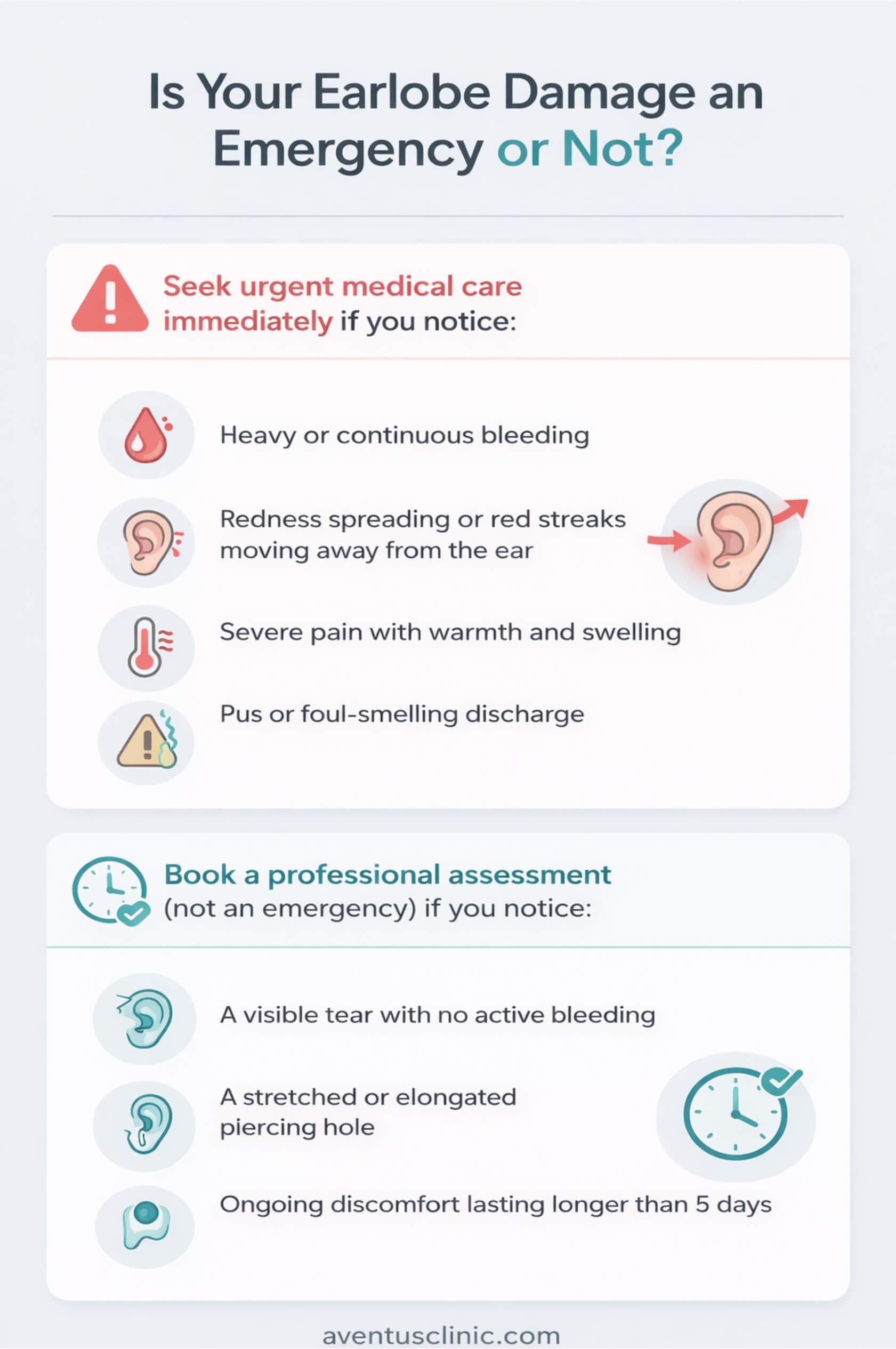
Signs Your Earlobes Need Urgent Medical Attention
| Type of Damage | Appearance | Common Causes |
|---|---|---|
| Complete tear | Split from piercing to bottom edge | Earring catching, trauma, heavy earrings |
| Partial tear | Notch or cleft in lobe | Similar to above but with less force |
| Stretched hole | Enlarged piercing hole, thin surrounding tissue | Heavy earrings, gauges, ageing |
| Elongated lobe | Downward sagging of entire lobe | Long-term wearing of heavy earrings, ageing |
These symptoms warrant emergency care. Delays could lead to permanent damage or spreading infection.
Non-Urgent Earlobe Damage That Still Needs Professional Assessment
Other conditions warrant professional evaluation but aren’t emergencies:
A visible split or healed tear affects appearance but isn’t medically urgent if there’s no active bleeding or infection.
Elongation or sagging often develops gradually and can be addressed electively.
“Floppy” or thinning lobes with no acute symptoms should be assessed professionally before they progress to tears.
Earrings that hang awkwardly due to stretched piercings indicate weakened tissue that may benefit from repair.
Research by Hemdani et al. (2020) found that addressing elongation early can prevent more complex tears that require extensive surgical repair later.
What to Do If You Notice Earlobe Damage
For urgent cases:
- Apply gentle pressure to control bleeding
- Clean with mild soap and water
- Seek emergency care immediately
- Avoid home repair attempts
For non-urgent damage:
- Remove earrings to prevent further problems
- Keep the area clean
- Book a professional consultation
- Document the damage with photos
For potential infections:
- Clean with saline solution
- Apply the recommended antibiotic ointment
- Seek medical advice if worsening
- Complete any prescribed treatments fully
Earlobe Repair Options Explained
Modern earlobe repair techniques offer excellent results for most patients.
| Repair Technique | Best For | Recovery Time | Notes |
|---|---|---|---|
| Simple closure | Clean, straight tears | 1–2 weeks | Quick procedure, minimal scarring |
| Z-plasty | Jagged tears, keloid prevention | 2–3 weeks | Creates zigzag scar to reduce tension |
| Flap techniques | Tissue loss cases | 3–4 weeks | Preserves earlobe shape and size |
| Tissue grafting | Severe damage with missing tissue | 4–6 weeks | May require multiple procedures |
| Non-surgical options | Minor stretching | Variable | Limited effectiveness for significant damage |
Watson reviewed torn earlobe repair techniques and found that multiple surgical methods exist with generally good outcomes. The research noted repiercing should typically wait several months after repair for the best results.
Non-surgical interventions work best for minor stretching cases and include dermal fillers to add volume to thinned lobes or special earring backs that distribute weight more evenly.
Earlobe Repair Aftercare and Healing Time
Proper aftercare significantly impacts healing success.
Most repairs require 7-10 days for initial healing, with suture removal typically occurring during this period. Complete healing takes 4-6 weeks for basic function.
Avoid sleeping on the affected ear for at least two weeks. Keep the area dry during showers for the first 48 hours.
Clean as directed with recommended solutions, usually gentle soap or saline. Apply the prescribed ointment to prevent scabbing and support healing.
Wait at least 6-8 weeks before considering re-piercing, and have this done professionally, ideally by the surgeon who performed your repair.
Scar maturation continues for 6-12 months. Silicone sheets or gels may help minimise scarring once the wound is fully closed.

How to Prevent Stretched or Torn Earlobes
Protect your earlobes with these preventive measures:
- Choose lightweight earrings that don’t pull excessively
- Remove earrings during physical activities and sleep
- Use support patches for heavy styles
- Limit gauge stretching to maintain adequate tissue thickness
- Address infections promptly with proper cleaning
- Be mindful around young children who may grab earrings
Consider a professional assessment if you notice early signs of stretching. Early intervention with temporary support or modified wearing habits prevents progression to tears requiring surgical repair.
When to Book a Professional Earlobe Assessment
If you’re concerned about your earlobes or experiencing any symptoms mentioned above, we recommend booking a free online assessment with our specialists. We’ll evaluate your condition and recommend appropriate treatment options without lengthy waiting times.
Our dermatologist in Hertfordshire specialises in all dermatology procedures. With years of experience, we provide expert care tailored to your specific needs.
Don’t wait until a minor issue becomes a major problem. Book your free assessment today and take the first step toward healthier earlobes.
FAQs
How do I know if my earlobe tear is serious?
Seek immediate medical attention if you experience significant bleeding, severe pain, spreading redness, swelling, warmth, pus, or fever. These symptoms suggest potential infection or damage requiring urgent care.
Can stretched earlobes heal on their own?
Mild stretching may improve slightly over time, but significantly stretched or torn earlobes won’t fully heal without intervention. Once the tissue has been stretched beyond a certain point, professional repair is necessary.
When is earlobe repair considered urgent?
Earlobe repair is urgent when there’s active bleeding, signs of infection (redness, warmth, pus, fever), or a fresh complete tear. Fresh tears repaired within 12-24 hours often achieve better cosmetic results.
Is earlobe repair surgery painful?
Most patients report minimal discomfort during the procedure because of effective local anaesthesia. Post-operative pain is typically mild and manageable with over-the-counter pain relievers for a few days.
How long does earlobe repair take to heal?
Initial healing occurs within 1-2 weeks, with sutures typically removed after 7-10 days. Complete healing takes 4-6 weeks, but full scar maturation continues for 6-12 months.

 CALL US
 WHATSAPP