Overview
What is acne scarring?
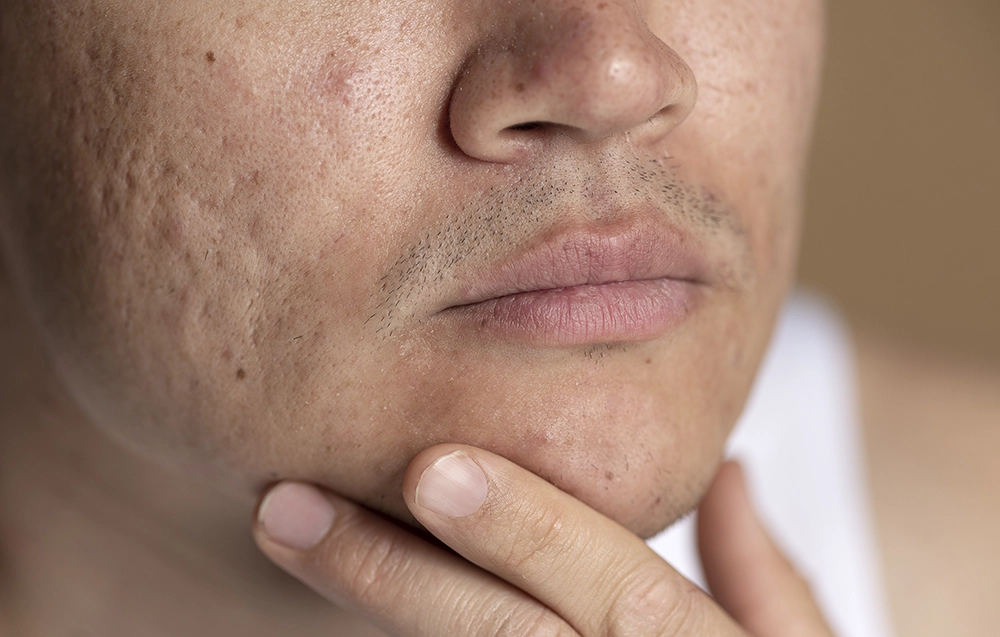
Acne scarring develops when inflamed acne lesions, such as cysts or nodules, damage the normal structure of the skin. As the skin heals, the body produces collagen to repair the injury. If too much or too little collagen is produced, the healed area may form a raised or sunken scar rather than smooth skin.
Acne scars differ from temporary marks left after spots heal. True scars represent permanent structural changes to the skin, although their appearance can often be improved with treatment.
Are acne scars permanent?
Yes. Acne scars are permanent changes to the skin. However, many dermatological treatments can improve skin texture, tone and overall appearance. While scars cannot be completely removed, most people see meaningful improvement with appropriate treatment.
What is the difference between acne scars and pigmentation?
Acne scars involve permanent changes to skin texture, such as pits or raised areas. Post-inflammatory pigmentation appears as flat red, brown or dark patches that remain after acne lesions heal. Pigmentation often fades gradually over time, whereas true acne scars do not resolve without targeted treatment.
Types of acne scars
Acne scarring develops when deep inflammation from acne breaks down the skin’s structure. During healing, the body produces either too much or too little collagen, resulting in raised, pitted, or discoloured marks.
There are several main types of acne scars:
- Atrophic scars: Depressed marks such as ice-pick, boxcar, or rolling scars caused by collagen loss.
- Hypertrophic scars: Raised scars formed by excess collagen during healing.
- Keloid scars: Thick, firm, overgrown tissue extending beyond the original spot.
- Post-inflammatory pigmentation: Dark or red patches that remain after a breakout has healed.
Where do acne scars commonly appear?
Acne scars can develop anywhere acne has occurred, but they are most common on the cheeks, forehead, chin, chest and back. Scars may appear more noticeable in certain lighting or when the skin is stretched.
Symptoms and Causes
How do acne scars form?
Acne scars form when inflammation from acne penetrates deep into the skin and damages tissue. During healing, uneven collagen repair leads to depressions, raised areas or thickened scar tissue. The deeper and longer the inflammation lasts, the greater the risk of scarring.
What are the signs of acne scarring?
Common features include:
- Uneven or rough skin texture
- Visible pits or depressions
- Raised or thickened areas of skin
- Long-lasting redness or dark patches after acne clears
Why do some people scar from acne and others do not?
Scarring risk varies between individuals due to:
- Genetics and skin type
- Severity and duration of acne
- Depth of inflammation
- How the skin heals
- Behaviour such as picking or squeezing spots
Which types of acne are most likely to cause scarring?
Inflammatory acne, especially cysts and nodules, carries the highest risk of scarring. Long-standing untreated acne also increases the likelihood of permanent skin damage.
Does skin tone affect acne scarring?
Skin tone does not change the likelihood of scarring itself, but darker skin tones are more prone to post-inflammatory pigmentation, which can make scars more noticeable if not protected from sun exposure.
Diagnosis and Tests
How is acne scarring diagnosed?
Acne scarring is diagnosed through a clinical examination by a dermatologist or skin specialist. Assessment focuses on:
- Scar type and depth
- Number and distribution of scars
- Skin tone and texture
- Presence of active acne
Do acne scars need professional assessment?
Mild scarring may not require specialist care. However, professional assessment is recommended for moderate or severe scarring, or if treatment is being considered, to ensure the most effective approach is chosen.
Do active breakouts need to be treated first?
Yes. Active acne should be controlled before starting scar treatments. Treating scars while acne is still active can lead to new scars forming and reduce treatment effectiveness.
Management and Treatment
How is acne scarring treated?
Acne scars cannot be removed completely, but advanced acne scarring treatments can improve skin texture, smoothness and appearance. Treatment choice depends on scar type, severity, skin tone and individual goals. Improvement usually occurs gradually over several months. Different types of acne scars respond to different treatments, which is why assessment is important before starting treatment.
Treatment options
Common treatments include:
- Chemical peels: Improve mild scarring and pigmentation by resurfacing the skin.
- Laser resurfacing: Stimulates collagen and improves deeper scars.
- Microneedling or radiofrequency: Encourages collagen production and gradual skin remodelling.
- Dermal fillers: Temporarily lift depressed scars.
- Subcision: Releases fibrous bands beneath indented scars.
- Topical prescription treatments: Improve skin tone and cell turnover.
- Combination therapy: Multiple treatments used together for better results.
What is the most effective treatment for acne scarring?
There is no single best treatment. The most effective approach depends on scar type and skin characteristics. Many people benefit from a personalised combination of treatments.
How many treatments are usually needed?
Most treatments require multiple sessions. Improvement is gradual and continues over time as collagen rebuilds. Your clinician will advise on a treatment plan based on your skin.
Is acne scar treatment painful or does it require downtime?
Discomfort and downtime vary depending on the treatment. Many procedures involve mild to moderate discomfort and short recovery periods. More intensive treatments may require longer healing time.
Outlook/Prognosis
Long-term outlook for acne scarring
Acne scars do not usually resolve on their own. Treatment can improve skin texture and appearance, although results vary between individuals. Appropriate skincare and sun protection may help support longer-term results.
Can acne scars return after treatment?
Treated scars do not return, but new scars can form if acne recurs. Ongoing acne control and maintenance skincare are important for long-term results.
Can acne scarring get worse over time?
Acne scars themselves do not usually worsen over time. However, untreated active acne can lead to new scars forming, and sun exposure can make pigmentation more noticeable.
Prevention
Can acne scarring be prevented?
Not all acne scars can be prevented, but the risk can be reduced by treating acne early and limiting inflammation.
What self-care steps help reduce scarring?
Helpful measures include:
- Treating acne promptly and consistently
- Avoiding picking or squeezing spots
- Using gentle, non-abrasive skincare
- Applying daily sunscreen to protect healing skin
- Seeking medical advice for persistent or severe acne
Early intervention and consistent care play a key role in reducing scarring and maintaining healthier skin.