Overview
What are epidermoid cysts?
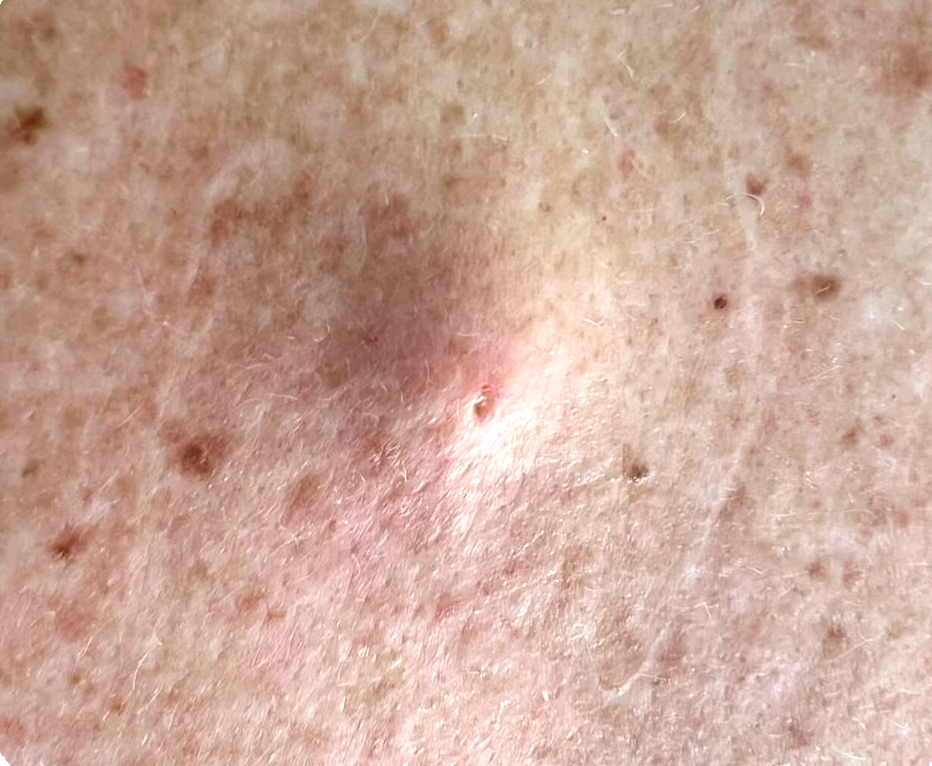
Epidermoid cysts are common, slow-growing, benign lumps beneath the skin. They arise when surface skin cells (epidermal cells) become trapped below the outer layer of skin, forming a sac that fills with the protein keratin.
These cysts are often called ‘sebaceous cysts’ in everyday language, but technically this term is misleading because true sebaceous cysts originate from oil glands and are rare. Epidermoid cysts develop from skin cells rather than sebaceous glands. They can occur at any age but are most common in adults, particularly on the face, neck, chest and back.
Are epidermoid cysts contagious?
No. Epidermoid cysts are not contagious.
They are not caused by bacteria, viruses or fungi, and they cannot spread from one person to another through touch or close contact. An epidermoid cyst forms when skin cells become trapped beneath the surface of the skin and continue producing keratin. It is a structural skin issue rather than an infectious condition.
Even if a cyst becomes inflamed or infected, the cyst itself is not contagious. However, if infection develops, appropriate medical treatment may be required.
Where do epidermoid cysts usually occur?
Epidermoid cysts most often appear on areas with hair follicles, including:
- Face
- Neck
- Chest
- Upper back
- Shoulders
- Genital area (less commonly)
They rarely occur on the palms of the hands or soles of the feet.
Are epidermoid cysts serious?
Epidermoid cysts are harmless. They usually grow slowly and may remain unchanged for years. However, any new, changing or painful lump should be assessed by a healthcare professional to confirm the diagnosis and exclude other conditions.
Symptoms and Causes
What symptoms do epidermoid cysts cause?
Epidermoid cysts often cause no symptoms and may go unnoticed for years. Typical features include:
- A small, round bump beneath the skin, often on the face, neck or trunk
- A central plug or small dark opening on the surface
- Slow growth over time
- A firm, smooth or slightly rubbery texture
Most epidermoid cysts are small, typically ranging from 0.5 to about 5 cm in diameter; they often grow slowly, but rapid enlargement may suggest inflammation or infection and should be medically assessed.
If a cyst ruptures, it may release a thick, yellowish, foul smelling, cheese like material made of keratin.
When should symptoms raise concern?
Inflammation or infection may cause:
- Redness
- Swelling
- Warmth
- Tenderness or pain
- Rapid increase in size
- Pus like discharge
Medical advice should be sought if a cyst grows quickly, becomes painful, repeatedly becomes inflamed, changes in appearance, or is located in an area that is frequently irritated.
What causes epidermoid cysts?
Epidermoid cysts develop when skin cells that would normally shed from the surface become trapped beneath the skin. These cells continue producing keratin within a closed sac, leading to cyst formation.
Possible contributing factors include:
- Skin trauma or irritation
- Blocked or damaged hair follicles
- Previous surgical wounds
- Inflammatory skin conditions
In many cases, there is no clear cause. There is no reliable method to prevent cyst formation.
Diagnosis and Tests
How are epidermoid cysts diagnosed?
Diagnosis is usually made through clinical examination by a healthcare professional. The appearance, location and feel of the lump are often sufficient to confirm the diagnosis.
Are tests required?
Additional tests are rarely necessary. However, further investigation may be considered if:
- The diagnosis is uncertain
- The lump has unusual features
- There are signs suggesting another condition
In selected cases, imaging (such as ultrasound) or examination of removed tissue under a microscope may be performed.
Can cysts be cancerous?
True skin cysts are almost always benign. Very rarely, skin cancers or other growths can resemble cysts, which is why professional assessment is important for new or changing lumps.
Management and Treatment
Do all cysts need treatment?
Most epidermoid cysts do not require treatment if they are painless and not causing problems. Observation and monitoring are often appropriate.
Treatment options
Treatment may be considered if a cyst becomes inflamed, infected, uncomfortable or cosmetically concerning.
- Steroid injection – A corticosteroid injection may reduce inflammation and swelling.
- Incision and drainage – A small cut is made to release the contents of the cyst. This can relieve discomfort but does not remove the cyst wall, so recurrence may occur.
- Surgical excision – Complete removal of the cyst and its capsule under local anaesthetic is the most effective treatment. This reduces the risk of recurrence but may leave a small scar.
What should be avoided?
Do not squeeze, puncture or attempt to remove a cyst yourself. This can:
- Increase the risk of infection
- Cause inflammation
- Lead to scarring
- Make complete removal more difficult later
Outlook/Prognosis
Epidermoid cysts are usually benign and slow growing. Many remain stable and cause no long term problems.
Most cysts can be left untreated unless they cause symptoms or concern. When completely removed, surgical treatment is generally curative. Cysts that are only drained rather than fully removed with the capsule are more likely to return. Complete surgical excision minimises recurrence.
Will an epidermoid cyst go away on its own?
Some epidermoid cysts may remain stable in size for years, and occasionally they may shrink slightly. However, most cysts do not disappear completely without treatment.
Because the cyst wall continues producing keratin, the lump often persists unless it is surgically removed. In some cases, a cyst may rupture and drain, which can temporarily reduce its size, but recurrence is common if the capsule remains intact.
Observation is usually safe if the cyst is painless and not changing.
Can epidermoid cysts turn into cancer?
Epidermoid cysts are almost always benign. Malignant transformation is extremely rare.
However, any lump that:
- Grows rapidly
- Changes in colour or texture
- Ulcerates
- Becomes persistently painful
- Looks unusual
Should be evaluated by a healthcare professional to exclude other conditions. It is important not to assume that all lumps are harmless cysts. Clinical examination ensures accurate diagnosis.
Prevention
There is no known way to completely prevent epidermoid cysts. They often develop without a clear trigger. Avoiding unnecessary skin trauma and managing skin irritation may help reduce the risk of inflammation or secondary infection.
When to seek medical advice
Medical assessment is recommended if a cyst:
- Grows rapidly
- Changes in appearance
- Becomes red, swollen, painful or infected
- Repeatedly becomes inflamed
- Causes functional problems, such as irritation from clothing
- Is cosmetically concerning
- Occurs in an unusual location such as a fingertip or toe
You should also seek medical advice if you are unsure whether a lump is a cyst. Many different skin conditions can appear similar, and accurate diagnosis is important.