






If you are considering restoring your hair, it is normal to have questions about how hair transplants work and what the process involves. Hair loss can feel worrying, especially when thinning becomes noticeable or when the hairline begins to recede. In many cases the cause is genetic pattern hair loss, although hormonal changes, ageing, and certain medical conditions can also contribute.
Hair transplants are widely considered an effective and long-term treatment for certain types of hair loss, particularly androgenetic alopecia. Modern techniques such as FUE and FUT allow surgeons to transplant healthy follicles that are genetically resistant to the hormone responsible for pattern baldness. Clinical studies suggest that approximately 90–95% of transplanted grafts survive and continue producing hair when the procedure is performed correctly.
A hair transplant is a surgical procedure that moves healthy hair follicles from one part of the scalp to areas where hair has become thin or stopped growing. Doctors usually take these follicles from the back or sides of the scalp, where hair tends to remain genetically resistant to pattern baldness.
Once transplanted, these follicles can continue producing hair in their new location. Because the follicle itself is moved rather than the hair shaft alone, the transplanted hair retains the biological characteristics of the donor area.
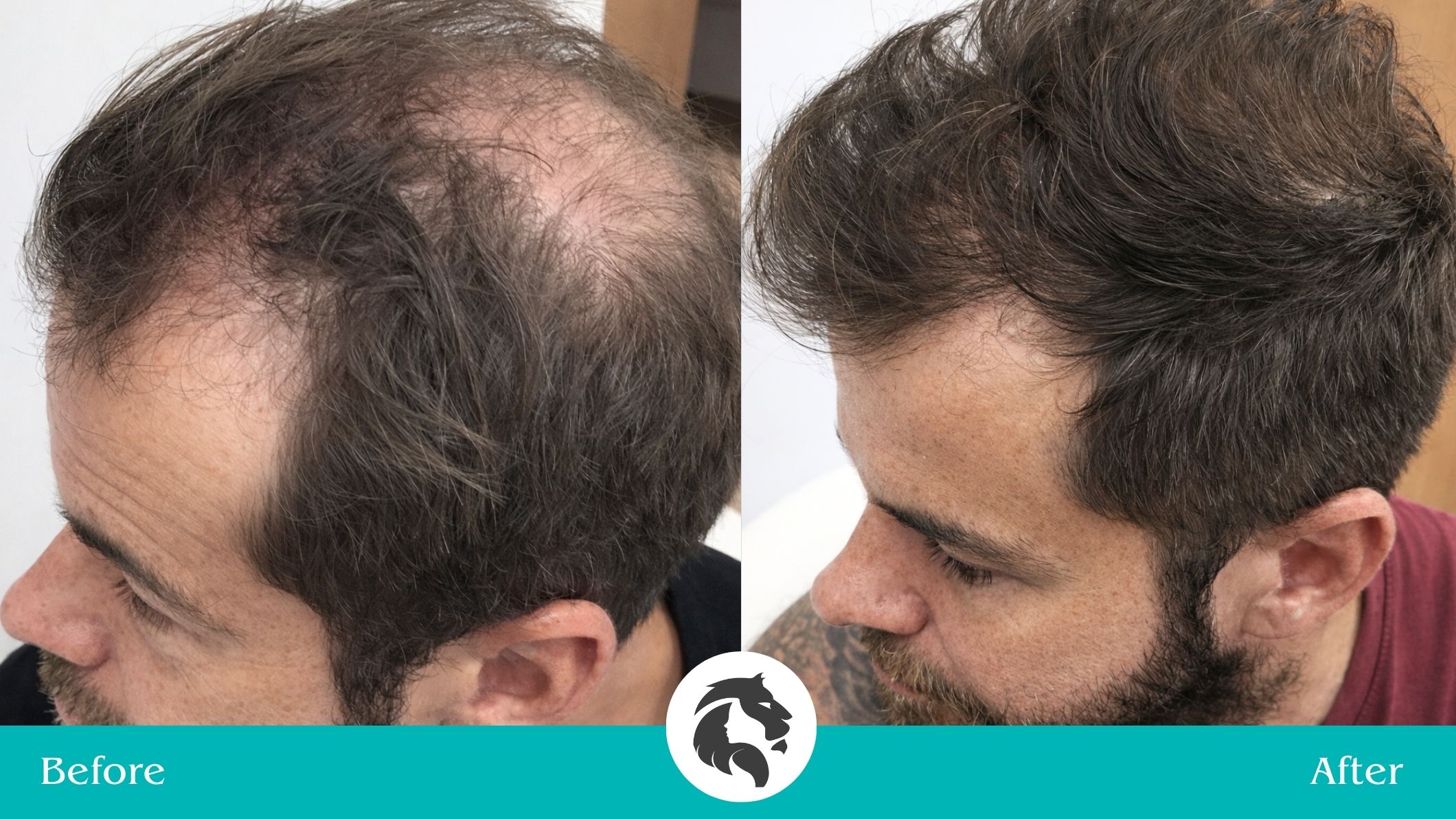
If you would like to understand the procedure in more detail, you can read our full guide on getting a hair transplant: pre-surgery guide.
Below we explain how hair transplantation works, why hair loss occurs, what the recovery process looks like, and when results usually appear.
How hair transplants work
Hair transplantation works by relocating existing follicles rather than creating new ones.
The technique relies on a principle known as donor dominance. Hair at the back and sides of the scalp is usually genetically resistant to the hormone dihydrotestosterone (DHT) the hormone responsible for most cases of pattern hair loss. During surgery, surgeons extract hair follicles from these stable donor areas and implant them into thinning regions of the scalp.
Hair is transplanted in small natural groupings known as follicular units. Each unit normally contains between one and four individual hairs.
Because surgeons place these units individually, they can recreate a natural hairline and natural hair direction across the scalp.
Why hair loss happens
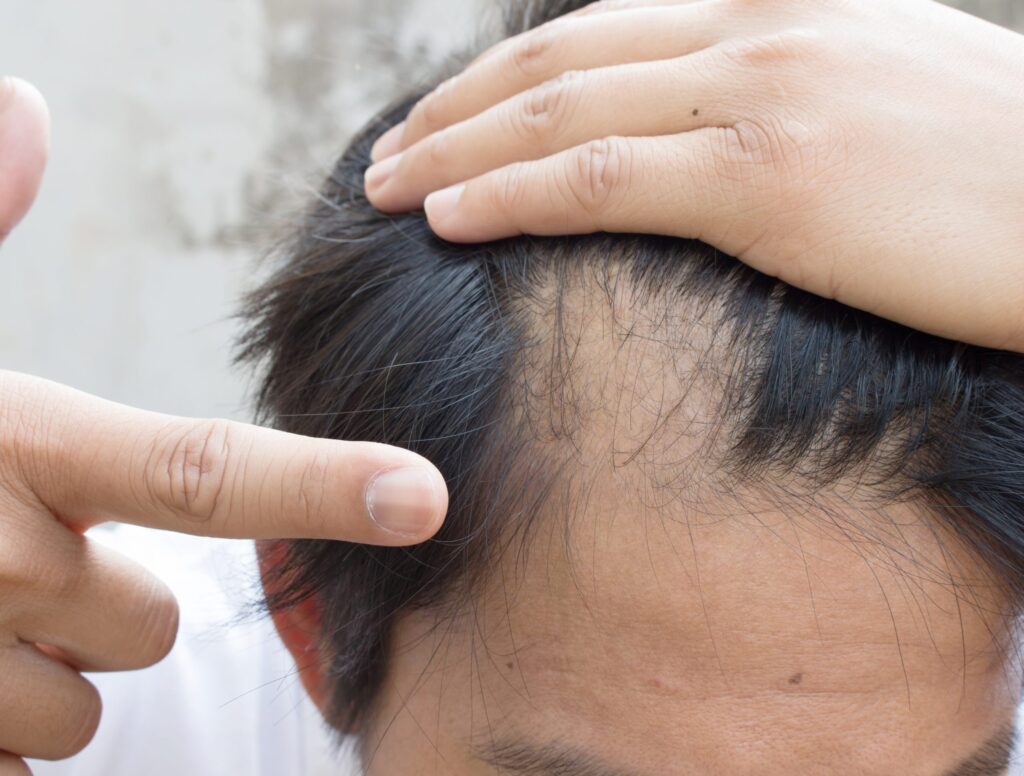
The most common cause of hair loss is androgenetic alopecia, also known as male or female pattern baldness.
In this condition, hair follicles gradually shrink due to sensitivity to certain hormones. As the follicles become smaller, the hair they produce becomes thinner and shorter. Eventually some follicles stop producing visible hair.
Hair follicles normally pass through several repeating phases of growth.
- Anagen (growth phase) – Hair actively grows from the follicle for several years.
- Catagen (transition phase) – Growth slows as the follicle begins to shrink.
- Telogen (resting phase) – Hair eventually sheds and the follicle prepares to begin the cycle again.
Hair loss conditions can shorten the growth phase, causing more follicles to enter the resting stage earlier, leading to thinner hair over time. Hair transplantation works by moving follicles that remain genetically stable, allowing them to continue cycling normally after being transplanted.
If you are unsure whether your hair loss pattern is suitable for transplantation, you can learn more here.
Common hair transplant techniques
Modern hair transplant surgery usually uses one of two techniques.
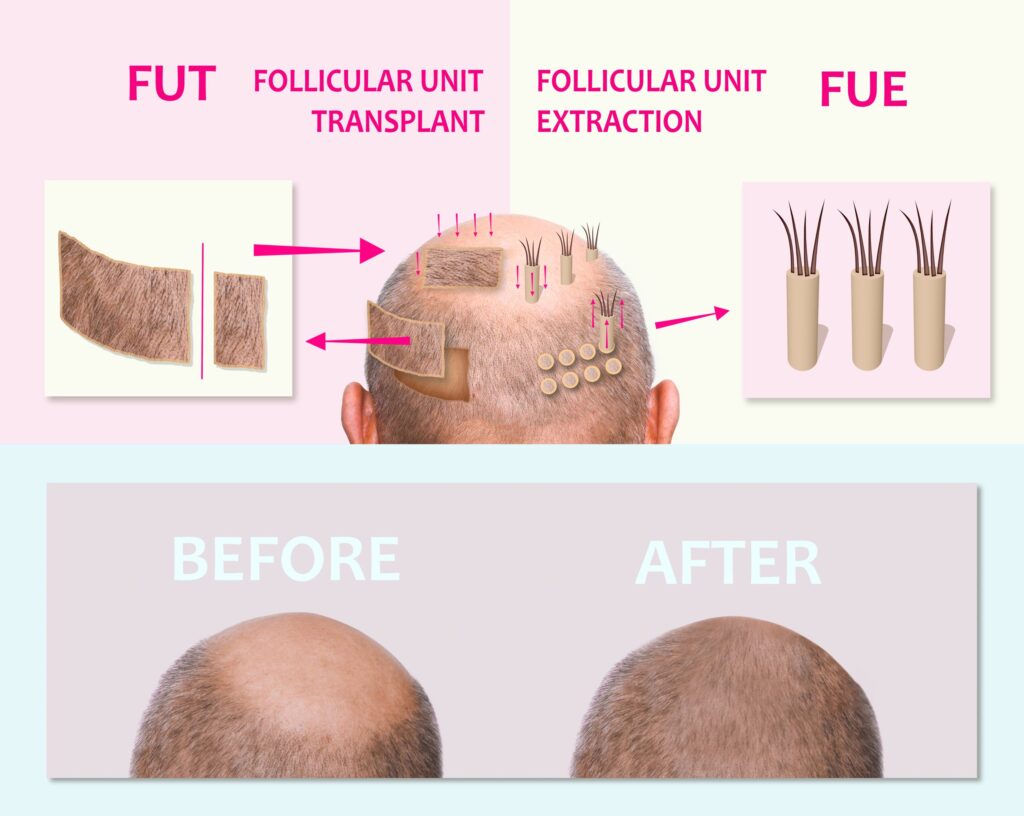
Follicular Unit Extraction
Follicular Unit Extraction, often called FUE, involves removing individual hair follicles directly from the donor area using a very small punch instrument. Each follicle is then implanted into tiny openings in the scalp.
Because the follicles are removed individually, this technique usually leaves very small circular marks rather than a long scar.
FUE is widely used today because it allows surgeons to distribute grafts evenly and create natural looking hairlines.
Follicular Unit Transplantation
Another technique is Follicular Unit Transplantation (FUT), sometimes called the strip method. It involves removing a thin strip of scalp containing healthy follicles from the donor area. This strip is then divided into individual follicular units before being transplanted into thinning areas.
FUT can allow a large number of grafts to be transplanted during one procedure, although it usually leaves a linear scar in the donor area.
How many grafts are needed for a hair transplant?
The number of grafts required for a hair transplant varies depending on the extent of hair loss, the size of the area being treated, and the density of hair in the donor region. A graft is a small natural grouping of hair follicles, usually containing one to four individual hairs, which are transplanted from the back or sides of the scalp to thinning or bald areas.
Although the exact number will differ for each patient, surgeons often estimate graft requirements based on the area being restored.
| Treatment Area | Typical Number of Grafts |
|---|---|
| Hairline restoration | 800 – 1,500 grafts |
| Hairline and temples | 1,200 – 2,000 grafts |
| Frontal scalp coverage | 1,500 – 3,000 grafts |
| Crown (vertex) area | 1,500 – 3,000 grafts |
| Extensive hair loss | 3,000 – 5,000+ grafts |
These estimates can vary depending on factors such as hair thickness, hair colour contrast with the scalp, and donor hair density. People with thicker hair or naturally dense donor areas may achieve good coverage with fewer grafts, while those with finer hair may require more grafts to create a similar visual result.
You can learn more about graft planning and hairline design in our guide on how many grafts are needed for a natural hairline.
What happens during a hair transplant
Although details vary between clinics, most hair transplant procedures follow similar steps.
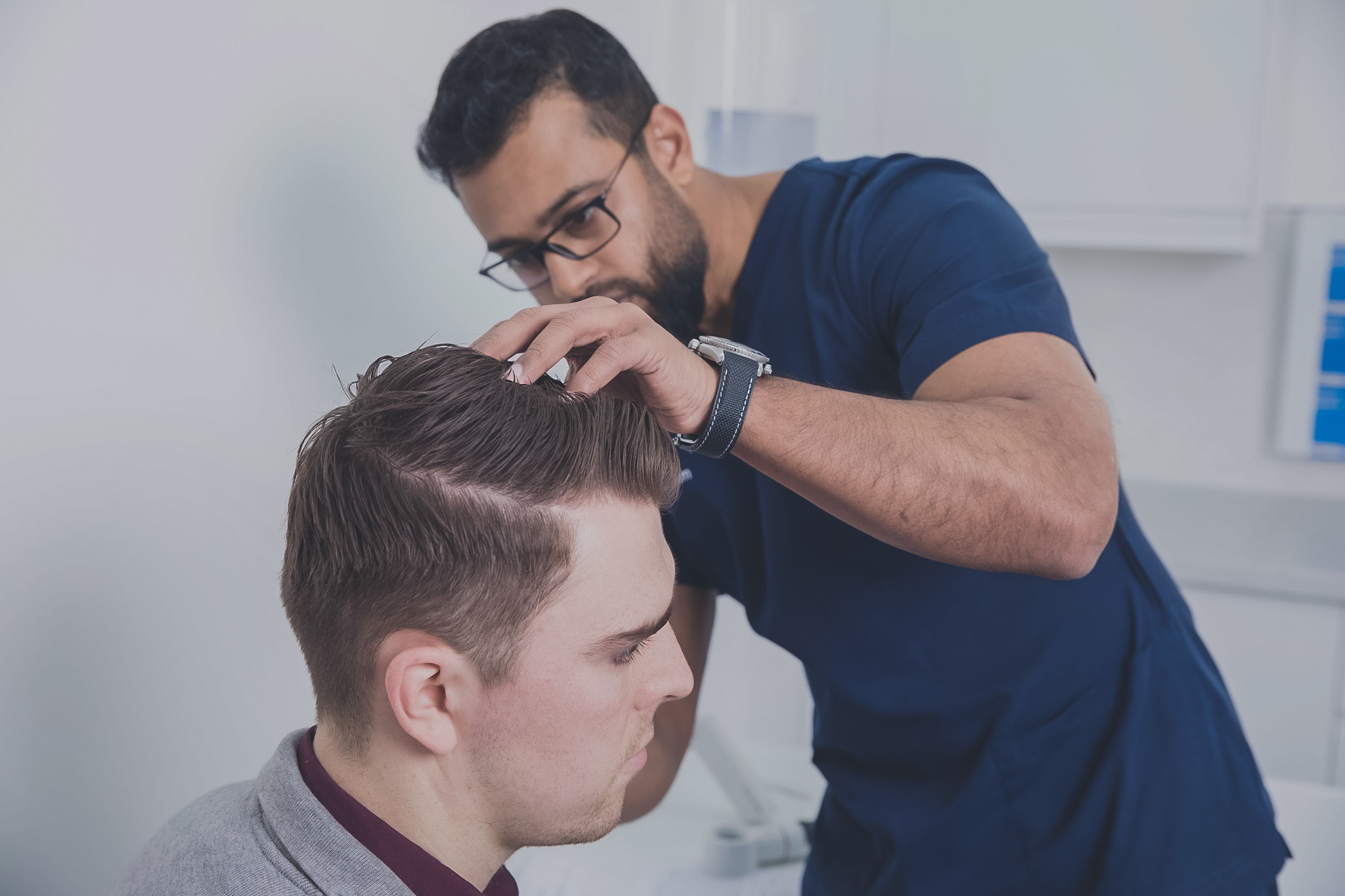
- Consultation and planning – A specialist examines the scalp and evaluates the pattern of hair loss, donor hair density and long term hair restoration goals.
- Local anaesthetic – Hair transplant procedures are usually performed under local anaesthetic, allowing patients to remain comfortable throughout the surgery.
- Donor follicle extraction – Hair follicles are removed using either the FUE or FUT technique.
- Creation of recipient sites – Tiny openings are made in the scalp where transplanted follicles will be placed.
- Graft implantation – Each follicle is carefully placed into the scalp at a specific angle and direction to mimic the natural direction of hair growth.
Depending on the extent of hair loss, hundreds to thousands of grafts may be transplanted in a single procedure.
Hair transplant timeline
Hair transplant recovery occurs gradually as transplanted follicles settle into the scalp and re-enter the normal hair growth cycle.
You can see a full stage-by-stage hair transplant recovery timeline explanation.
First week after surgery
During the first few days the scalp may appear slightly red and small scabs may form around each transplanted follicle. These scabs are part of normal healing.
Weeks 2–4: The shedding phase
Many patients notice that the transplanted hairs begin to shed within a few weeks of surgery. This stage is known as shock loss.
Although it can look alarming, this is a normal biological response. The hair shaft sheds while the follicle remains alive beneath the scalp.
Months 3–4: Early regrowth
New hair growth usually begins around three to four months after the procedure as follicles return to the active growth phase. Initially, these new hairs may appear thin or uneven.
Months 6–9: Visible thickening
Hair gradually becomes thicker and more noticeable as the follicles continue producing new strands.
Months 9–12: Final results
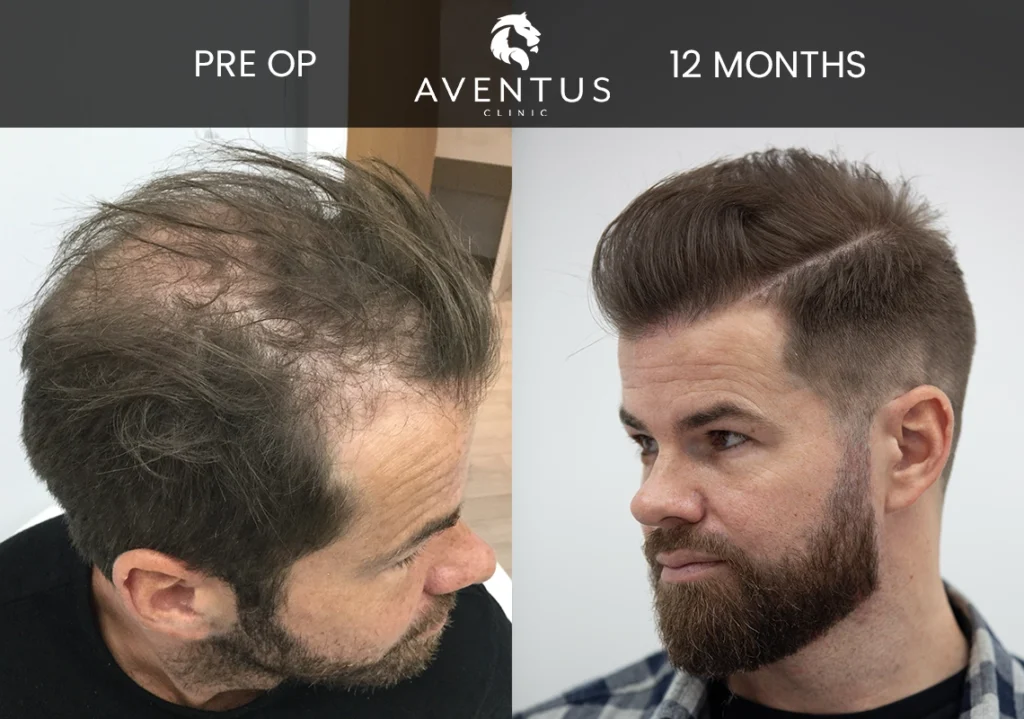
Most patients see the full cosmetic outcome of their hair transplant within 9 to 12 months, once the transplanted hair has matured.
What results can you expect from a hair transplant?
A hair transplant can improve hair density in areas affected by thinning or baldness, particularly around the hairline, temples, and crown. The goal of the procedure is usually to restore natural-looking coverage rather than recreate the density of a full head of hair from adolescence.
After transplantation, the follicles gradually begin producing new hair as they re-enter the natural growth cycle. Most patients notice visible changes over several months.
Typical progression of results:
Months 1–2: Transplanted hairs often shed as part of a normal process known as shock loss.
Months 3–4: Early regrowth begins as follicles re-enter the growth phase.
Months 6–9: Hair becomes thicker and more noticeable as density improves.
Months 9–12: Most patients see the final cosmetic outcome once transplanted hair has matured.
The overall appearance of the results can depend on several factors, including:
- the number of grafts transplanted
- donor hair density and quality
- hair thickness and texture
- hair colour contrast with the scalp
- the surgeon’s technique and hairline design
When modern techniques such as Follicular Unit Extraction (FUE) or Follicular Unit Transplantation (FUT) are performed correctly, transplanted hair can grow in a way that blends naturally with existing hair.
Conditions hair transplants can treat
Hair transplantation is most commonly used to treat androgenetic alopecia, also known as male or female pattern baldness. This condition causes gradual thinning of the hair, often beginning at the temples, hairline or crown. Because the pattern of loss is predictable, surgeons can plan where transplanted follicles should be placed to restore coverage.
However, hair transplantation may also help restore hair in other situations where follicles have been permanently damaged or lost.
These include:
- Androgenetic alopecia (male or female pattern baldness)
- Hair loss caused by burns or physical trauma
- Hair loss following surgery or scarring of the scalp
- Certain stable forms of alopecia where follicles have stopped growing hair
- Hair restoration for eyebrows, beard or other facial hair areas
In these cases, healthy follicles from the donor area can be transplanted to restore hair growth in affected regions.
The suitability of transplantation depends on the amount of permanent hair loss and the availability of strong donor follicles.
Long-term hair loss management
A hair transplant restores hair in areas that have thinned or become bald, but it does not stop the underlying cause of hair loss. Many people with pattern baldness will continue to lose hair in untreated areas over time.
For this reason, doctors often recommend a long-term approach to managing hair loss.
This may include:
- Medications such as finasteride or minoxidil, which may slow the progression of pattern hair loss
- Regular monitoring of hair density and scalp health
- Future transplant sessions if hair loss progresses further
- Lifestyle factors that support healthy hair growth, such as good nutrition and scalp care
These treatments help preserve existing hair and maintain balanced coverage across the scalp after surgery. Long-term management is usually tailored to the individual pattern and progression of hair loss.
How successful are hair transplants
Modern hair transplant techniques have high success rates when performed by experienced surgeons.
Clinical data suggests that around 90 to 95 percent of transplanted grafts typically survive and grow hair successfully.
The final outcome depends on several factors including:
- donor hair quality
- surgical technique
- careful graft handling
- proper aftercare
Results are usually long lasting because the transplanted follicles come from areas that are genetically resistant to pattern hair loss.
How long do hair transplant last?
Hair transplants are generally considered a long-term solution for certain types of hair loss, particularly androgenetic alopecia (male or female pattern baldness).
The transplanted follicles are usually taken from the back or sides of the scalp, areas that are genetically resistant to the hormone dihydrotestosterone (DHT), which plays a major role in pattern hair loss. Because these follicles retain their genetic characteristics, they typically continue producing hair after being transplanted.
However, it is important to understand that a transplant does not stop the underlying cause of hair loss. While transplanted follicles usually remain stable, existing non-transplanted hair may continue to thin over time.
For this reason, doctors may recommend long-term hair loss management such as:
- medications like finasteride or minoxidil
- regular monitoring of hair density
- maintaining good scalp and hair health
- future transplant procedures if hair loss progresses
With appropriate planning and ongoing care, the results of a hair transplant can remain stable for many years and provide lasting improvement in hair coverage.
Who is a good candidate for a hair transplant?
Hair transplantation works best for people with certain types of hair loss and suitable donor hair. Before recommending surgery, doctors usually assess the pattern of hair loss, the quality of the donor area and the overall health of the scalp.
In most cases, the best candidates are people with androgenetic alopecia, also known as male or female pattern baldness. This form of hair loss follows a predictable pattern, which allows surgeons to plan where transplanted follicles should be placed.
Another key factor is having sufficient healthy donor hair, usually located at the back or sides of the scalp. These follicles are genetically more resistant to balding and can be safely moved to thinning areas.
Doctors usually consider several factors before recommending surgery, including
- the pattern of hair loss
- the age of the patient
- donor hair density
- long term hair loss progression
If you are wondering whether the timing may be right for you, these guides may help

When a hair transplant may not be recommended
Although hair transplantation can be highly effective, it is not suitable for every type of hair loss. Doctors evaluate several factors before recommending surgery.
A transplant may not be recommended in situations such as:
- Insufficient donor hair in the back or sides of the scalp
- Unstable or rapidly progressing hair loss
- Active scalp infections or inflammatory skin conditions
- Certain medical conditions that affect healing
- Unrealistic expectations about the amount of hair that can be restored
Successful transplantation depends on having a healthy donor area and a stable pattern of hair loss. If these conditions are not present, doctors may suggest treating the underlying cause of hair loss before considering surgery.
A thorough consultation helps determine whether hair transplantation is likely to provide safe and natural looking results.
Possible side effects and recovery symptoms
Most people recover from hair transplant surgery without serious complications. However, some temporary symptoms are common during the healing process.
These may include
- mild swelling of the scalp
- redness around graft sites
- small scabs during healing
- temporary numbness or itching
Temporary shedding during the first month is also expected and does not mean the transplant has failed.
Learn what happens during the healing process after a hair transplant, including the typical recovery timeline, when scabs fall away, and when new hair growth begins.
Are hair transplants permanent?
Hair transplants are generally considered permanent because the transplanted follicles are taken from areas of the scalp that are genetically resistant to pattern hair loss. Once transplanted, these follicles typically continue producing hair for many years. However, surrounding non-transplanted hair may still thin over time if the underlying cause of hair loss continues.
Does a hair transplant hurt?
Hair transplant procedures are usually performed under local anaesthetic, which numbs the scalp during surgery. Most patients report only mild discomfort during the procedure. Some tenderness or tightness of the scalp may occur for a few days afterwards as the area heals.
How long does a hair transplant procedure take?
The length of a hair transplant procedure depends on the number of grafts being transplanted. Smaller procedures may take around 4–6 hours, while larger sessions can last 6–8 hours or longer. In some cases, extensive treatments may be completed over two separate sessions.
When can I return to work after a hair transplant?
Many patients return to work within 3–7 days after the procedure, depending on the type of work they do and the extent of the transplant. Jobs that involve physical exertion may require a slightly longer recovery period to avoid disturbing the newly implanted grafts.
Can women have hair transplants?
Yes, hair transplants can be suitable for women in certain cases. Female pattern hair loss, traction alopecia, or hair loss from scarring may sometimes be treated with transplantation if there is sufficient donor hair available and the hair loss pattern is stable.
Can transplanted hair be cut and styled normally?
Yes. Once the transplanted hair has fully grown, it can be washed, cut, and styled in the same way as natural hair. Because the follicles continue to grow hair normally, many patients treat transplanted hair just like the rest of their scalp hair.
What is shock loss after a hair transplant?
Shock loss refers to temporary hair shedding that can occur after a hair transplant. This can affect both transplanted hairs and nearby existing hairs. It is usually temporary, and hair growth typically resumes as the follicles return to the normal growth cycle.

Book a free hair assessment and speak with our hair restoration specialists.
- Medical Disclaimer:
This article is for general information only and does not replace personalised medical advice. If you are experiencing hair loss or considering a hair transplant, consult a qualified healthcare professional.



 CALL US
 WHATSAPP