






- Medically Reviewed. Last updated on 03/23/2026.
Finding a hard lump under the skin can be concerning, particularly when it develops in an area where hair has recently been shaved, waxed or exposed to friction. In many cases, this type of lump is linked to an ingrown hair turned into hard lump under skin.
Ingrown hairs are common and usually appear as small, inflamed bumps. However, when the hair becomes trapped beneath the skin or the follicle becomes blocked, the condition can progress. This may lead to a deeper, firmer lump that feels more noticeable and persists longer than a typical ingrown hair.
While the term “ingrown hair lump” is often used broadly, some of these lumps may represent a more defined structure known as a cyst (sometimes referred to as a pseudocyst in dermatology). This occurs when keratin and skin cells become trapped within a blocked follicle, forming a deeper, more persistent lump beneath the skin.
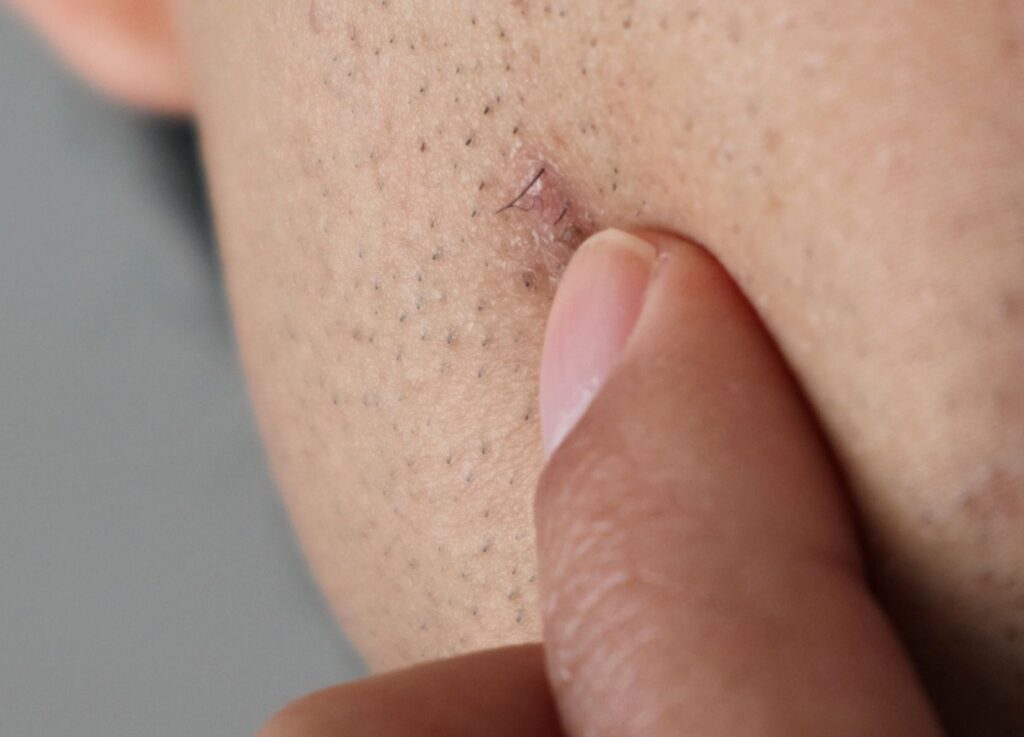
This change is usually caused by ongoing inflammation, accumulation of keratin within the follicle, or the development of a cyst-like structure beneath the skin.
How ingrown hairs become lumps
An ingrown hair occurs when a hair grows back into the skin instead of outward. This often happens after shaving, waxing or plucking. The hair may curl back or fail to exit the follicle.
When the hair becomes trapped, the body reacts as if it is a foreign object. This leads to inflammation, which causes swelling, redness and the formation of a bump.
In some cases, the follicle becomes blocked. When this happens, a space forms beneath the skin and fills with keratin and skin cells. This process can lead to a cyst, which presents as a lump under the skin. In clinical terms, these may be described as cysts or pseudocysts, as they form from follicular blockage rather than a true epithelial-lined cyst in all cases.
This is why a simple ingrown hair can sometimes turn into a firm or hard lump.

What an ingrown hair lump looks and feels like
An ingrown hair that develops into a lump usually changes gradually rather than appearing suddenly.
It often begins as a small, slightly raised red bump at the surface of the skin. If inflammation persists or the follicle becomes blocked, the area may become firmer and extend deeper beneath the skin. Over time, the lump may feel more defined and, in some cases, slightly increase in size.
In the early stages, an ingrown hair may appear as a small surface bump, and the hair is often visible just beneath the skin. As the condition progresses, the hair can become trapped deeper within the follicle, making it less visible or no longer seen at all. Over time, ongoing inflammation or blockage may cause the area to feel firmer and develop into a more defined lump beneath the skin. The surface may appear less inflamed, even as the lump becomes more noticeable, reflecting changes within the follicle rather than irritation at the surface.
Some lumps remain painless, while others may become tender, depending on the degree of inflammation or whether infection develops.
How to tell the difference
While both conditions originate from the same process, their presentation can differ as the condition progresses.
| Feature | Typical Ingrown Hair | Hard Lump from Ingrown Hair |
|---|---|---|
| Depth | Superficial | Deeper under the skin |
| Texture | Soft or slightly firm | Firm, dense or rubbery |
| Size | Small and localised | May feel larger or more defined |
| Duration | Usually resolves within 1–2 weeks | May persist for several weeks |
| Visible hair | Often visible under skin | Often not visible |
| Cause | Mild inflammation | Persistent inflammation, blockage or cyst formation |
Why an ingrown hair can become a hard lump
Persistent inflammatory response
If a hair remains embedded within the skin, the inflammatory response may persist beyond the normal healing phase. Instead of resolving, the surrounding tissue gradually thickens due to ongoing irritation. This process, known as induration, reflects localised structural change within the skin and is a common reason why the area begins to feel firm rather than soft.
Follicular blockage and cyst formation
When the follicular opening becomes obstructed, keratin and desquamated keratinocytes can accumulate within the follicle rather than being shed naturally. This process is recognised in dermatology as follicular occlusion.
As this material builds up, it may form a well-circumscribed subcutaneous cavity. Over time, this can develop into an epidermoid (follicular) cyst, a keratin-filled lesion lined by stratified squamous epithelium.
Because the contents are contained within a defined structure, the lesion typically feels smooth, rounded and firm on palpation. Clinically, this corresponds to a cystic lesion and explains why some ingrown hair–related lumps are described as feeling like a small, firm “ball” beneath the skin.
Infection and folliculitis
If microorganisms, most commonly bacteria such as Staphylococcus aureus, enter the follicle, an infection may develop. This is referred to as folliculitis, which involves inflammation of the follicular unit and surrounding tissue.
Clinically, this may present with erythema, localised swelling and tenderness. As the inflammatory response progresses, a pustule may form due to the accumulation of purulent material within the follicle.
In some cases, the infection may extend beyond the follicle into the surrounding dermis, resulting in a small abscess. The build-up of inflammatory fluid and pus increases local pressure, which can cause the area to feel more tense, painful and firm.
Intradermal hair growth
In less common cases, the hair shaft does not emerge through the skin surface but instead continues to grow within the superficial layers of the skin. This phenomenon, sometimes described as intradermal hair growth, has been reported in clinical literature.
As the hair remains embedded, it can act as a persistent irritant, contributing to ongoing inflammation or the formation of a localised lesion. This mechanism may explain why certain ingrown hair lumps are slow to resolve or recur in the same area.
Where these lumps commonly develop
These types of lumps are most often seen in areas where hair removal or repeated friction occurs. Common locations include the beard and neck, underarms, legs, groin and buttocks.
These areas are more susceptible because hair regrowth patterns and mechanical irritation increase the likelihood of hairs becoming trapped.
How long a hard lump can last
Most ingrown hairs improve within one to two weeks. However, when a lump forms, the duration may be longer. If deeper inflammation or follicular blockage is present, the lump may persist for several weeks. In some cases, it gradually reduces as the underlying process resolves. A lump that does not improve over time should be assessed.
When medical assessment is needed
Although most ingrown hair lumps are benign, certain features suggest further evaluation is appropriate.
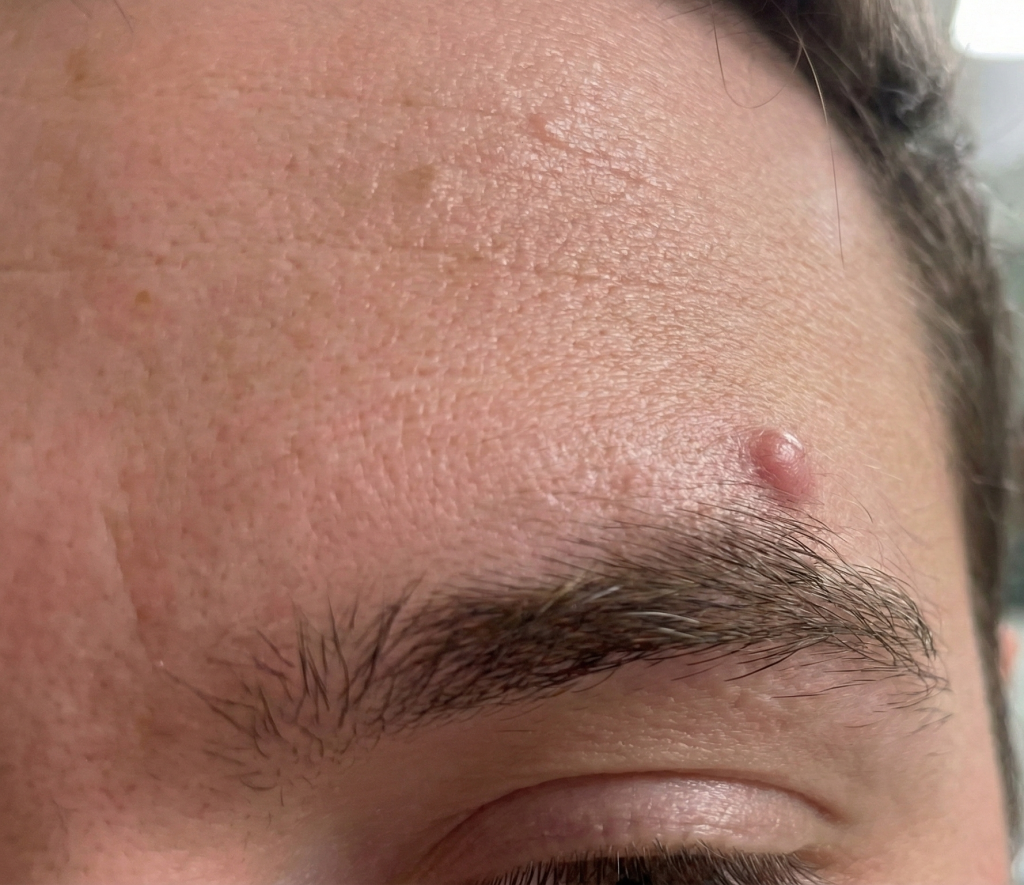
A lump should be assessed if it continues to enlarge, becomes increasingly painful, feels fixed beneath the skin or produces discharge. Persistence beyond several weeks is also an important factor.
These changes may indicate infection, cyst formation or another condition requiring treatment.
Management and treatment
In many cases, conservative care is sufficient. Applying a warm compress can help soften the skin and support natural healing. Keeping the area clean and avoiding further irritation allows the follicle to recover.
It is important not to squeeze or pick at the lump, as this can worsen inflammation and increase the risk of infection or scarring.
If symptoms persist or complications develop, medical treatment may be required. This may include antibiotics or, in some cases, procedures to treat cystic changes.
Prevention
Reducing irritation to the hair follicle is an important part of preventing ingrown hairs and their progression into deeper lesions.
Shaving technique plays a key role. Shaving very closely or against the direction of hair growth increases the likelihood of hair re-entering the skin. Using a clean, sharp razor and shaving in the direction of growth can help reduce follicular irritation.
Avoiding repeated passes over the same area and allowing adequate time between hair removal sessions supports normal follicular function. Reducing mechanical friction, such as from tight clothing, may also help prevent obstruction of the follicular opening. In some cases, gentle exfoliation can assist in removing excess keratin and reducing the risk of follicular blockage.
Possible complications
Complications are uncommon but may occur, particularly if there is secondary infection or repeated localised trauma. Bacterial entry into the follicle can lead to folliculitis, which may present with increasing erythema, swelling, tenderness and, in some cases, purulent discharge. If inflammation extends beyond the follicle, a localised abscess may develop.
Repeated irritation or unresolved inflammation may also result in scarring or post-inflammatory changes in skin pigmentation.
Avoiding mechanical trauma, such as squeezing or picking at the lesion, reduces the risk of infection and supports appropriate healing.
Conclusion
An ingrown hair may develop into a firm lump beneath the skin when inflammation persists or the follicular opening becomes obstructed. This represents progression of the same underlying process rather than a separate condition.
In many cases, these lesions resolve gradually without intervention. However, clinical assessment is recommended if the lump persists, increases in size, becomes more painful or shows signs of infection, to exclude cyst formation or other underlying pathology.
Frequently asked questions
Why is my ingrown hair lump still there after months?
In most cases, ingrown hairs resolve within one to two weeks. However, when a lump persists for months, it is often due to ongoing inflammation or the formation of a cyst within the follicle. When keratin and skin cells become trapped beneath the surface, they can form an enclosed structure that does not resolve quickly. In these situations, the lump may remain until the underlying blockage clears or is treated. Persistent lumps should be assessed to rule out cysts, abscesses or other conditions.
Can an ingrown hair leave a permanent lump under the skin?
Most ingrown hair lumps do not become permanent. However, in some cases, repeated inflammation can lead to residual changes within the skin. This may include scar tissue or a small remaining cyst capsule, which can feel like a persistent lump. The risk of long-term changes is higher if the area has been repeatedly irritated or manipulated.
Why does my ingrown hair lump feel like a small ball under the skin?
A lump that feels like a small ball is often caused by material becoming enclosed within the follicle. When keratin and debris accumulate, they can form a rounded structure beneath the skin. Because this material is contained, the lump may feel smooth, well-defined and slightly mobile when touched.
Can an ingrown hair move under the skin?
Some people notice that the lump feels as though it moves slightly. This can occur when the lesion is superficial and not attached to deeper structures, such as in the case of small cysts or localised inflammation. However, movement is usually limited. A lump that feels mobile is often benign, but any changes in how it feels over time should still be monitored.
Why did my ingrown hair turn into multiple lumps?
The development of multiple lumps is often linked to repeated irritation of the skin. This can occur with frequent shaving, friction or when several hair follicles become blocked at the same time. In some cases, a condition such as folliculitis may affect multiple follicles, leading to clusters of bumps or lumps in the same area.
Can squeezing an ingrown hair make the lump worse?
Squeezing or picking at an ingrown hair can make the condition worse. This can push bacteria deeper into the skin, increase inflammation and delay healing. It also raises the risk of infection or abscess formation. For this reason, it is generally recommended to avoid manipulating the area.
Why does my ingrown hair lump have no visible hair?
In deeper or longer-standing cases, the hair may no longer be visible at the surface. This is often because the hair sits deeper within the skin or has become enclosed within a cyst-like structure. Even though the hair cannot be seen, it may still be contributing to the lump.
Can an ingrown hair turn into something more serious?
Most ingrown hairs are harmless and resolve without complications. However, in some cases, infection, cyst formation or ongoing inflammation can occur. These changes may cause the lump to persist or become more symptomatic. Rarely, persistent lumps may resemble other skin conditions, which is why changes over time should be evaluated.
Why does my ingrown hair keep coming back in the same spot?
Recurring lumps in the same area are often due to repeated irritation or damage to the follicle. This can be caused by ongoing hair removal, friction or incomplete resolution of a previous ingrown hair. In some cases, the hair may continue to grow abnormally within the skin, contributing to repeated inflammation in the same location.
Can an ingrown hair lump turn into a hole or tract under the skin?
In rare cases, repeated inflammation or infection may lead to small tract-like openings beneath the skin. This is more likely to occur if the area has been repeatedly squeezed or has developed infection multiple times. While this is uncommon, any persistent opening or drainage should be assessed by a healthcare professional.
Conclusion
An ingrown hair may develop into a firm lump beneath the skin when inflammation persists or the follicular opening becomes obstructed. This represents progression of the same underlying process rather than a separate condition.
In many cases, these lesions resolve gradually without intervention. However, clinical assessment is recommended if the lump persists, increases in size, becomes more painful or shows signs of infection, to exclude cyst formation or other underlying pathology.

Not sure if your lump is an ingrown hair or something else? Book a free skin assessment and get personalised advice from our dermatology specialists.
- Medical Disclaimer:
This content is for general information only and does not replace professional medical advice. While every effort has been made to ensure the information is accurate and up to date, medical knowledge and guidance can change. Individual symptoms and circumstances may vary. If you have a persistent, worsening or concerning lump, please consult a GP or qualified healthcare professional.
 CALL US
 WHATSAPP