






Inverted nipples are often normal anatomical variations affecting 10-20% of people. Seek medical attention for sudden inversion, pain, discharge, or changes in one breast, especially when accompanied by other symptoms.
- Dr Roshan Vijayan
- Reading Time: 10 Mins
Inverted nipples retract or dimple inward instead of protruding outward from the breast. While often a natural variation in breast anatomy, sudden changes can sometimes indicate underlying health concerns. From cosmetic considerations to breastfeeding challenges, inverted nipples affect millions worldwide and deserve proper attention for both peace of mind and optimal health outcomes.
Key Takeaways
- Inverted nipples are common (affecting 10-20% of people) and usually represent a normal anatomical variation rather than a medical concern.
- Sudden nipple inversion, especially in one breast, requires prompt medical evaluation as it may indicate an underlying condition.
- Most women with inverted nipples can successfully breastfeed with proper support and techniques, despite potential initial challenges.
Table of Contents
What Are Inverted Nipples
Inverted nipples occur when nipple tissue turns inward toward the breast instead of pointing outward. They appear as a dimple or flat surface where the nipple would typically protrude. Research shows that inverted nipples affect approximately 10-20% of the general population, making them a common anatomical variation.
Doctors classify inverted nipples into three grades based on severity:
| Grade | Description | Characteristics | Breastfeeding Potential |
|---|---|---|---|
| Grade 1 | Mild inversion | Can be pulled out manually and may stay out temporarily | Usually possible |
| Grade 2 | Moderate inversion | Can be pulled out but retracts quickly | Challenging but possible |
| Grade 3 | Severe inversion | Cannot be pulled out manually | Often not possible without intervention |
Inverted nipples look different from person to person. Some appear as a small dimple, while others show a more pronounced depression. The surrounding areola (the darker skin around the nipple) may pucker slightly when the nipple inverts.
Prevalence studies indicate that inverted nipples occur in both women and men, though they’re more commonly discussed in women due to breastfeeding implications. According to research, about 3.26% of young women have congenital inverted nipples, with bilateral inversion (affecting both nipples) occurring in 86.8% of cases.
Causes and Risk Factors
Congenital inverted nipples typically result from shortened milk ducts or tight connective tissue that pulls the nipple inward. During fetal development or puberty, these structures fail to elongate properly, causing the nipple to retract rather than protrude.
Some people develop inverted nipples later in life. Causes of acquired inverted nipples include:
- Tissue changes: Mastitis, breast abscess, or inflammation can cause scarring that pulls nipple tissue inward.
- Surgery: Previous breast surgeries may affect nipple projection.
- Trauma: Injury to the breast area can alter nipple appearance.
- Pregnancy and breastfeeding: Hormonal changes during these periods sometimes affect nipple shape, either temporarily or permanently.
Genetic factors likely play a role in congenital inverted nipples, though no specific gene has been definitively linked to this trait.
Hormonal fluctuations throughout life can impact nipple appearance. Some women notice changes during their menstrual cycle, pregnancy, or menopause. These changes usually reflect normal physiological processes rather than a cause for concern.
Normal vs. Concerning Inverted Nipples
Inverted nipples are generally considered a normal anatomical variation when:
- They’ve been present since puberty
- They affect both nipples (bilateral)
- They don’t cause pain or discomfort
- There are no other breast changes
Research from multiple studies confirms that inverted nipples are common enough to be considered a normal variation.
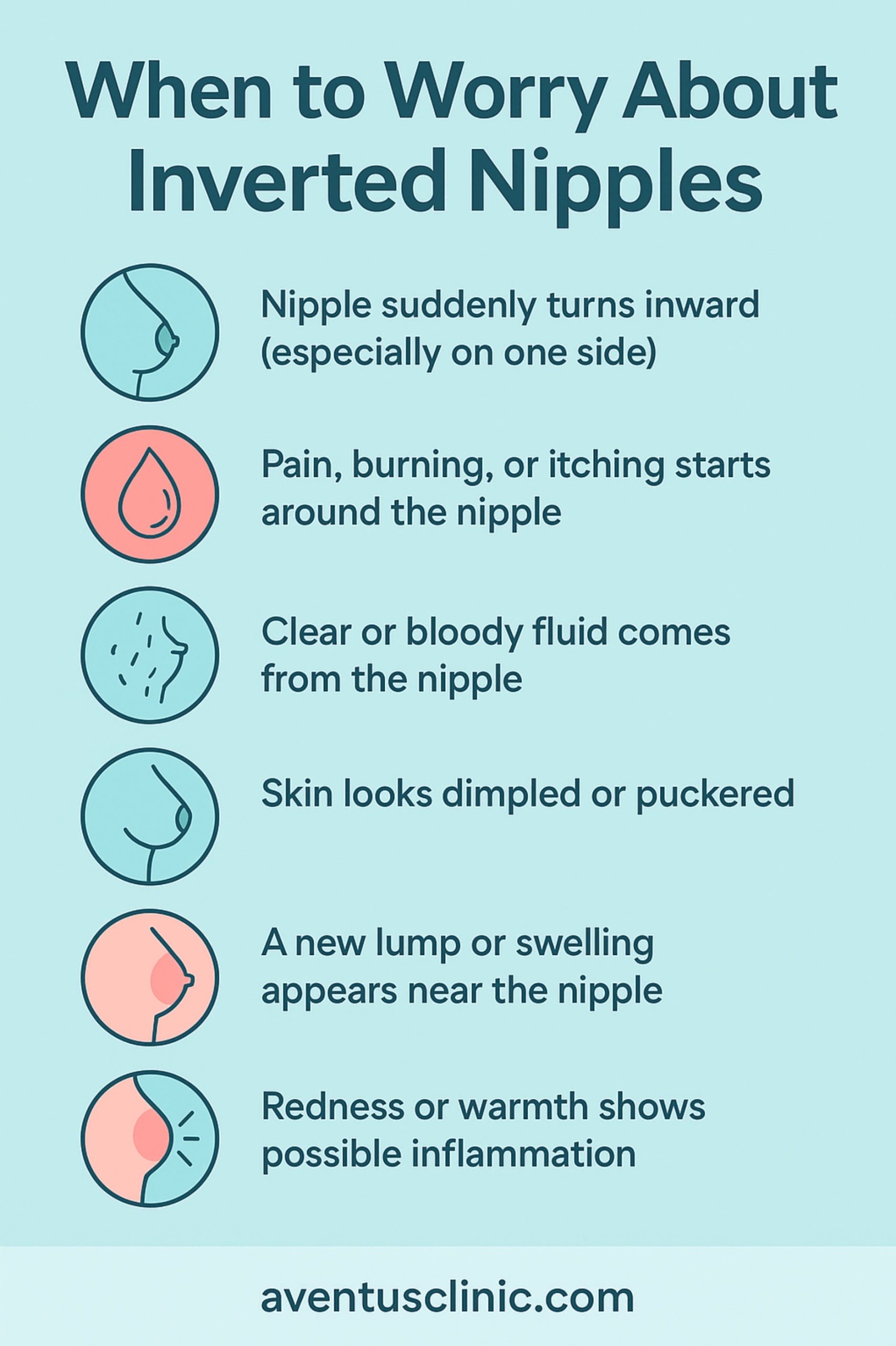
However, certain signs warrant medical attention:
Breastfeeding with Inverted Nipples
Many women with inverted nipples worry about their ability to breastfeed. The good news is that breastfeeding is often possible, though it may require additional techniques or support.
A 2021 randomised study showed that mothers with inverted nipples who received specialised postnatal support had significantly higher breastfeeding success rates compared to those receiving standard care.
Several techniques can help manage breastfeeding with inverted nipples:
| Technique | Description | When to Use |
|---|---|---|
| Hoffman's Exercise | Placing thumbs at nipple base and gently pulling outward to break adhesions | During pregnancy and before feeding |
| Breast Pump | Using gentle suction to draw out the nipple before feeding | Immediately before latch attempt |
| Cold Compress | Applying cold briefly to stimulate nipple protrusion | Just before feeding |
| Nipple Shield | Thin silicone cover that helps baby latch | When other methods aren't sufficient |
Consulting with a lactation specialist before birth can provide personalised strategies and build confidence. Many women find that regular breastfeeding itself helps gradually improve nipple protrusion over time.
Treatments and Nipple Correction Options
For those seeking to correct inverted nipples, options range from non-invasive methods to surgical procedures.
Non-surgical approaches:
The Niplette device, introduced in the early 1990s, has shown effectiveness in correcting nipple inversion. This small suction cup draws out the nipple when worn regularly over several months. Studies indicate it’s most effective for Grade 1 and some Grade 2 inversions.
Manual techniques like Hoffman’s exercises, which involve placing thumbs at the base of the nipple and gently pulling outward, can help break adhesions causing inversion. A 2023 clinical study confirmed significant improvement in breastfeeding outcomes for women with mild (Grade 1) inversion who performed these exercises regularly.
Nipple correction surgery:
Surgical correction becomes an option for those with severe inversion or when non-surgical methods fail. Several techniques exist:
- Duct-preserving techniques: Maintain the integrity of milk ducts, allowing potential future breastfeeding. These methods involve releasing fibrous bands while preserving ductal structures.
- Duct-dividing techniques: Offer more dramatic and permanent correction but sacrifice the ability to breastfeed by cutting the milk ducts.
A comprehensive 2020 literature review reported that surgical correction is most appropriate when inversion causes psychological distress, functional problems, or aesthetic concerns. Recovery typically takes 1-2 weeks, with most patients achieving satisfactory results.
Potential complications include scarring, altered sensation, infection, and recurrence of inversion. Women considering future breastfeeding should discuss duct-preserving options with their surgeon.
Medical professionals at our dermatology clinic in Hertfordshire offer personalised consultations to determine the most appropriate treatment approach based on individual needs.
Living with Inverted Nipples
Most people with inverted nipples lead normal lives without treatment. The condition rarely causes physical discomfort and typically doesn’t impact overall health.
For intimate relationships, open communication helps address any concerns. Many people find their partners are understanding and untroubled by nipple inversion.
Those experiencing self-consciousness may find that learning about the condition’s prevalence helps normalise their experience. Remember that nipple inversion is a common anatomical variation affecting millions of people worldwide.
Regular breast self-examinations remain important for everyone, including those with inverted nipples. Becoming familiar with your normal breast appearance makes it easier to spot concerning changes should they occur.
Conclusion
Inverted nipples represent a common anatomical variation that rarely indicates health problems. However, knowing when changes warrant medical attention ensures peace of mind and timely care when needed. If you’re considering treatment options or have concerns about recent changes, book a free online assessment with our specialist team today. We provide personalised care and expert advice tailored to your unique situation.
FAQs
Are inverted nipples a sign of breast cancer?
Congenital inverted nipples (present since birth or puberty) aren’t linked to cancer. However, sudden nipple inversion in previously protruding nipples, especially if unilateral and accompanied by other symptoms, warrants prompt medical evaluation to rule out malignancy.
Can men have inverted nipples too?
Yes, inverted nipples occur in both men and women. The condition affects approximately 10-20% of the general population regardless of gender, though it’s less frequently discussed in men as it doesn’t impact functions like breastfeeding.
Will pregnancy or breastfeeding change inverted nipples permanently?
Hormonal changes during pregnancy sometimes cause inverted nipples to protrude temporarily or permanently. Studies show that prior breastfeeding experience is associated with reduced nipple inversion rates, suggesting that the process may help evert nipples long-term.
How successful is nipple correction surgery?
Success rates for nipple correction surgery range from 70-90% depending on the technique, surgeon expertise, and grade of inversion. Duct-dividing techniques typically show lower recurrence rates but prevent breastfeeding, while duct-preserving methods maintain function but have slightly higher recurrence rates.
Can inverted nipples correct themselves over time?
Mild (Grade 1) inverted nipples sometimes correct naturally during hormonal changes like puberty or pregnancy. However, moderate to severe inversion rarely resolves without intervention. Non-surgical approaches like the Niplette device or Hoffman’s exercises can improve mild cases with consistent use.
 CALL US
 WHATSAPP