






Finding a lump under your skin can be unsettling, especially if it appears suddenly. Many people immediately worry about something serious. In reality, small lumps beneath the skin are common and are often caused by minor skin conditions, particularly in areas where hair grows or has recently been removed.
One of the most common causes of a small, tender bump in shaved areas is an ingrown hair. These usually develop when a hair grows back into the skin instead of emerging normally. However, not every lump is related to hair growth. Some may be cysts, inflamed follicles or other benign skin changes.
Understanding what an ingrown hair is, how it forms, and how it differs from other types of lumps can help you decide whether simple self-care is enough or whether medical advice is needed. In many cases, the key is not just how a lump looks, but how it changes over time.
Key Takeaways
- Most small lumps that develop shortly after shaving are ingrown hairs. These are typically superficial, mildly tender and improve within 1 to 2 weeks.
- Lumps that enlarge, persist beyond 3 to 4 weeks, feel firm or fixed, or become increasingly painful are less likely to be ingrown hairs and should be assessed clinically.
- Conservative care is usually sufficient for uncomplicated cases. Warm compresses and avoiding irritation support natural healing, while squeezing can worsen inflammation and increase infection risk.
What is an ingrown hair?
Hair grows from follicles within the skin, with the shaft normally exiting through the surface. An ingrown hair develops when this process is disrupted and the hair curls back or grows sideways into the surrounding tissue.
This is more common after shaving, particularly when hair tips become sharp, and in individuals with coarse or curly hair. The trapped hair triggers a local inflammatory response, leading to redness, swelling and a small raised bump.
In some cases, secondary bacterial involvement can occur, increasing tenderness and occasionally producing discharge. This inflammatory reaction is what gives an ingrown hair the feel of a small lump beneath the skin.
Can an ingrown hair become a lump?
An ingrown hair can develop into a firmer lump when inflammation persists or the follicle remains blocked.
The body may recognise the trapped hair as foreign material, triggering a sustained inflammatory response. This can cause localised swelling and tissue thickening, making the area feel firm.
If bacteria enter the follicle, a small abscess may form, presenting as a tender, warm and sometimes painful lump. In other cases, keratin and debris can accumulate, leading to a small epidermoid cyst.
Most of these changes remain localised and improve within 1 to 3 weeks. However, a lump that enlarges, becomes fixed or persists beyond several weeks should be clinically assessed.
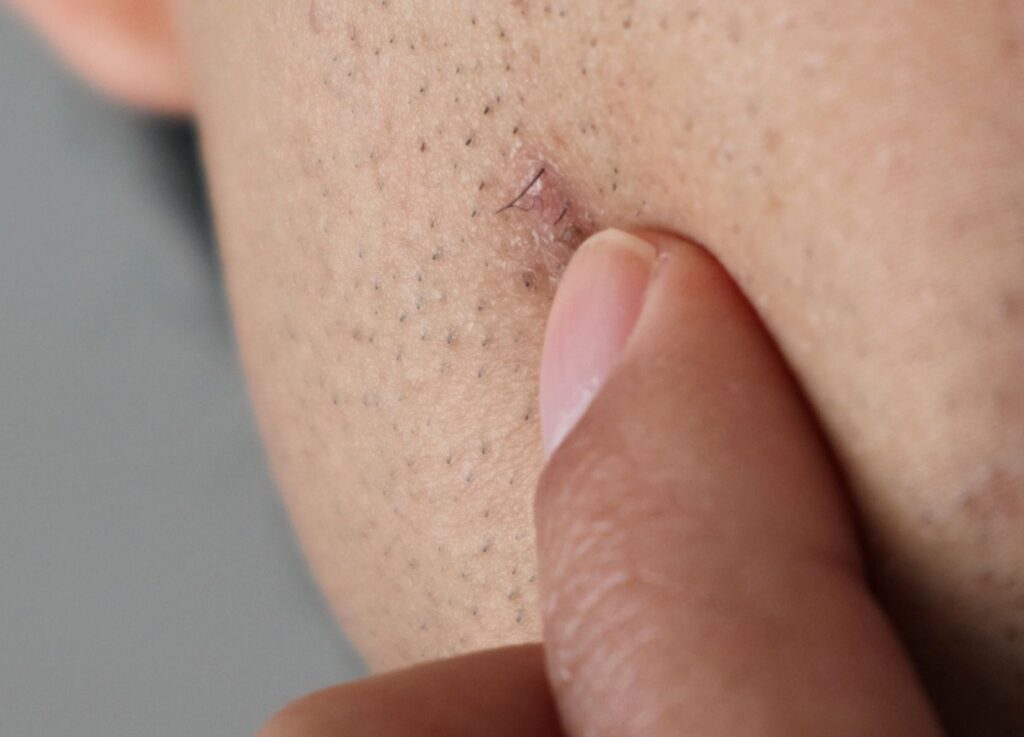
How to tell the difference
Identifying ingrown hair from another type of lump often depends on timing and behaviour.
An ingrown hair usually appears within days of shaving or hair removal. It tends to be small and near the surface. The skin over the area may look slightly red or raised. It may feel mildly tender or itchy, and in some cases a dark hair may be visible under the skin.
Most importantly, an ingrown hair tends to improve gradually over one to two weeks without medical treatment.
By contrast, a lump that is not related to hair removal often has no clear trigger. It may feel deeper beneath the skin, and the skin above may look normal. Such lumps may persist for longer periods and may slowly increase in size rather than resolving.
Monitoring how a lump changes over time provides important information about the likely cause.
| Feature | Ingrown Hair | Other Lump |
|---|---|---|
| Common trigger | Often appears after shaving, waxing or friction | Often no clear trigger |
| Typical size | Small, usually under 1 cm | Can vary from small to larger |
| Surface appearance | Red or raised bump; may look inflamed | Skin may appear normal or slightly raised |
| Visible hair | A trapped hair may be visible | No visible hair |
| Pain or tenderness | Mild soreness, tenderness or itch | May be painless or more painful |
| Texture | May feel firm from inflammation | May feel soft, rubbery, firm or hard |
| Movement under skin | Usually superficial and mobile | May move or feel fixed |
| Duration | Typically resolves in 1 to 3 weeks | May persist or enlarge |
| Progression | Gradual improvement | May remain stable or increase |
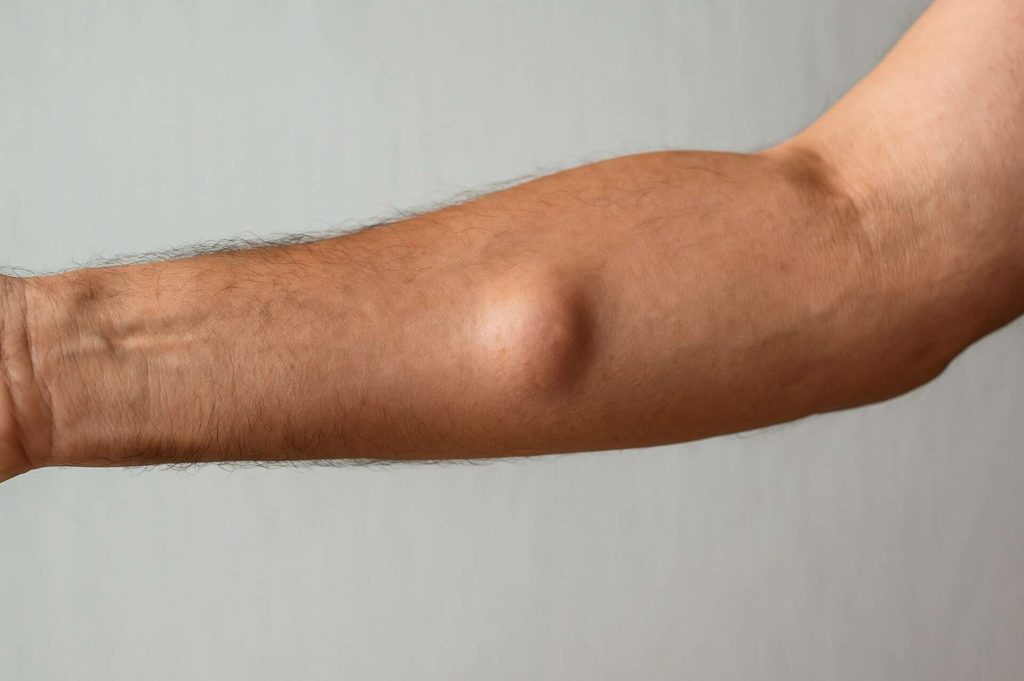
Why some lumps feel hard
Firmness alone is not a reliable indicator of seriousness.
Inflammation can cause local tissue thickening, making a lump feel firm. Cysts may also feel solid due to their enclosed structure containing keratin or fluid.
However, a lump that feels very hard, deep, or fixed to underlying structures warrants medical evaluation.
Common benign causes of lumps
Lumps can vary in size, firmness and mobility. Some are soft and move easily under the skin, while others feel firmer or more fixed. They may be painless or tender and can appear suddenly or develop gradually.
Common benign causes include:
- Cysts – Cysts are closed sacs that can form under the skin. They are often filled with fluid, dead skin cells or other material. Many cysts grow slowly and feel smooth.
- Boils or abscesses – These are infections around a hair follicle or gland. They typically cause pain, redness and warmth, and may produce pus.
- Swollen lymph nodes – Lymph nodes are small immune system structures that can enlarge during infection or inflammation.
- Lipomas – Lipomas are soft, benign lumps of fatty tissue under the skin. They are usually painless and slow growing.
In most cases, how a lump behaves over time is more clinically useful than how it initially appears. Lumps that remain stable or improve are generally less concerning than those that continue to grow or become painful.
Does location matter?
The location of a lump can provide important clues about its likely cause, as different areas of the body contain different skin structures, glands and lymph nodes.
Beard, neck and recently shaved areas
Lumps in these areas are commonly linked to ingrown hairs or inflamed hair follicles, particularly after shaving. They are usually small, superficial and may be associated with redness or irritation.
Groin and armpits
These areas contain a high concentration of hair follicles, sweat glands and lymph nodes. Lumps may be caused by ingrown hairs, blocked glands, cysts or swollen lymph nodes, especially during infection or irritation.
Neck
Lumps in the neck are often related to enlarged lymph nodes, which can occur in response to infections such as colds, throat or ear infections. These are typically mobile and may feel slightly tender.
Breast or testicle
Any lump in these areas should be assessed promptly by a healthcare professional. While many are benign, these locations require careful evaluation to rule out more serious conditions.
When it is more likely to be an ingrown hair
An ingrown hair is more likely if the bump appears in an area that has recently been shaved, waxed or exposed to friction. It usually develops within a few days of hair removal as the newly cut hair begins to grow. The bump is typically small, localised and close to the surface of the skin. The overlying skin may look slightly red or raised, but the discomfort tends to be mild.
In addition to tenderness or itch, you may notice a dark hair shaft just beneath the surface. One of the most reassuring features of an ingrown hair is that it slowly reduces in size and discomfort over one to two weeks.
A bump that shows stability or gradual improvement is usually less concerning.
When it may be something else
A lump is less likely to be an ingrown hair if it continues to enlarge, becomes increasingly painful, or feels deep, hard or fixed beneath the skin. Ingrown hairs are generally superficial and move slightly under the skin.
Medical assessment should be considered if the lump:
- Grows rapidly over days
- Becomes more painful
- Shows spreading redness or warmth
- Produces thick discharge
- Persists beyond three to four weeks
- Appears repeatedly in the same location
Lumps associated with fever or general discomfort should be evaluated promptly. These features may point to infection or another underlying condition.
While most skin lumps are benign, changes in size, texture or symptoms warrant review.
What you should do
If you suspect an ingrown hair and there are no concerning symptoms, conservative care is usually appropriate.
Applying a warm compress for 10 to 15 minutes several times a day can help soften the skin and encourage natural drainage. Gently cleaning the area with mild soap and water removes debris and reduces bacterial buildup. Avoid shaving directly over the bump until it improves.
Wearing loose clothing in areas such as the groin or underarms can reduce friction and irritation.
It is important not to squeeze, pick or dig at the lump. Attempting to remove an ingrown hair with needles or sharp objects can damage surrounding tissue, introduce bacteria and increase the risk of infection or scarring.
Most ingrown hairs resolve without invasive treatment.
How long should it take to resolve
In uncomplicated cases, ingrown hairs improve within several days to two weeks. Mild inflammation may persist slightly longer if the hair remains trapped beneath the surface.
If there is no noticeable improvement after three to four weeks, or if symptoms worsen at any stage, medical advice should be sought. Persistent lumps require evaluation to exclude cysts, abscesses or other skin conditions.
Monitoring how a lump changes over time provides valuable information about the likely cause.
Can ingrown hairs be prevented?
Yes. Preventive measures focus on reducing irritation and keeping follicles clear.
Shaving in the direction of hair growth, avoiding very close shaving, and using a clean sharp razor can reduce the risk. Gentle exfoliation prior to shaving removes dead skin cells and helps prevent follicle blockage. Some people find that electric clippers cause less irritation than blades. In cases of frequent or recurrent ingrown hairs, professional laser hair removal may help reduce longer-term occurrence.
Conclusions
If a small bump appears after shaving or hair removal, it is often an ingrown hair, especially if it appears within a few days, is small and surface-level, and gradually improves.
The key factors to consider are when it appeared, how it feels, and whether it changes over time. Stable or improving bumps are usually minor. Persistent, enlarging or painful lumps should be checked by a healthcare professional.
If you are unsure, seeking medical advice is always reasonable and reassuring.
Frequently Asked Questions
Can a lump feel like an ingrown hair but be something else?
Yes. Some lumps that appear after shaving or hair removal may resemble ingrown hairs but actually be small cysts or inflamed hair follicles that don’t involve trapped hairs. A healthcare provider can distinguish between these during a physical exam.
What’s the difference between an ingrown hair and folliculitis?
Both involve the hair follicle, but ingrown hairs happen because the hair grows back into the skin, whereas folliculitis is inflammation or infection of the hair follicle itself. The treatments can differ, so accurate identification matters.
Why does my ingrown hair sometimes turn into a cyst?
If a trapped hair blocks the follicle for a prolonged period, fluid and skin cells can collect around it, forming a small cyst. These cysts can be deeper, may feel harder, and sometimes become itchy or sore.
Is it normal for ingrown hairs to appear in the pubic area?
Yes. Ingrown hairs commonly occur in areas you shave, wax or pluck, including the pubic region. They may cause small, tender bumps and can sometimes become cystic or inflamed if the hair continues to grow inward.
How long do ingrown hairs take to go away if left untreated?
Most ingrown hairs improve within a few days to two weeks. However, new bumps may continue to form if you keep shaving without adjusting technique, and more persistent ones may take several weeks to fully resolve.
Can an ingrown hair ever look like a boil?
Yes. If the area becomes infected, an ingrown hair can develop pus and resemble a small boil or abscess. Infection signs include increasing redness, warmth, pain and discharge. If these occur, see a healthcare provider.
Will razor bumps disappear if I stop shaving?
Yes, stopping shaving or hair removal in the area gives trapped hairs time to emerge naturally and prevents new ones from forming. Over time, existing razor bumps and ingrown hairs usually settle once the irritation source is removed.
Can stress cause lumps that look like ingrown hairs?
Stress itself does not directly cause ingrown hairs or lumps under the skin, but it can affect immune response and skin healing. Persistent lumps should be evaluated medically rather than attributed to stress alone.
Is saline or a warm compress helpful for lumps that may be ingrown hairs?
Applying a warm compress can help soften the skin and may encourage a trapped hair to surface. Gentle cleansing and warm water can also help reduce inflammation. Avoid harsh treatments on inflamed skin.
- Medical Disclaimer
This information is for general educational purposes only and does not replace professional medical advice. If you have a lump that is persistent, worsening or causing concern, please consult a GP or qualified healthcare professional for assessment.

 CALL US
 WHATSAPP