


Have you noticed a hard lump on your scalp, a small bump beneath the skin, or a keratin-filled trichilemmal cyst near your hairline? At Aventus Clinic, our skilled specialists offer safe, private removal of pilar cysts. Every treatment begins with a thorough assessment and is carried out precisely to ensure a comfortable, smooth recovery.
Avoid long delays. Our team provides same-day consultations and removal procedures for scalp cysts, keratin cysts, or trichilemmal cysts using modern, minimally invasive techniques that prioritise safety and patient comfort.
We focus on achieving discreet results with minimal scarring. Personalised aftercare ensures your healing is smooth, supported, and results are long-lasting.
At Aventus Clinic, our pricing is clear and upfront with no hidden costs. You don’t need a GP referral to book an appointment, allowing quick and convenient access to professional care for pilar cyst removal.
A simple guide to your visit, covering everything from your initial assessment to post-treatment care.
You can safely upload photos of any bumps, lumps on the scalp, or keratin-filled cysts through our secure online form. A specialist will review the images and advise if an in-clinic appointment is necessary.
If further assessment is required, you will visit the clinic for a full examination. Our specialists will identify the type of cyst, such as pilar (trichilemmal), sebaceous, or epidermoid, and recommend the safest and most effective method for removal.
After the procedure, you will receive clear guidance on caring for the treated area. Our team provides ongoing support to ensure healing is smooth, scarring is minimal, with any questions or concerns addressed throughout recovery.
Discreet, doctor led treatment in a state of the art clinic designed around your comfort.
Consultant Plastic Surgeon
Consultant Dermatologist
“My mission is simple. To deliver natural results that restores confidence and changes lives.“
Voted Specialist Hair & Skin Clinic of the Year
Independent quality inspection
“My mission is simple. To deliver natural results that restores confidence and changes lives.“
Trusted by thousands across the UK.
From consultation to treatment, you’ll be supported by a medical-led team dedicated to delivering safe and effective results.
Pilar cysts are benign, firm lumps that most often develop on the scalp. These cysts usually grow slowly and are harmless, but they can become noticeable, cause discomfort, or occasionally become inflamed, leading to tenderness or redness. In rare cases, they may also appear on the neck, back, chest, or torso. Pilar cysts can run in families and affect around 5–10% of people.
Pilar cysts often form when hair follicles become blocked or damaged. They can appear anywhere hair grows, but are especially common on the scalp, where natural oils and minor trauma from grooming or scratching can contribute to their formation.
Pilar cyst removal should always be carried out by a trained medical professional. At Aventus Clinic, our specialists safely remove cysts on the scalp and other hair-bearing areas using minor surgical techniques under local anaesthetic.
The procedure involves making a small incision over the cyst and carefully extracting the entire cyst sac along with its keratin contents. Removing the sac completely is crucial to prevent the cyst from returning. The wound is then closed using fine stitches or adhesive strips to support healing and minimise visible scarring. Aftercare guidance is provided to ensure a smooth recovery and optimal cosmetic results.
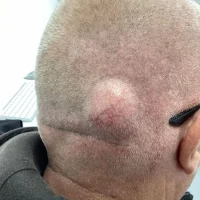
Pilar cysts, also known as trichilemmal cysts, are firm, rounded lumps that typically develop under the skin of the scalp. They often have a dome-like appearance and usually match your natural skin tone. The surface feels smooth, while the cyst itself is solid and firm when touched.
These cysts can be mistaken for other types of lumps or scalp conditions, so it’s important to seek a professional assessment if you notice any hard lumps on the scalp, firm bumps on the head, or unusual growths in hair-bearing areas. Early evaluation helps confirm the diagnosis and ensures safe, effective treatment if removal is needed.
Treatment is usually recommended if the cyst increases in size, causes pain, becomes infected, or is cosmetically concerning, particularly when it appears as a visible lump on the head. Many patients choose removal early to prevent the cyst from enlarging, reduce the risk of scarring, and avoid potential complications such as infection or rupture.
Yes. Surgical excision is the standard treatment and is performed under local anaesthetic. Skilled specialists ensure complete removal of the cyst sac to minimise the chance of recurrence.
Diagnosis is usually made through a physical examination by a specialist, who will feel the lump and assess its mobility and texture. In some cases, imaging such as an ultrasound or MRI may be used to determine the cyst’s depth or to confirm the diagnosis, especially for larger or unusual lumps on the scalp.
Signs & Symptoms
Pilar cysts can resemble other scalp or skin lumps, a professional examination is recommended to confirm the diagnosis and rule out other conditions, particularly if the cyst grows rapidly, becomes painful, or shows signs of infection.
A solid, dome-shaped lump beneath the skin, most commonly on the scalp. Usually painless unless irritated.
The cyst gradually increases in size over time, sometimes reaching 0.5–5 cm in diameter.
The skin over the cyst is typically unbroken, smooth, and the same colour as surrounding skin.
If the cyst becomes inflamed or infected, the area may feel sore, swollen, or warm to the touch.
The cyst can often be gently moved beneath the skin, distinguishing it from deeper or fixed lumps.
Some individuals may develop more than one cyst, particularly if there is a family history of pilar cysts.
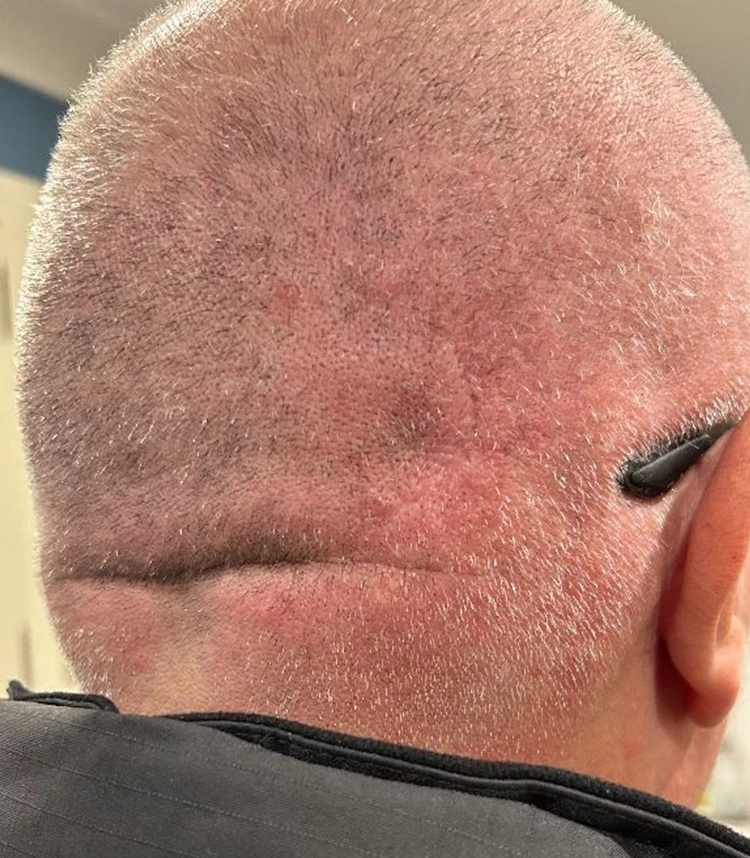
See the Results for Yourself
Our dermatology specialists at Aventus Clinic provide expert pilar cyst removal, guiding you safely from your initial consultation to full recovery. Every step is performed with precision to ensure a discreet, effective, and minimally invasive procedure.
The results highlight how quick and comfortable the treatment is, leaving the affected area smooth and natural-looking.
A small scar is possible, but expert surgical techniques aim to keep scarring minimal. Most patients experience no significant hair loss, and any temporary thinning around the incision site usually grows back naturally.
Most pilar cysts remain stable and do not resolve without treatment. Small, painless lumps can be monitored, but they may slowly grow, become firmer, or cause discomfort if left untreated.
Yes. If a cyst ruptures or is irritated, it can become red, tender, swollen, and may discharge fluid. Prompt removal prevents infection and reduces the risk of pain, inflammation, or further complications.
Pilar cysts are almost always benign. On very rare occasions, they can develop into a proliferating trichilemmal tumour, which is non-aggressive but requires careful medical management. Malignant transformation is extremely uncommon.
No. Attempting to drain or remove a cyst at home increases the risk of infection, scarring, and regrowth. Pilar cysts should only be removed in a sterile clinical environment by trained specialists.
Many pilar cysts remain harmless, but if left untreated they may grow, become uncomfortable, or occasionally inflamed — causing redness, tenderness, or infection. Most pilar cysts range from 0.5 cm to 5 cm in diameter, roughly the size of a small marble up to a golf ball. In rare cases, larger cysts can reach sizes comparable to a tennis ball, forming a noticeable hard lump on the scalp.
Recovery is generally straightforward. Stitches are typically removed within 7–10 days, and mild swelling, soreness, or redness around the incision is normal. Standard aftercare ensures smooth healing and minimal scarring, allowing most patients to return to normal activities quickly.
Yes. Some patients develop multiple cysts over time. Each cyst can be safely excised, and specialists will plan treatment to minimise scarring while achieving effective, long-lasting results.
There is no guaranteed way to prevent pilar cysts, particularly for those with a family history. Early detection and monitoring of any new lumps or bumps on the scalp help manage them before they grow or cause discomfort.