






- Medically Reviewed. Last updated on 03/18/2026.
Feeling a tender spot on your scalp can be uncomfortable and sometimes confusing. The discomfort may feel like a bruise, a burning sensation, or sensitivity when you press on one specific area of the scalp.
- Dr Suhail Alam
- Reading Time: 8 Mins
In most cases, the pain does not come from the hair itself. Hair fibres are made of keratin and do not contain nerves or blood supply. Instead, the sensation comes from the scalp skin and the hair follicles beneath it, which are surrounded by sensory nerve endings, blood vessels, sebaceous glands, and small muscles responsible for hair movement.
When these structures become irritated, inflamed, or compressed, the nerves in the scalp can send pain signals to the brain. Because irritation may occur around a single follicle or a small group of follicles, the discomfort is often localised to one spot rather than affecting the entire scalp.
Dermatologists often associate this type of discomfort with sensitive scalp syndrome or trichodynia, a condition characterised by burning, pain, pricking, itching, or tingling sensations in the scalp, sometimes without visible skin changes.
Understanding scalp tenderness
The scalp is one of the most nerve-rich areas of the body. Even mild inflammation around hair follicles can stimulate nerve endings and create noticeable discomfort.
Medical literature describes scalp tenderness as a symptom that may appear with a variety of dermatological or neurological conditions. It can occur in response to environmental triggers, skin irritation, hair loss disorders, or nerve sensitivity.
Research has shown that sensitive scalp symptoms may include pain, burning, itching, or pricking sensations triggered by factors such as chemicals, stress, temperature changes, or mechanical stimulation.
In many cases, the scalp appears normal during examination., which is why the condition is often described as a sensory disorder rather than a visible skin disease.

How common is scalp tenderness?
Scalp sensitivity is more common than many people realise.
A dermatological study examining patients with hair disorders found that approximately 32% reported symptoms of a sensitive scalp, including pain, burning, itching, or tenderness.
These symptoms were particularly common in individuals experiencing hair loss conditions such as:
- telogen effluvium
- androgenetic alopecia
- alopecia areata
The study also noted that scalp discomfort may occur alongside trichodynia, a condition where patients experience burning or painful sensations around hair follicles.
Researchers believe these symptoms may be related to neurogenic inflammation, where nerve endings release inflammatory molecules that increase pain sensitivity in the scalp.
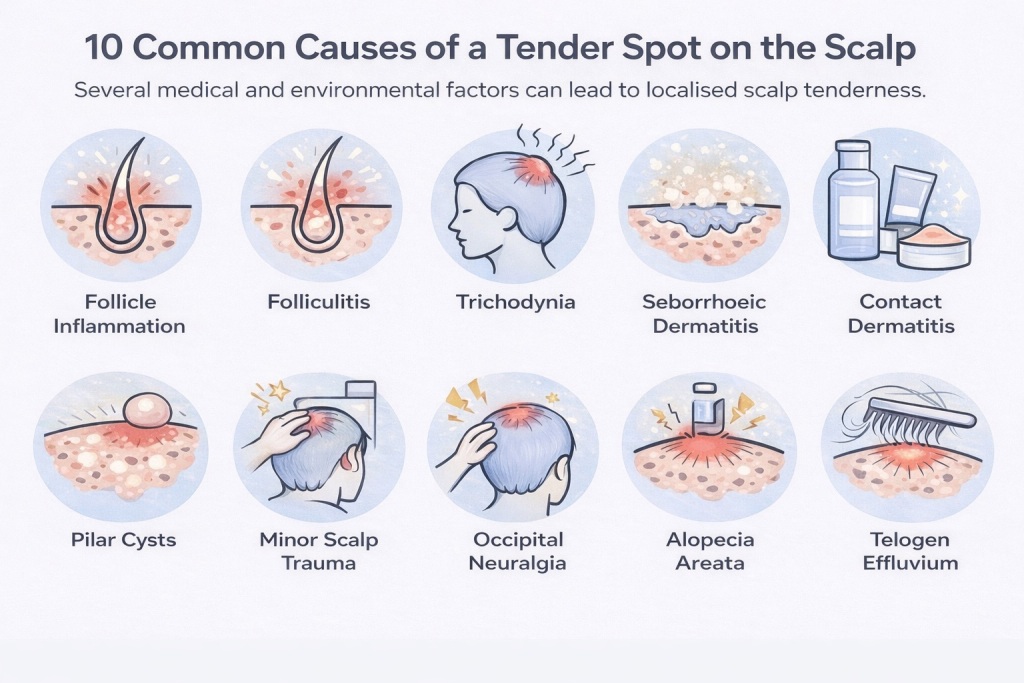
10 Common causes of a tender spot on the scalp
Several medical and environmental factors can lead to localised scalp tenderness.
1. Follicle Inflammation
Inflammation around the hair follicles is one of the most common reasons a small area of the scalp becomes painful. When follicles become irritated, immune cells release inflammatory chemicals that increase nerve sensitivity and produce tenderness.
2. Folliculitis
Folliculitis occurs when hair follicles become infected or inflamed. It may appear as small red bumps or pustules on the scalp and can cause tenderness when touched.
3. Trichodynia
Trichodynia refers to scalp pain or burning sensations around hair follicles, often without visible skin changes. Dermatology research suggests that stress-related neuropeptides such as substance P may contribute to inflammation around hair follicles and create these sensations.
4. Seborrhoeic Dermatitis
Seborrhoeic dermatitis is an inflammatory scalp condition linked to yeast growth on oily skin. It commonly causes redness, flaking, itching, and tenderness in affected areas.
5. Contact Dermatitis
Allergic reactions to hair products such as shampoos, dyes, or styling products can cause localised irritation and sensitivity on the scalp.
6. Pilar Cysts
Pilar cysts are benign lumps that form from hair follicles and commonly occur on the scalp. If they become inflamed or enlarged, they may create tenderness in one spot.
7. Minor Scalp Trauma
A tender area may occur after mild trauma such as bumping the head, tight headwear, or pressure from sleeping in one position.
8. Occipital Neuralgia
Occipital neuralgia involves irritation of the occipital nerves at the back of the head. This can cause sharp or aching pain that may be felt in small areas of the scalp.
9. Alopecia Areata
Alopecia areata is an autoimmune condition that attacks hair follicles. Some individuals experience scalp tenderness before noticeable hair loss occurs.
10. Telogen Effluvium
Telogen effluvium is a temporary hair shedding condition triggered by stress, illness, or hormonal changes. Many patients report scalp discomfort or burning sensations during active shedding.
When to seek medical advice for scalp tenderness
Mild scalp tenderness often improves within a few hours to several days, especially if it is caused by pressure, tight hairstyles, or minor irritation. Most cases of scalp tenderness resolve once the underlying irritation improves. However, medical evaluation may be necessary if you experience:
- persistent scalp pain lasting more than a week
- visible swelling, redness, or pus
- sudden hair loss in the affected area
- severe headaches or neurological symptoms
A dermatologist can examine the scalp, review medical history, and determine whether additional tests or treatments are required.
How scalp tenderness is treated
Treatment depends on the underlying cause of the tenderness.
For example:
- inflammatory scalp conditions may be treated with medicated shampoos
- infections may require antibiotics or antifungal medications
- allergic reactions may improve once the triggering product is discontinued
- nerve-related pain may require specialised treatment
Addressing the underlying condition usually helps reduce both scalp pain and associated symptoms.
The connection between scalp tenderness and hair loss
Research has shown that scalp pain often occurs alongside hair loss conditions. Trichodynia has been observed in patients with:
- telogen effluvium
- androgenetic alopecia
- alopecia areata
Inflammation and nerve sensitivity around hair follicles may contribute to both scalp discomfort and changes in hair growth. Treating the underlying scalp condition often improves both hair health and scalp comfort.
Why is my scalp tender in one spot when I touch it?
A tender spot on the scalp usually occurs when hair follicles, skin, or sensory nerves become irritated or inflamed. Each hair follicle is surrounded by nerve fibres and blood vessels, so even mild inflammation can make the area sensitive to touch.
Common causes include follicle inflammation, scalp dermatitis, pressure on the scalp, or nerve sensitivity.
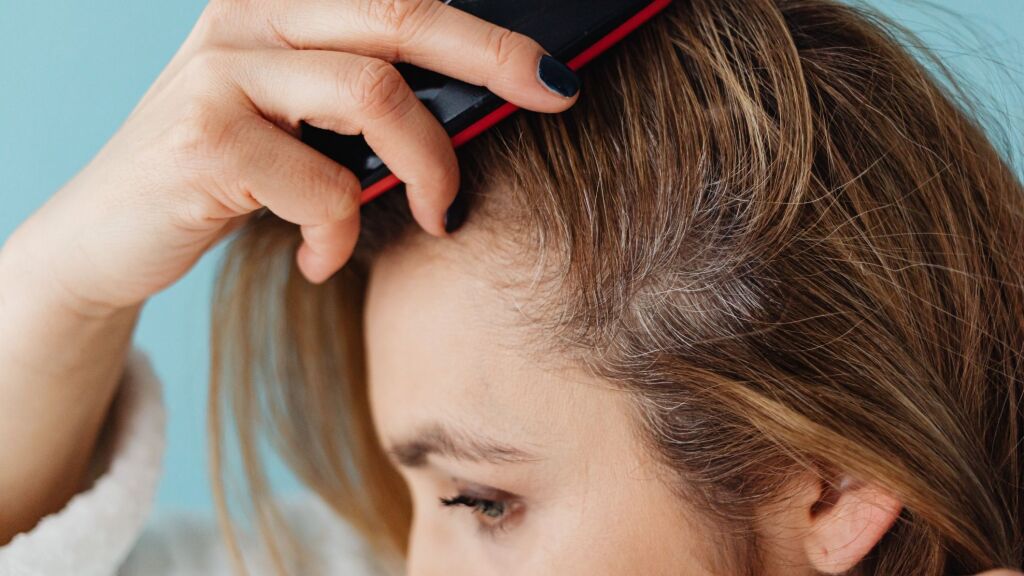
Why is my scalp tender in one spot from sleeping?
A tender patch on the scalp may develop after sleeping in the same position for several hours. Prolonged pressure on one area can temporarily irritate the skin, hair follicles, and sensory nerves in that spot.
Because the scalp has a rich nerve supply, pressure can increase nerve sensitivity and reduce blood flow slightly. Once circulation returns to normal after waking, the area may feel tender or bruised for a short time. This type of scalp tenderness usually improves within a few hours.
Why is my scalp tender in one spot with no bump?
Scalp pain without a visible bump can occur when the nerve endings in the scalp become hypersensitive. Dermatologists often refer to this as trichodynia, a condition characterised by burning, tingling, or pain of the scalp even when the skin looks normal.
Studies suggest that trichodynia may involve increased nerve sensitivity and inflammatory signals around hair follicles. This is why some people feel scalp pain despite having no visible rash or swelling.
Why does the back of my scalp feel tender?
Tenderness at the back of the scalp can occur due to muscle tension, nerve irritation, or pressure on the occipital nerves located at the base of the skull.
Tension headaches, poor posture, or sleeping positions can increase pressure in this region, making the scalp feel sore or tender when touched.
Why does my scalp feel bruised in one area?
A bruised sensation on the scalp often occurs when local inflammation or nerve irritation develops around a hair follicle.
This may happen due to minor trauma, follicle irritation, tight hairstyles, or inflammatory scalp conditions. Because scalp nerves are very sensitive, even mild irritation can create a bruised or aching feeling.
Can stress cause scalp tenderness?
Yes. Stress can affect the scalp through several biological pathways. Increased stress hormones may alter nerve sensitivity and inflammatory signalling in the skin.
Research shows that scalp pain conditions such as trichodynia often occur alongside stress-related hair disorders, including telogen effluvium. This may explain why scalp tenderness sometimes appears during periods of emotional stress.
Is scalp tenderness a sign of infection?
Sometimes scalp tenderness can be caused by infections such as folliculitis, which occurs when hair follicles become infected by bacteria or yeast. Signs of infection may include redness, swelling, pus-filled bumps, or warmth around the affected area. If these symptoms occur, medical treatment may be needed.

Book a free online hair and scalp assessment with a qualified dermatologist to understand what may be affecting your scalp and what treatments could help.
- Medical Disclaimer:
This content is for informational purposes only and reflects current medical understanding. It should not replace professional medical advice, diagnosis, or treatment. If you are concerned about scalp pain or related symptoms, please consult a qualified healthcare professional.
 CALL US
 WHATSAPP