






If you accidentally scratch your mole too hard, or maybe you have caught it on a piece of clothing taking the surface layer of.. Do not panic! This can happen to moles in awkward places. Oftentimes a mole that is damaged will heal like a normal skin wound, requiring no intervention. However, if the mole has now changed dramatically in appearance, booking an assessment with a dermatologist can put your mind at ease.
- Dr Sharon Crichlow
- Reading Time: 5 Mins
Accidental injury to a mole is common. Moles, also known as melanocytic naevi, are clusters of pigment-producing cells in the skin and can be flat or raised. Raised moles are more likely to be affected by everyday activities such as shaving, friction from clothing, or scratching.
In most cases, this type of injury is not harmful. Current clinical understanding shows that injuring a mole does not cause skin cancer. Skin cancers, including melanoma, develop due to genetic changes in skin cells, often linked to ultraviolet exposure and individual risk factors rather than physical trauma.
However, injury can draw attention to a mole that has already changed. For this reason, any mole that appears different over time should be assessed, regardless of whether it has been injured.
What to do if you scratch a mole
If you have just scratched or injured a mole, it can feel concerning. In most cases, however, there is no need to panic. Minor injuries to moles are common and can usually be managed with simple wound care. Staying calm and following basic steps can help promote healing and reduce the risk of infection.
Step 1: Stop the bleeding
Apply gentle pressure with a clean tissue or gauze and hold it in place for a few minutes until the bleeding stops.
Step 2: Clean the area
Wash the area gently with mild soap and lukewarm water. This helps reduce the risk of infection. An antiseptic can be used if needed.
Step 3: Protect and allow healing
If the area is exposed to friction, cover it with a plaster while it heals. Avoid touching, picking, or scratching the area, as this may delay healing or cause irritation.
Most minor injuries heal within one to two weeks, in the same way as other superficial skin wounds.
Once the area has begun to heal, the next step is to monitor the mole for any changes in appearance, such as alterations in size, shape, colour, or symptoms.
Can a mole be scratched off and will it grow back?
A mole can be partially or completely removed through trauma, particularly if it is raised above the surface of the skin. When this happens, bleeding and scab formation are expected as part of the normal healing process.
Whether a mole grows back depends on whether melanocyte cells remain in the deeper layers of the skin. If some cells are still present, the mole may gradually return. If it has been completely removed, it may not grow back and the area may heal as normal skin or leave a small scar.
Moles do not usually fall off without a clear cause such as injury or medical removal.
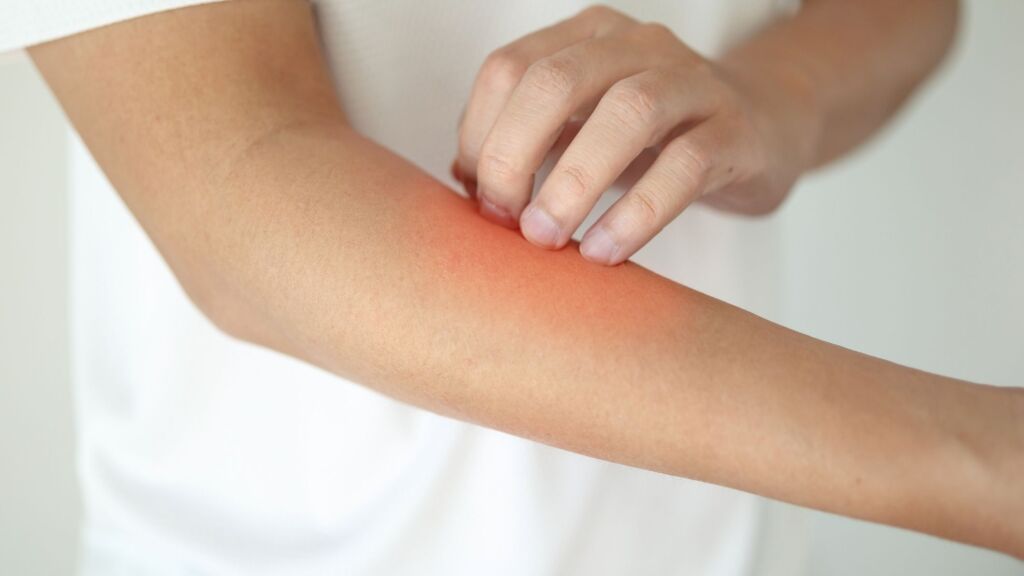
Does scratching a mole cause cancer?
Scratching or damaging a mole does not cause cancer. There is no clinical evidence linking physical injury to the development of melanoma.
Melanoma arises from mutations within melanocytes and is associated with factors such as ultraviolet exposure, genetics, and skin type. Trauma is not considered a cause.
That said, a mole that bleeds, changes, or becomes more noticeable after injury should still be evaluated. In these cases, the injury may have revealed an existing change rather than caused it.
Is picking or repeatedly irritating a mole harmful?
Occasional accidental irritation is unlikely to cause harm. However, repeated picking or rubbing can interfere with the normal healing process. It may increase the risk of infection, cause inflammation, and alter the appearance of the mole.
These changes can make it more difficult to assess whether a mole has changed naturally or as a result of repeated trauma. For this reason, it is best to avoid interfering with moles.
What to watch for after a mole injury
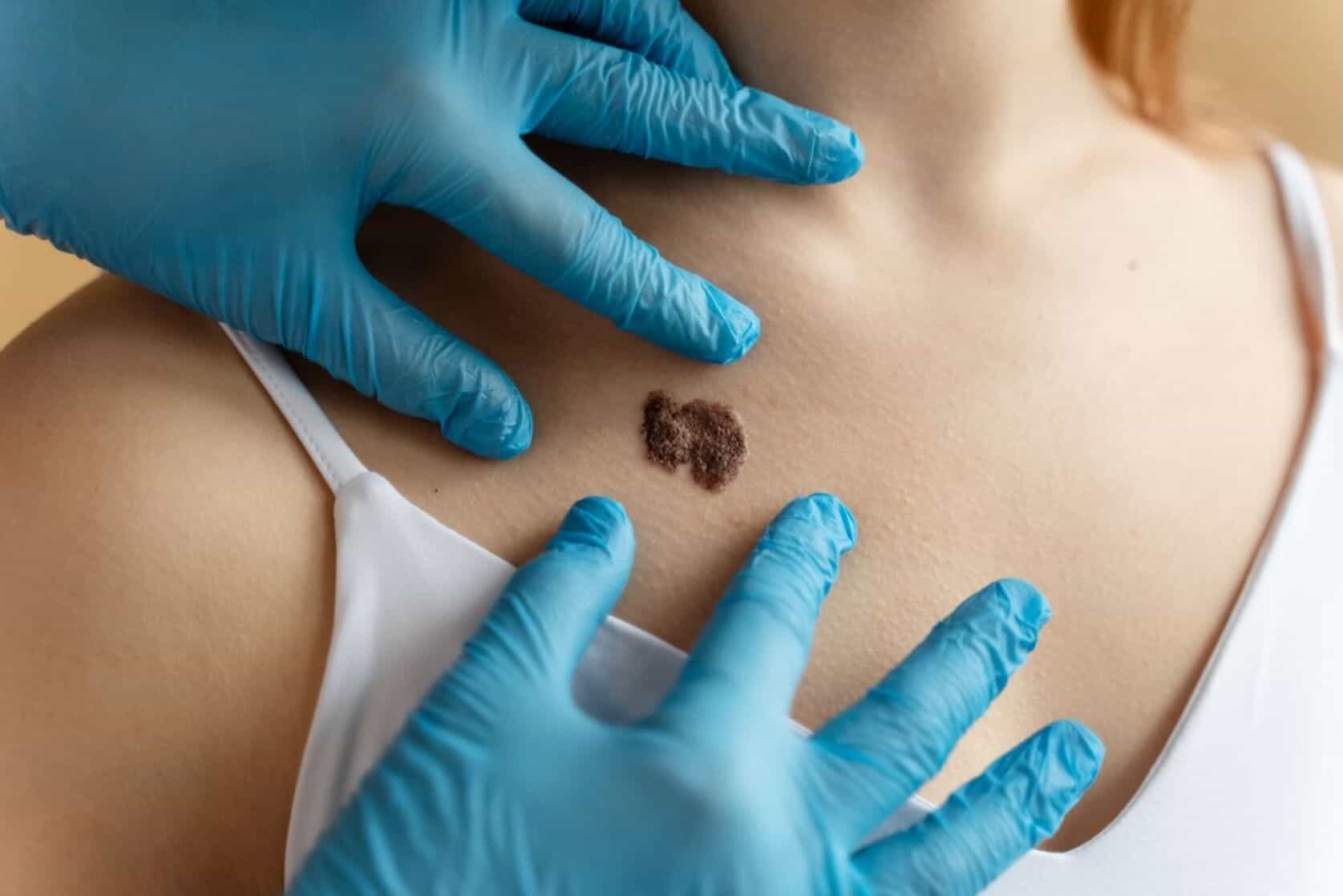
Once the area begins to heal, attention should shift to monitoring the mole for changes. Dermatologists commonly use the ABCDE rule as a guide:
- Asymmetry, where one half does not match the other
- Border irregularity, such as uneven or blurred edges
- Colour variation within the mole
- Diameter greater than approximately 6 millimetres
- Evolving changes in size, shape, colour, or symptoms
Of these, change over time is one of the most important signs. A mole that evolves should be assessed.
Common symptoms after scratching a mole
After a mole has been injured, some symptoms are expected as part of normal healing. These include bleeding at the time of injury, followed by scab formation, mild redness, and temporary itching or stinging.
These symptoms should gradually improve as the skin repairs itself. Persistent or worsening symptoms are not typical and may require assessment.
When to seek dermatological assessment
ou should seek medical advice if you notice:
- A wound that does not heal within a few weeks
- Persistent or repeated bleeding
- Changes in size, shape, or colour
- Uneven pigmentation or irregular borders
- Ongoing pain, itching, or tenderness
- A lesion that becomes crusted, ulcerated, or continues to break down
A mole that bleeds without a clear cause or fails to heal properly should always be examined.
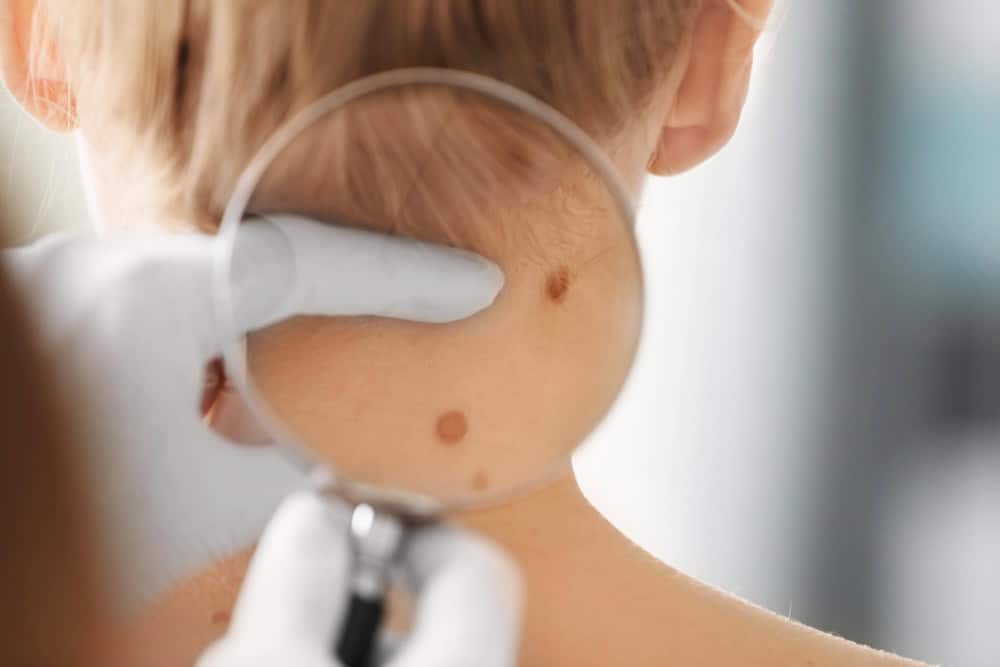
What happens during a mole check
A mole assessment is usually straightforward and non-invasive:
- The mole is examined visually
- A dermatoscope may be used to provide magnification and better visualisation of structures beneath the skin
- The mole may be compared with others on your body
If the mole appears unusual, a biopsy may be recommended. This involves removing part or all of the mole for laboratory analysis. Histological examination is the only way to confirm whether a lesion is benign or malignant.
Do you need mole removal after injury?
Removal is not routinely required after a mole has been scratched. It may be considered if the mole appears atypical, does not heal as expected, or requires further investigation.
When performed, removal is a minor procedure under local anaesthetic and is generally well tolerated.
Conclusion
Accidentally scratching a mole is unlikely to cause harm. In most cases, the area heals with simple care and no further treatment is required.
The important consideration is whether the mole changes during or after healing. If it remains stable, there is usually no cause for concern. If it changes or does not heal as expected, a dermatological assessment is recommended.

Concerned about an itchy or changing mole? Get a personalised assessment from a dermatologist and clear guidance on the next steps.
- Medical Disclaimer:
This content is for general information only and does not replace professional medical advice. If you are concerned about an itchy mole or notice any changes, consult a qualified dermatologist for proper assessment.
 CALL US
 WHATSAPP