






Persistent crusty moles need medical attention if they don’t heal within 4 weeks, change appearance, bleed unexpectedly, or cause pain. These signs could indicate skin cancer requiring prompt evaluation.
- Dr Sharon Crichlow
- Reading Time: 10 Mins
A small crusty patch on a mole might seem insignificant, but it could signal something important. While many scabbed moles are harmless and heal naturally, others persist and may indicate serious skin conditions, including melanoma. Recognising the difference between a temporary scab and a warning sign can be lifesaving.
Key Takeaways
- Non-healing crusty moles that persist beyond 4 weeks require immediate medical attention as they may indicate melanoma or other skin cancers.
- Use the ABCDE method (Asymmetry, Border irregularity, Colour variation, Diameter >6mm, Evolution) to monitor suspicious moles at home.
- While most crusty moles result from minor injuries and heal naturally, any that bleed without cause, change appearance, or feel painful should be evaluated by a dermatologist.
Table of Contents
What Is a Crusty Mole?
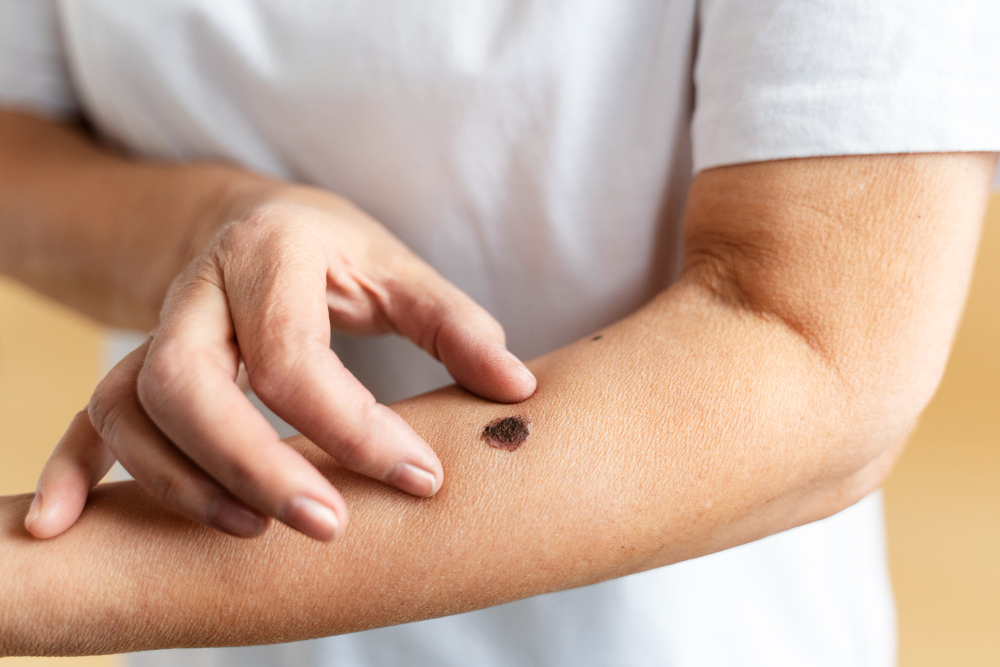
A crusty mole refers to a previously normal mole that develops a scab, crust, or scale on its surface. This change in texture often appears as flaking, hardened skin or dried blood on top of the mole.
Normal moles are typically smooth with consistent colouration. When a mole develops crusting, it indicates that something has disrupted the skin surface.
The crust might appear brown, black, or reddish, depending on the cause and whether bleeding has occurred.
Why Do Moles Become Crusty or Scab Over?
Moles crust over for various reasons, ranging from innocent trauma to serious health concerns.
Physical injury remains the most common cause. Accidentally scratching, rubbing against clothing, or injuring a mole during shaving can create a scab as part of the normal healing process.
Research published in the PMC/NCBI (Antonio et al, 2015) explains that wound healing triggers an inflammatory response with cytokines and growth factors. This inflammation can sometimes create a persistent crusty appearance.
In some cases, hormonal changes during pregnancy or adolescence alter mole appearance, sometimes causing temporary crusting or textural changes.
More concerning is when a mole becomes crusty due to cellular changes within the mole itself, which might indicate skin cancer.
When a Crusty Mole Could Be Skin Cancer
A crusty mole that appears without injury or doesn’t heal within 2-4 weeks warrants medical attention. This persistent change could indicate melanoma or other skin cancers.
According to research (Jelcic et al, 2015), trauma to pigmented lesions can potentially activate latent mutant melanocytes through inflammatory signals, suggesting a possible link between injury and melanoma development.
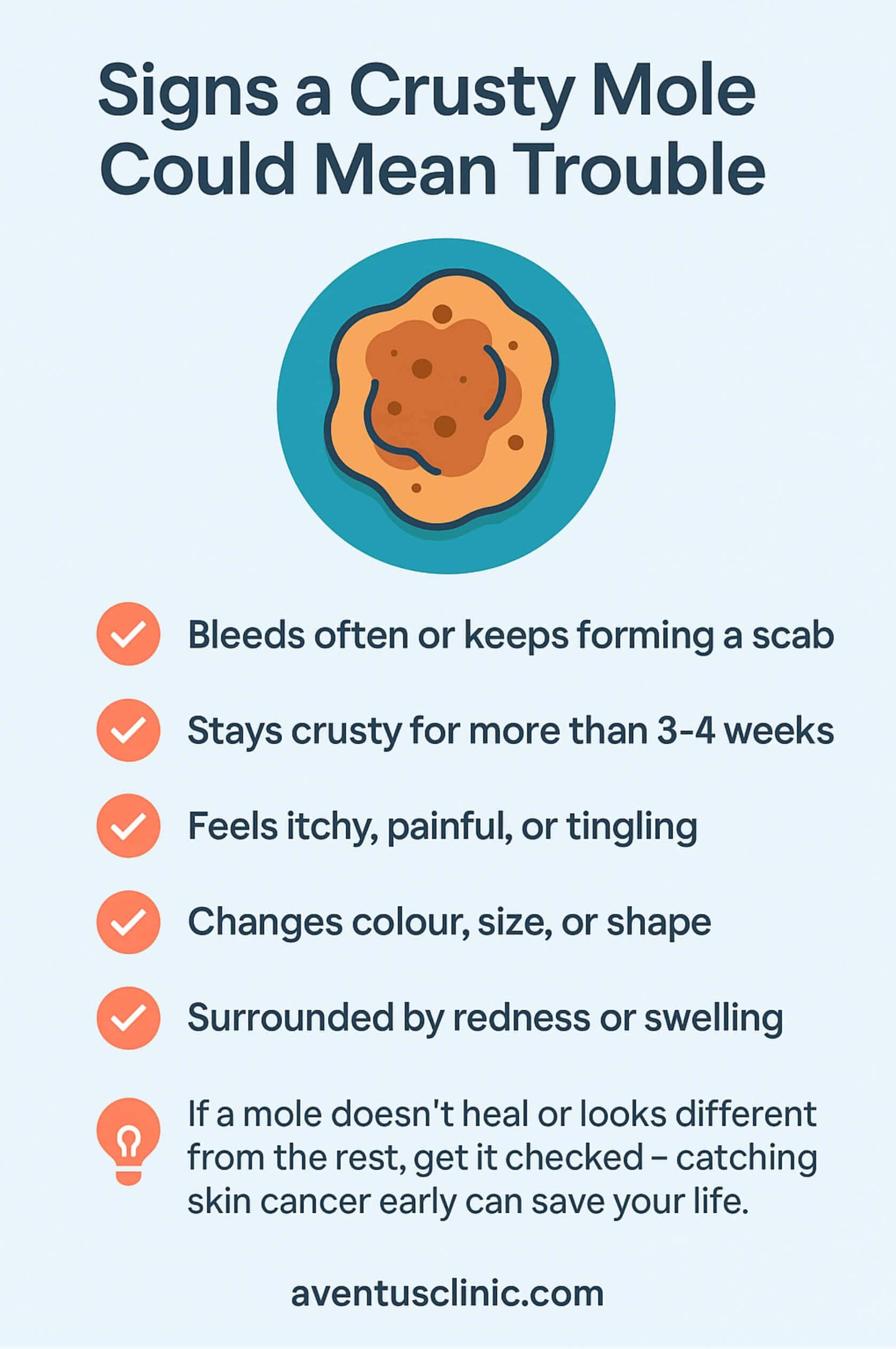
While not all crusty moles are cancerous, research shows that non-healing lesions create an environment potentially conducive to malignant transformation.
How to Tell a Crusty Mole from a Melanoma Scab
Distinguishing between a harmless crusty mole and potential melanoma requires careful observation of several key characteristics:
| Feature | Normal Crusty Mole | Potential Melanoma |
|---|---|---|
| Colour | Uniform throughout | Multiple shades or patchy appearance |
| Shape | Symmetrical, round or oval | Asymmetrical, irregular shape |
| Border | Smooth, well-defined edges | Notched, jagged or poorly defined |
| Evolution | Stable appearance over time | Changing appearance over weeks/months |
| Texture | Slightly flaky or dry | Thick, persistent crust that may ooze |
| Healing | Resolves within 2 weeks | Persists or repeatedly scabs over |
Healthcare professionals recommend using the ABCDE method for self-examination:
- Asymmetry: One half doesn’t match the other
- Border: Irregular, jagged, or poorly defined edges
- Colour: Varies from one area to another
- Diameter: Larger than 6mm (pencil eraser)
- Evolving: Changing in size, shape, colour, or elevation
Remember, only a medical professional can definitively diagnose melanoma. If you’re concerned about a suspicious mole, our professional mole checking service can provide expert assessment and peace of mind.
Common Non-Cancer Causes of Crusty Moles
Fortunately, most crusty moles aren’t cancerous. Common benign causes include:
- Trauma: Accidental scratching, friction from clothing, or shaving can damage moles. These typically heal within a few weeks.
- Seborrhoeic keratosis: These benign growths often have a warty, crusty appearance that can be mistaken for concerning moles.
- Irritated naevi: Sometimes moles become irritated due to friction or environmental factors, developing temporary crusting.
A study by Kaskel et al. (2000) found that 91.3% of melanoma patients didn’t attribute their cancer to any trauma, suggesting most injuries to moles don’t lead to cancer.
If you can clearly connect your mole’s crusting to a specific injury and it heals normally, cancer is less likely. However, when in doubt, consult a doctor.
When to See a Dermatologist
Seek medical attention promptly if your crusty mole:
- Doesn’t heal within 4 weeks
- Bleeds without injury
- Causes pain or unusual sensations
- Changes in size, shape, or colour
- Looks significantly different from your other moles
Don’t delay evaluation based on fear or inconvenience. Early detection drastically improves outcomes for skin cancers.
Research by Mylle et al (2021) confirms that targeting suspicious lesions like non-healing, crusty moles for early dermatology consultation significantly improves skin cancer detection rates.
Our professional mole removal service provides same-day assessments with qualified specialists who can evaluate concerning moles and recommend appropriate treatment.
If you’re uncertain about a red lesion, it’s always best to consult a specialist dermatologist for professional evaluation and peace of mind.
How Doctors Diagnose and Treat Crusty Moles
When evaluating a crusty mole, dermatologists typically follow several steps:
First, they perform a thorough visual examination, often using a dermatoscope (magnifying device) to closely inspect the mole’s features.
If the mole appears suspicious, the doctor will likely recommend removal for histological analysis. This involves:
- Cleaning the area with antiseptic
- Administering local anaesthetic
- Performing a simple excision or shave biopsy
- Sending the sample to a laboratory for testing
- Closing the wound with stitches if necessary
Treatment options depend on the diagnosis:
For benign lesions, simple removal may be sufficient. For confirmed skin cancers, further treatment might include wider excision, topical therapies, or, in rare cases, systemic treatments.
Griffin et al (2016) note that surgical excision remains standard for suspicious lesions, though other modalities like topical treatments or photodynamic therapy may be appropriate in certain cases.
After any mole treatment, proper aftercare is essential: keep the area clean, apply recommended moisturisers, avoid direct sun exposure, and resist picking at healing tissue.
Conclusion
When it comes to crusty moles, knowledge and vigilance are your best protection. Most will be harmless, but recognising the warning signs ensures early intervention when needed. Don’t hesitate to seek professional evaluation for any persistent or changing moles. For peace of mind, book a free online assessment with our skin specialists today. Your skin deserves expert care.
FAQ
Can a crusty mole that won’t heal be harmless?
Yes, crusty moles can be harmless if caused by friction, dryness, or minor injury. However, persistent crusting beyond two weeks warrants medical evaluation to rule out skin cancer.
How long should I wait before getting a crusty mole checked?
Don’t wait more than two weeks if a crusty mole hasn’t healed. Seek immediate attention if it’s accompanied by bleeding, pain, rapid growth, or colour changes.
Can scratching make a mole crust over?
Yes, physical trauma from scratching can cause moles to form protective scabs. However, this disrupts the skin barrier and potentially creates inflammation, so it’s best avoided.
Do crusty moles always hurt or itch?
No, many crusty moles are painless. However, persistent pain, itching, or burning sensations in a mole indicate it should be examined professionally.
Should I try to remove a crusty mole myself?
Never attempt self-removal of moles. This increases infection risk, prevents proper diagnosis, and may spread cancerous cells if the mole is malignant.
What’s the best way to monitor moles at home?
Regular monthly self-examinations in good lighting, with photographs for comparison, help detect changes early. Use a partner or mirror to check hard-to-see areas.
 CALL US
 WHATSAPP