






Hair can thin without noticeable shedding because follicles produce progressively finer hairs through miniaturisation, reducing visible density even when daily hair loss remains normal throughout the process.
Noticing thinner hair but no big clumps falling out worries many people who check their pillows and brushes, expecting evidence of hair loss. Hair can thin because follicles produce finer hairs or cycle changes occur, not only because of dramatic shedding events.
Let us tell you the major causes of thinning without obvious shedding and what treatment options are available for this issue.
Key Takeaways
- Follicular miniaturisation gradually converts thick terminal hairs into fine vellus hairs, reducing visible density without dramatic shedding.
- Genetic pattern hair loss, nutritional deficiencies, hormonal changes, and hair breakage all cause thinning without excess shedding.
- Early medical evaluation preserves more follicles because miniaturised follicles respond better to treatment than permanently lost ones.
What hair thinning without hair loss means
Hair thinning refers to reduced density or shaft diameter across the scalp, while noticeable shedding means excess hairs appearing on pillows, brushes, or shower drains beyond the normal 50 to 100 daily count.
Hair thinning can look more obvious due to certain visual factors, such as:
- Lighting changes that highlight the scalp
- Part widening that exposes more skin between strands
- Greater scalp visibility due to reduced hair density
These visual changes can make thinning appear more noticeable even when shedding is normal. Biological reasons for thinning without obvious hair loss include a shortened anagen growth phase, progressive follicular miniaturisation, and hair shaft breakage near the scalp.
Progressive follicular miniaturization where terminal hairs gradually become thinner vellus-like hairs, represents the most common mechanism. This process reduces both hair shaft diameter and overall density over time, creating visible thinning even when daily shedding remains normal.
How does hair thinning typically begin?
Hair thinning is typically a gradual, progressive process rather than a sudden change. Clinical research shows that structural changes occur within the hair follicle over multiple growth cycles, meaning visible thinning is often preceded by subtle alterations in hair quality.
In many cases, daily shedding remains within normal ranges, but the hairs that regrow become progressively finer, leading to reduced overall hair density over time.
- Hair follicles undergo progressive miniaturisation, producing finer and shorter hairs with each growth cycle
- Hair shedding may remain normal, but replacement hairs become increasingly thinner
- Reduction in hair shaft diameter often occurs before visible loss of overall hair density
- Changes develop gradually over several years and may not be immediately noticeable
- In androgenetic alopecia, dihydrotestosterone (DHT) drives follicle miniaturisation in genetically susceptible individuals
- Visible thinning typically reflects a process that has already been progressing over multiple hair cycles
What are the major causes of hair thinning
Hair thinning usually starts gradually as follicles shrink and produce finer, weaker hairs. Genetics and the hormone DHT determine which follicles are affected and drive the pattern hair loss seen over time.
Follicular Miniaturization
Follicular miniaturisation occurs when hair follicles gradually shrink, producing thinner and shorter hairs over time.
As this process continues, the strong, thick terminal hairs become finer and more vellus-like. The diameter of each hair shaft decreases, and even if the total number of follicles remains the same at first.
The overall density of the hair visibly declines, which eventually gives the appearance of thinning.
Genetics
A person’s genetic makeup plays a key role in determining which hair follicles are most sensitive to hair loss.
Male and female pattern hair loss show different typical patterns:
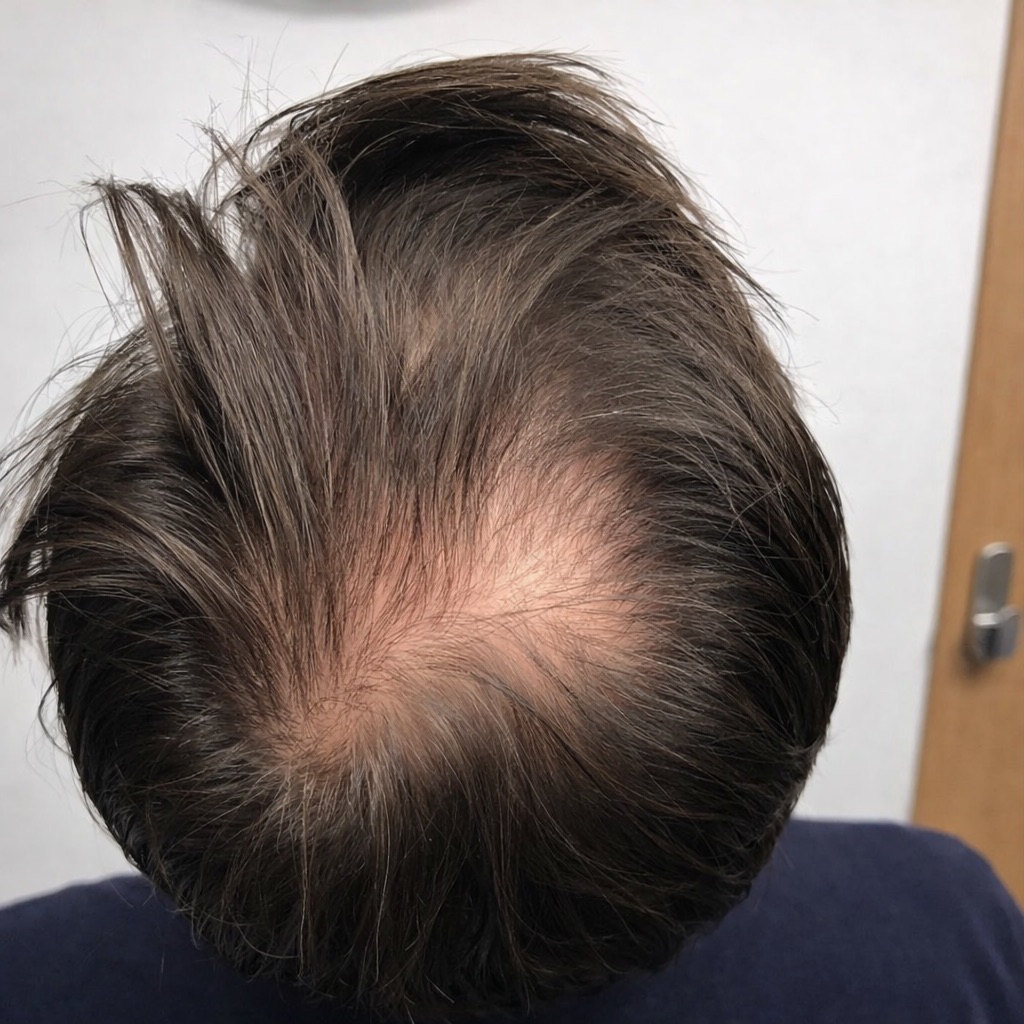
- Male pattern hair loss usually affects the temples, vertex, and crown.
- Female pattern hair loss generally causes diffuse thinning (most noticeable along the central part).
Genetic factors combined with hormonal sensitivity influence which follicles undergo miniaturisation and how quickly the process progresses. If pattern hair loss runs in the family, thinning is more likely to appear earlier and in specific areas.
Hormonal Influence (DHT)
Dihydrotestosterone (DHT), a derivative of testosterone, binds to susceptible follicles and accelerates miniaturisation. Higher DHT activity in certain scalp regions explains why thinning follows predictable patterns in men and women.
Together, genetics and DHT drive miniaturisation, making it the root cause of progressive hair thinning.

Other causes of hair thinning without obvious shedding
Not every thinning situation stems from pattern hair loss because several other mechanisms reduce visible density without creating dramatic daily shedding. Each cause requires different evaluation and treatment approaches.
Hormonal changes and ageing
Perimenopause and postpartum periods create subtle hormonal shifts that alter hair cycle timing and reduce anagen duration. Oestrogen fluctuations affect follicle function gradually, producing progressive thinning rather than acute shedding events.
Nutritional deficiencies
Iron stores measured through ferritin testing often show lower levels in women with chronic diffuse thinning, and vitamin D insufficiency associates with reduced follicle function. Protein insufficiency limits keratin production for shaft growth, creating thinner weaker hairs throughout the scalp.
Chronic stress and systemic illness
Prolonged psychological stress or ongoing medical conditions can shorten anagen phase and create telogen shifts that reduce density gradually. Unlike acute telogen effluvium triggering sudden shedding, chronic stress produces subtle progressive thinning over extended periods.
Hair shaft damage and breakage
Chemical treatments, heat styling, and mechanical stress break hairs close to the scalp, mimicking thinning because broken short hairs provide less coverage. This differs from true follicle miniaturisation because the hair breaks after emerging rather than growing thinner from the follicle.
Medications and medical conditions
Thyroid disease alters hair cycle timing and shaft quality without necessarily increasing daily shedding. Some medications change follicle function gradually, and timing combined with extra symptoms, including itching, scaling, or sudden shedding episodes, points toward specific diagnoses.
What are the early signs of hair thinning
Hair thinning often begins subtly, and noticing the early signs can make a significant difference in preventing further loss. These signs typically involve changes in hair texture, density, and coverage. Paying attention to small changes in your hair can help you address the issue before it progresses.
The most common early indicators of thinning include:
| Sign | What to Look For |
|---|---|
| Reduced hair volume and density | Hair may feel lighter or appear less full, especially when styling or brushing. |
| Visible scalp in certain lighting | Parts of the scalp become more noticeable under bright lights or in mirrors. |
| Finer hair strands | New hairs growing in affected areas may be thinner and softer than existing strands. |
| Changes in hairline or crown density | Receding hairline or thinning at the crown may appear gradually over time. |
Recognising these early signs allows for timely evaluation and targeted treatment.
Even subtle changes in hair thickness or coverage can indicate that follicles are beginning to miniaturise, making early intervention key to maintaining healthy hair density.
How doctors diagnose hair thinning
Dermatologists combine physical examination, imaging techniques, and laboratory testing to identify which mechanism causes thinning in each patient.
Accurate diagnosis directs treatment because different causes respond to different interventions.
Clinical exam and imaging
Scalp inspection reveals patterned thinning distribution that suggests androgenetic alopecia versus diffuse changes. Dermoscopy and trichoscopy identify miniaturised hairs by measuring shaft diameter variations and calculating miniaturisation ratios across different scalp regions.
Laboratory tests and other investigations
When diffuse hair thinning is observed, doctors often check several laboratory markers to identify underlying causes, such as:
- Ferritin
- Complete blood count
- Thyroid-stimulating hormone
- Vitamin D levels
Hormonal panels are also added when polycystic ovary syndrome or other endocrine conditions seem likely based on symptoms.
Hair pull tests quantify active shedding, and hair density counts measure changes over time, while scalp biopsies clarify unclear cases where clinical features do not point to one diagnosis.
What are the treatment options for hair thinning
Earlier treatment for miniaturisation creates better chances of thickening because viable follicles respond more effectively than severely atrophied ones.
Some causes, including nutritional deficiencies and inflammatory conditions, are reversible with proper treatment, while others, like androgenetic alopecia, are progressive but stabilizable with ongoing therapy.
The table below shows common treatments for hair thinning and the evidence supporting each option.
| Treatment | Mechanism | Typical Response Time |
|---|---|---|
| Topical minoxidil | Prolongs anagen, increases follicle size | 4 to 6 months |
| Oral finasteride (men) | Blocks DHT conversion | 6 to 12 months |
| Oral anti-androgens (women) | Reduces androgen effects | 6 to 12 months |
| Platelet-rich plasma (PRP) | Growth factor delivery | 3 to 6 months |
| Low-level laser therapy (LLLT) | Cellular stimulation | 4 to 6 months |
| Iron repletion | Corrects deficiency | 3 to 6 months |
Evidence reviews of non-surgical treatments confirm that topical minoxidil and oral finasteride or dutasteride show the strongest support for androgenetic alopecia, while platelet-rich plasma, low-level laser therapy, and microneedling provide adjunctive benefits.
Response times vary by treatment, with most requiring at least four to six months before visible improvements appear.
Lifestyle and nutritional measures support follicle health when combined with medical treatments.
Reducing heat styling, chemical treatments, and tight hairstyles prevents additional mechanical damage while medical treatments address underlying causes.
When Surgical Options Are Considered
Hair transplant surgery moves follicles from donor areas to thinning regions when miniaturisation advances, and donor hair remains adequate.
This works best after medical treatments stabilise progression because ongoing miniaturisation can affect transplanted grafts. Miniaturised follicles may regrow thicker hair if the follicle remains viable and treatment starts early enough.
Permanently lost follicles that have scarred or completely atrophied cannot be restored without surgical grafting, which emphasises why early evaluation and treatment matter for long term outcomes.
Our medical hair restoration services include topical options and clinic procedures tailored to your diagnosis and goals.
Conclusion
Thinning without significant shedding is common but manageable. If you have noticed steady thinning or changes in hair density, we can help through targeted testing and personalised treatment plans.
Get a free online assessment so we can build a treatment approach tailored to your specific goals and diagnosis.
FAQs
Why is my hair thinning but not falling out?
Follicular miniaturisation gradually produces finer hairs without increasing daily shedding, creating visible thinning over months to years as the shaft diameter decreases.
Can hair thinning happen without shedding?
Yes, miniaturisation reduces hair thickness and density without dramatic shedding because follicles shrink gradually rather than stopping growth suddenly.
Does thinning hair always lead to baldness?
No, because treatment can stabilise miniaturisation if started early, and some causes, including nutritional deficiencies, are completely reversible with proper intervention.
How quickly does thinning from miniaturisation show improvement with treatment?
Most medical treatments require four to six months before visible improvements appear because follicles need multiple growth cycles to produce thicker shafts.
What home checks can I do before seeing a doctor?
Check for patterned thinning distribution, examine recent photographs for density changes, and note whether shedding has increased beyond normal daily levels. Patient resources and clinical guidelines provide additional information on recognising different hair loss patterns.
Medical Disclaimer: This content is for general information only and does not replace professional medical advice. If you are concerned about hair thinning or hair loss, consult a qualified healthcare professional for proper assessment and treatment.

Concerned about thinning hair or changes in density? Get a personalised assessment from our experienced clinical team and explore treatment options tailored to your diagnosis.

 CALL US
 WHATSAPP