






Minoxidil is a topical medication that can stimulate hair growth by prolonging the active (anagen) phase of the hair cycle and improving blood flow to hair follicles. It is approved for treating scalp hair loss but is commonly used off-label on the face to support beard growth.
Minoxidil for Beard Growth
Clinical studies suggest that some men experience increased facial hair density after consistent twice-daily use for around 16 weeks, although results vary. Response depends on factors such as genetics, age, hormone sensitivity, and baseline beard growth.
Patchy or slow beard growth is common. Minoxidil is one of the few topical treatments for this concern that has been evaluated in clinical research rather than relying solely on anecdotal reports.
Key Takeaways
- Clinical trials indicate that 3 percent topical minoxidil used twice daily for approximately 16 weeks can increase beard hair count and density compared with placebo, with mostly mild side effects.
- Beard growth is gradual. Fine vellus hairs may appear within 1 to 3 months, thicker terminal hairs often develop over 4 to 6 months, and fuller results may take 7 to 12 months.
- Minoxidil is a clinically approved treatment for scalp hair loss and is widely used off-label for beards by extending the hair growth phase and improving follicular blood supply.
- Results are variable, and continued use is usually required to maintain improvement.
Table of Contents
What Minoxidil Is and Why Men Use It for Beard Growth
Minoxidil was originally approved as an oral treatment for high blood pressure (hypertension). During its use, increased hair growth was observed as a side effect, which led to the development of topical minoxidil for hair loss.
Topical minoxidil is approved for the treatment of scalp hair loss only. It is not licensed for use on the face, and its use for beard growth is considered off-label. When applied to the skin, it improves blood flow around hair follicles and may help prolong the active growth phase of the hair cycle.
Minoxidil does not create new hair follicles. It works by stimulating existing or dormant follicles and supporting thicker hair growth where follicles are already present. For this reason, results depend on having some natural hair growth to build on, and areas with no follicles are unlikely to respond.
Who Is Most Likely to Benefit From Minoxidil for Beard Growth
Minoxidil tends to work best in men who:
- Have patchy or uneven beard growth, rather than complete absence of hair
- Already have fine or light facial hairs in sparse areas
- Are willing to apply treatment consistently for at least 6 to 12 months
Men with no visible hair follicles in certain areas may see limited response, as minoxidil cannot generate new follicles.
Minoxidil Formulations for Beard Growth
Liquid Minoxidil (Typically 2% or 5%)
Liquid minoxidil absorbs efficiently and is available in both 2 percent and 5 percent strengths. It contains propylene glycol, which improves penetration but can cause irritation, dryness, or flaking on facial skin in some users.
Liquid formulations remain wet for longer after application, which some people find inconvenient during the day.
Foam Minoxidil (Usually 5%)
Foam formulations do not contain propylene glycol and are generally better tolerated, particularly for sensitive skin. They dry more quickly and feel less greasy.
Absorption may be slightly lower in some individuals, but overall effectiveness appears comparable when used consistently.
Oral Minoxidil and Beard Growth
In a small number of cases, low-dose oral minoxidil may be prescribed under medical supervision for scalp hair loss when topical treatments are ineffective. It is not routinely recommended for beard growth due to its systemic effects and higher risk profile.
For facial hair, topical liquid or foam formulations remain the preferred option.
Does Minoxidil Work for Beard Growth?
Yes, Clinical evidence supports minoxidil as a treatment for beard growth, with both trials and real-world use showing consistent results.
A randomised study in the Journal of Dermatology found that men applying 3% minoxidil twice daily for 16 weeks achieved higher beard density than those using a placebo, with only minor side effects.
Similar improvements have been observed in studies involving transgender men on testosterone therapy, as well as in long-term case reports. Individual results still vary, largely due to genetics and follicle sensitivity, meaning some men respond within months while others need closer to a year.
Because results vary widely due to genetics and follicle sensitivity, we also encounter men who plateau despite correct use, where alternative treatments such as a medically supervised beard transplant may be considered alongside topical therapy.
What Makes Beard Hair Respond Differently Than Scalp Hair
Follicle sensitivity to androgens plays a major role.
Beard follicles rely on testosterone and DHT to form thick terminal hairs, while scalp follicles are weakened by DHT. This fundamental difference explains why facial hair often responds more predictably to growth stimulation.
Growth cycle differences matter too. Beard hairs cycle faster than scalp hair, which helps minoxidil show results sooner, but turning fine vellus hairs into thick terminal hairs still takes months of steady stimulation.
It’s also important to note that Minoxidil can thicken existing facial hair and fill sparse areas, but it cannot create new follicles, so results depend on having at least some natural growth to build on.
How to Use Minoxidil for Beard Growth Properly
Proper application maximises results and minimises side effects.
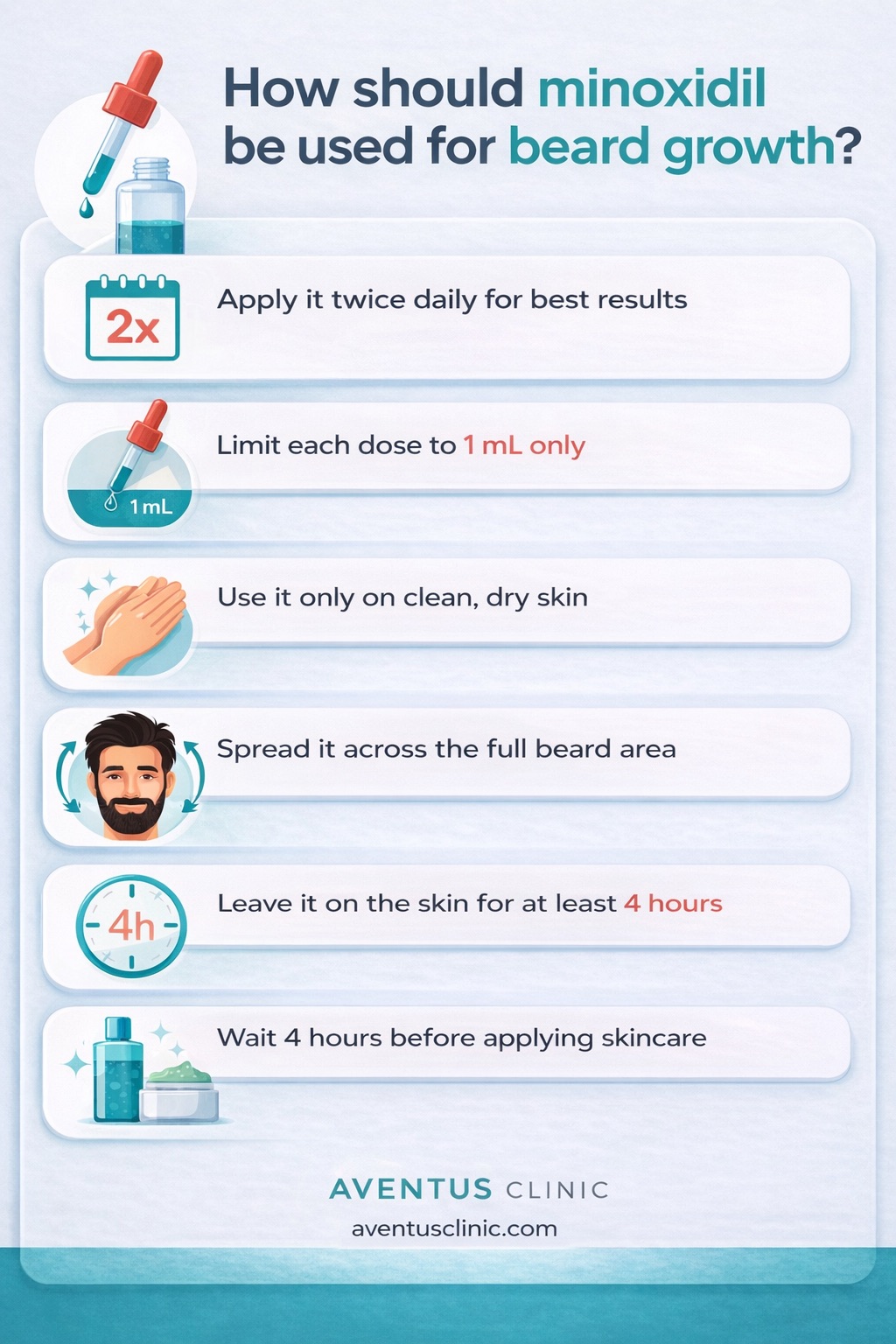
Proper application of minoxidil is crucial for achieving optimal beard growth results. The process requires consistency and attention to detail to ensure the medication effectively reaches your hair follicles.
Daily Application Process
For best results, apply minoxidil to your beard area twice daily, ideally twelve hours apart. Follow these essential steps:
- Apply minoxidil twice daily, morning and evening, for optimal effectiveness. Clinical trials demonstrating beard growth used this frequency, and less frequent application reduces efficacy.
- Use 1 mL total per application (0.5 mL per side of face if measuring precisely). More does not accelerate results and only increases side effect risk. Liquid formulations come with droppers or spray applicators marked for dosing. Foam users typically use a half-cap full per application.
- Apply to clean, completely dry skin. Wash your face first to remove oils and debris that block absorption. Wait until skin is fully dry because moisture dilutes the solution and reduces penetration.
- Cover the entire beard area you want to enhance, not just patchy spots. Follicles across the whole region benefit from stimulation, creating more uniform growth patterns. Massage gently into skin rather than just coating surface hairs.
- Leave minoxidil on for at least 4 hours before washing to ensure absorption. Many users apply in the morning and evening, leaving it on overnight after the evening application. Avoid eating, drinking, or activities that cause excessive sweating immediately after application.
- Wait 4 hours before applying moisturiser or sunscreen. Minoxidil needs time to penetrate fully, and layering products too soon interferes with absorption. After the 4-hour window, normal skincare routines can resume.
Common Application Mistakes
Understanding what not to do is just as important as knowing the correct application process. Many users compromise their results by:
Applying minoxidil to wet skin, which reduces absorption Using more than the recommended amount, which doesn’t improve results Washing their face too soon after application Inconsistent application timing or skipping doses
Minoxidil Beard Results and Timeline
Realistic timelines prevent frustration and premature discontinuation. Beard growth with minoxidil is gradual, not instant. The table below shows what to expect at different stages of minoxidil beard treatment.
| Timeline | What Happens | Visual Changes |
|---|---|---|
| Weeks 1–4 | Potential initial shedding of weak vellus hairs; skin may feel dry or slightly irritated | Minimal visible change; some users notice finer hairs appearing |
| Months 1–3 | Vellus hair development; increased hair count but still fine and light-coloured | Slight increase in facial hair coverage; hairs remain thin and pale |
| Months 4–6 | Vellus hairs begin transitioning to terminal hairs; pigmentation increases | Noticeable density improvement; patchy areas start filling in |
| Months 7–12 | Terminal hair maturity; thickness and colour reach final development | Significant beard enhancement; mature, pigmented facial hair |
| 12+ Months | Maintenance phase; further minor improvements possible | Full results visible; continued use maintains and slightly enhances gains |
These stages reflect how facial hair responds gradually to sustained stimulation rather than changing overnight. Some men move through them faster, others more slowly, depending on genetics, hormone levels, and baseline follicle activity.
Facial hair also follows a different growth rhythm from scalp hair, which is why beard timelines do not mirror scalp treatment patterns and need to be judged on their own terms.
Safety, Side Effects, and Common Concerns
Topical minoxidil is generally safe for facial use when applied correctly.
The following table outlines common side effects, how to manage them, and when professional consultation becomes necessary.
| Side Effect Type | What Happens | How to Manage | When to Seek Help |
|---|---|---|---|
| Skin irritation, dryness, redness, flaking | Common during the first 2–4 weeks as the skin adjusts to treatment | Consider switching to a foam formulation; apply a moisturiser at least 4 hours after minoxidil | If irritation persists beyond 2 weeks or worsens |
| Acne and clogged pores | May occur due to excessive product use or inadequate facial cleansing | Use correct dosage; maintain good facial hygiene; wash the area after 4+ hours | If painful breakouts, infections, or scarring develop |
| Temporary shedding | Normal in the first month and indicates hair follicles entering a new growth phase | Continue treatment consistently; avoid stopping prematurely | If shedding continues beyond 6 weeks |
| Rare systemic effects (dizziness, rapid heartbeat, chest discomfort) | Very uncommon due to minimal systemic absorption when applied to facial skin | Stop using the product immediately | Seek medical attention immediately |
These safety considerations align with topical minoxidil safety profiles from long-term studies, which show minoxidil remains well-tolerated when proper application protocols are followed.
Can Minoxidil Cause Facial Ageing or Wrinkles?
A common myth suggests that minoxidil causes facial ageing or permanent wrinkles. There is no clinical evidence that minoxidil causes facial ageing or wrinkles.
The concern usually comes from temporary skin dryness, particularly with liquid formulations containing alcohol or propylene glycol, which can make fine lines appear more visible.
Any perceived changes are usually due to temporary skin dehydration, not collagen loss.
Dehydrated skin can look creased or dull but returns to normal once moisture is restored, whereas ageing involves lasting collagen loss, which minoxidil does not trigger.
Proper hydration and moisturising prevent this temporary effect during treatment.
Alongside randomised trials, a 2024 case report described identical twin males where one applied 5% topical minoxidil daily for over a year and developed visibly greater beard and moustache density than his untreated twin, illustrating possible long-term outcomes of consistent use.
This supports clinical evidence that long-term minoxidil use improves beard density without causing facial ageing when used with basic skin care.
What Happens When You Stop Minoxidil for Beard
What stays after stopping depends on the type of hair developed during treatment. Fully formed terminal hairs (thick, dark and mature) often remain permanent once they’ve been established for 12 months or more.
These hairs no longer rely on minoxidil to survive.
In contrast, finer vellus hairs that have not fully transitioned usually shed after stopping, as those follicles return to their natural baseline.
Shedding happens because hairs still mid-transition depend on minoxidil to stay in their growth phase. Once that support is removed, they enter rest and fall out.
If your beard has stabilised with mature growth, reducing use gradually or stopping is reasonable. Some minor thinning can occur, but overall beard structure typically remains intact.
Who Should and Should Not Use Minoxidil for Beard Growth
Ideal candidates for minoxidil beard growth include:
- Men over 18 with patchy beard growth
- Those with existing vellus facial hair
- Men committed to 12+ months of consistent use
Those with heart conditions, skin infections, or allergies to minoxidil should seek medical advice first.
The following list shows who should avoid minoxidil or seek medical advice before starting.
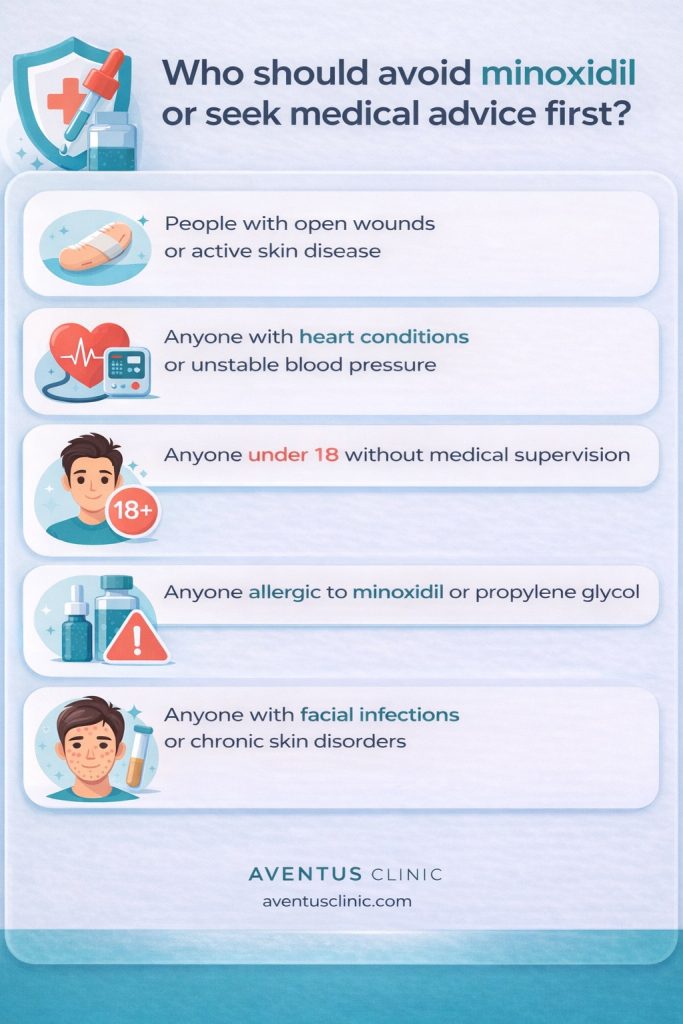
Responsible use means honest self-assessment of candidacy and professional consultation when uncertainty exists. Medical guidance prevents adverse reactions and optimises treatment planning.
Age considerations matter because younger users (late teens to early twenties) often have facial hair still maturing naturally, making it difficult to distinguish minoxidil effects from normal development. Men over 25 with established but sparse patterns are clearer candidates.
FAQs
Can I apply minoxidil only on patchy beard areas?
Applying minoxidil across the whole beard area usually gives more even results than treating patches alone, as it avoids clear treated and untreated zones and supports balanced density.
How long does minoxidil take to grow a beard?
Early changes often appear within 3–4 months, with clearer improvement by 6 months. Full density usually takes around 12 months of consistent use.
Will minoxidil grow a full beard if I have no facial hair?
Minoxidil strengthens existing follicles but cannot create new ones. Areas with zero hair growth typically show limited response.
Is minoxidil safe for long-term beard use?
Long-term use follows the same safety profile as scalp treatment, with side effects usually mild and manageable.
Can minoxidil cause acne or clogged pores on the beard?
Yes. Clogged pores can occur if hygiene is poor or too much product is used, but proper cleansing reduces this risk.
Conclusion
Minoxidil is a proven, safe option for improving beard density when used correctly, with results developing over 3–12 months. Consistency, proper skincare and realistic expectations matter far more than product strength or brand choice.
Professional guidance prevents common mistakes and improves results. If you are ready to take the next step, get a free beard growth consultation with our specialists today to discuss whether minoxidil suits your facial hair goals safely.
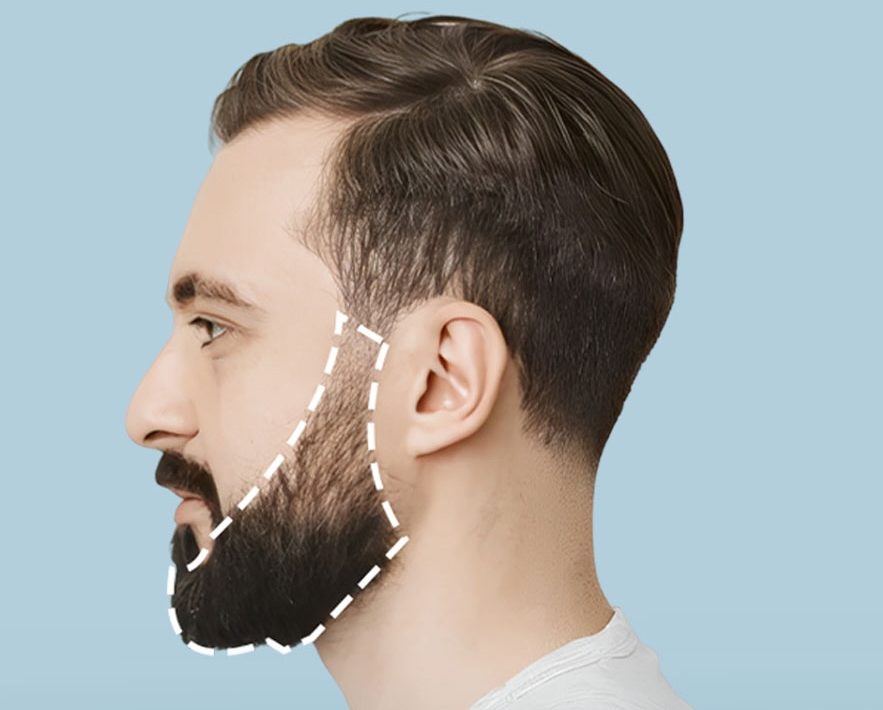
Find out whether a beard transplant, medication, or a combined approach is the best solution for your beard growth concerns.


 CALL US
 WHATSAPP